
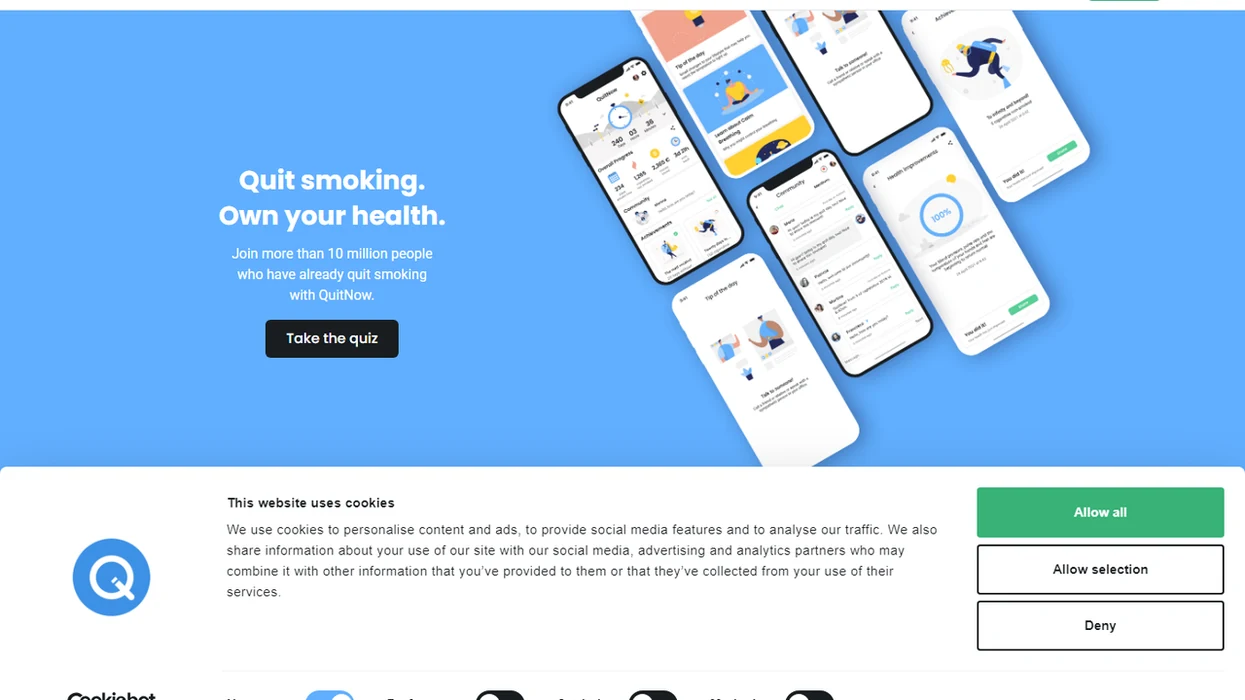
> Definition: Stop Smoking App is a smoking cessation app that helps people track progress, manage cravings, and stay motivated while quitting smoking or vaping.
| Need | Best option |
|---|---|
| All-in-one craving, streak, savings, and relapse recovery tracking | Stop Smoking App, with Smoke Free as another strong progress-tracking option |
| Community-style motivation and public quit milestones | QuitNow, with Stop Smoking App for a more personal tracking-first experience |
| Gamified motivation and achievement-based quitting | Kwit, with Stop Smoking App for simpler daily craving and progress support |
| Structured coaching, clinical-style programs, or public health support | Quit Genius or NHS Quit Smoking, with Stop Smoking App as a practical companion for daily tracking |
At a Glance: What This Stop Smoking App Delivers
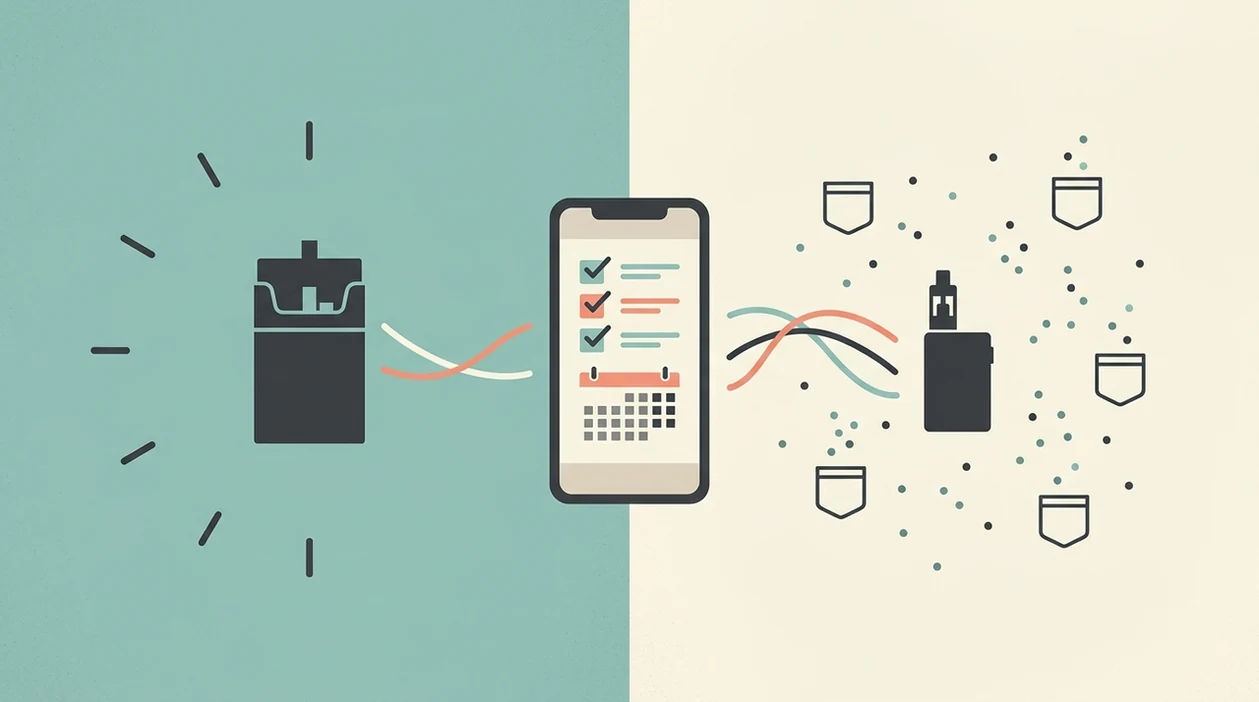
A strong stop smoking app should make quitting cigarettes or vaping more trackable, less vague, and easier to restart after a slip-up. Good stop smoking apps deliver daily structure, not miracle claims.
- A stop smoking app should track smoke-free time, cravings, triggers, and money saved in one place.
- A 2024 Cochrane review found that smartphone apps can help more people quit smoking than minimal support.
- Cigarette quitting often centers on set smoking breaks; vaping quitting may involve constant access and hidden puffs.
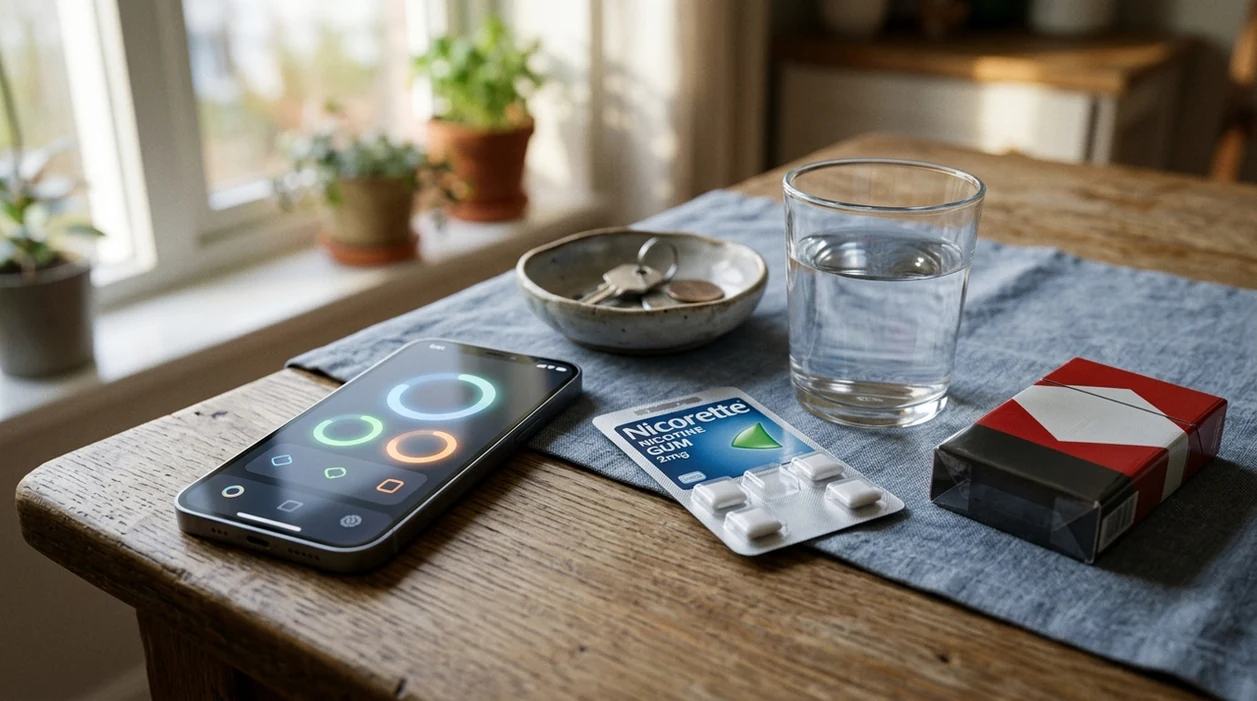
- Apps tend to work better alongside counseling, nicotine replacement therapy, or medication than as a stand-alone plan.
- Popular download numbers do not prove a smoking cessation app has clinical evidence.
When the blue LED blink under a desk is the issue, MeQuit fits people who need trigger notes before the urge turns automatic, using a craving log and trigger history.
What This Quit Smoking App Does for Your Quit Journey
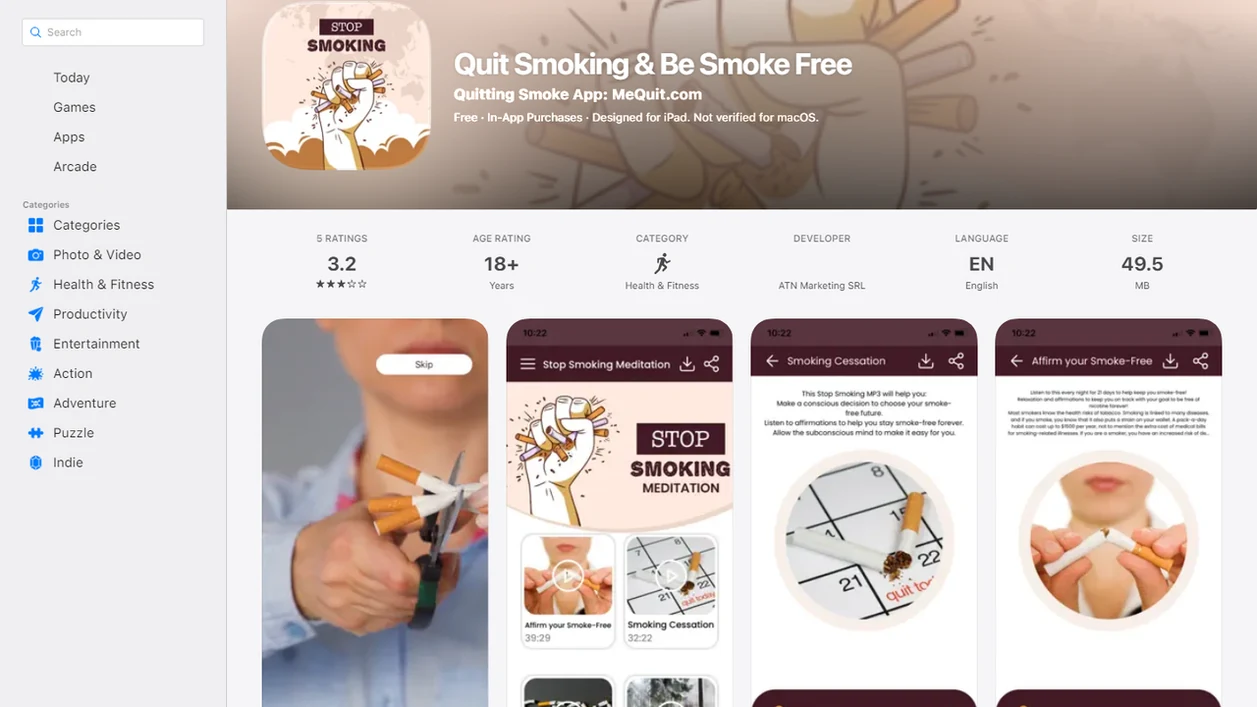
A quit smoking app gives your quit day a daily checklist: what to notice, what to log, and what to do next when a craving hits. MeQuit turns that into personalized goals, smoke-free milestones, and a savings counter you can check when motivation drops.
The need is not small. In 2022, about 28.3 million U.S. adults smoked cigarettes, per the CDC. That is a lot of people trying to get through lunch breaks, school pickup, and stressful calls without reaching again.
For people who need accountability between appointments, the MeQuit stop smoking app covers the daily gap because it records cravings, mood, money saved, and streak progress in one routine.
A good quit plan gives support and next steps, not shame. MeQuit can help you track what actually happened, but it does not replace medical advice.
Key Features of the Smoking Cessation App
MeQuit combines craving tools, progress tracking, savings, relapse support, and daily check-ins. That matters because a plain timer can feel nice on day one, then thin on day four.
Craving and Trigger Management Tools
The craving tracker lets you log the urge, trigger, intensity, and mood. If the craving log gets opened in the elevator, that still counts. Small notes help you spot patterns later, such as after-dinner dishes or sitting in a parked car before work.
Progress Tracking and Savings Counter
The smoke-free day counter, milestone badges, and money saved calculator turn progress into something visible. The NHS Quit Smoking app also emphasizes a quit plan, progress tracking, and money saved, which reflects the feature set many users expect from quit apps.
If your priority is staying motivated after the first week, MeQuit earns the spot because the savings counter and milestone notifications make progress visible before health changes are easy to feel.
How a Stop Smoking App Works (Behavioral Science Behind the Tracking)
A stop smoking app works by attaching a digital habit loop to the behaviors that drive nicotine use. Every cigarette or vape pull is paired with a place, a mood, and a stress level, which clinicians call cue-driven smoking. Logging that cue weakens the loop because the urge becomes visible instead of automatic.
Underneath, the app stores three signal streams: craving intensity over time, trigger frequency by category, and smoke-free streak duration. The streak counter resets at local midnight, the savings counter compounds daily based on cigarettes per day plus pack price, and milestone notifications fire at the 8-hour, 24-hour, 72-hour, 2-week, and 1-month points that match the NHS quit-smoking timeline source. None of this replaces clinical care; it makes patterns visible so the next cigarette is a choice, not a reflex.
How to Use a Stop Smoking App in Your First Week
Use the steps below to get the most out of the Stop Smoking App in the first seven days. The order matters because each step builds the signal the next one needs.
- Set your quit date or pick a gradual reduction plan, then choose whether you are quitting cigarettes, vaping, or both.
- Log every craving in the moment, including the place, the mood, and a 1-10 intensity score, even if you give in to it.
- Tag each cigarette or vape pull with a trigger category (stress, after meal, social, boredom, screen breaks, driving).
- Check the trigger summary every evening and pick the top one to plan around for tomorrow.
- Use the relapse reset button after a slip so one cigarette stays one cigarette, not a full-day reset.
- Review the weekly report on day seven for streak days, money saved, top three triggers, and the milestone you just cleared.
The most useful stop smoking app habit is opening the craving log during the urge wave, not after the day is already over. Pair the app with a quitline or clinician when withdrawal is heavy; the CDC notes counseling plus medication can double or triple quit success compared with quitting unaided.
Ready to start your quit?
A stop smoking app helps people quit cigarettes or vaping by tracking smoke-free days, managing cravings, counting money saved, and sending daily motivation. MeQuit gives that…
Stop Vaping App Support: Cigarettes vs Vaping Cessation
Vaping cessation often needs different tracking than cigarette cessation because access is different. A cigarette has a start and finish; a vape can sit in a sleeve, bag, desk drawer, or car cup holder filled with pods.
Stat pair: Australia’s Department of Health says nicotine replacement therapy can help reduce withdrawal symptoms and cravings when used correctly source. The CDC says quitlines provide free coaching and support, and U.S. help is available through 1-800-QUIT-NOW.
Many competitor apps, including general trackers and some community-first options like QuitNow, focus more clearly on cigarette patterns. Vapers may need tapering by nicotine strength, device access, or puff routines instead of cigarette count alone.
Vapers trying to reduce nicotine gradually can use MeQuit because it separates cigarette and vape tracking, then ties each urge to a trigger, mood, and reduction plan.
The most common medically supported way to improve quit chances is behavioral support combined with proven aids such as NRT, counseling, quitline help, or medication.
Who This Quit Smoking App Is Built For
MeQuit is built for daily cigarette smokers, vapers, and people quitting both nicotine habits at once. It also fits people who have had a slip-up and need to restart today, not next Monday.
If you’ve thought, “I already messed up, so I might as well smoke the rest of the day,” the relapse tools are meant for that exact moment. Ash on fingers after a stressful call does not have to become a full-day reset.
For smokers combining NRT, counseling, or prescription medication, MeQuit works as a phone-based companion because it keeps the daily behavior record separate from medical treatment.
It is not a clinical treatment tool for severe dependence. If withdrawal feels unmanageable, or you have medical concerns, talk with a clinician or pharmacist.
What Makes a Quit Smoking App Effective?
The most effective quit smoking apps share five evidence-backed traits: behavioral support tools, structured tracking, personalization, relapse handling, and honest framing. Marketing copy is not a feature. Streak counters alone are not a method.
- Behavioral support tools. Look for CBT-style craving exercises, urge-surfing prompts, or trigger replacement scripts, not just motivational quotes. A 2020 Cochrane review found behavioral support roughly doubles quit success compared with self-help alone.
- Personalization that adapts. Effective apps adjust the plan based on your check-ins, not just the quit date you entered on day one.
- Trigger and craving logs. The point is pattern recognition, not data entry. Apps that surface "you smoke most often after lunch" are more useful than apps that just total your urges.
- Relapse handling without shame. A slip-up is one cigarette, not a failed quit. Strong apps treat a relapse as plan data and reset the streak honestly.
- Honest framing about limits. Apps that promise "easy quitting" or "cravings gone" are not effective; they are marketing. The CDC notes that combining counseling with medication can double or triple quit rates compared with no support.
If you can name three of those traits in the app you are considering, it has a real chance of helping. If you cannot, the app is probably a glorified streak counter.
Evidence Behind Smoking Cessation Apps
A 2024 Cochrane review found that smartphone apps can improve quit rates compared with minimal support, but results vary across studies. That is the honest reading: apps can help, especially when people keep using them.
Opening an app once is not a quit plan. Ongoing engagement matters because cravings change across the first week, the second weekend, and the first stressful workday after quit day.
Clinicians typically suggest combining behavioral support with proven quitting methods, especially for people with stronger nicotine dependence. A smoking cessation app can support that plan by recording cravings, triggers, streaks, and slip-ups between real-world supports.
Good stop smoking apps give structure, feedback, and reminders, not a guarantee that quitting will feel easy.
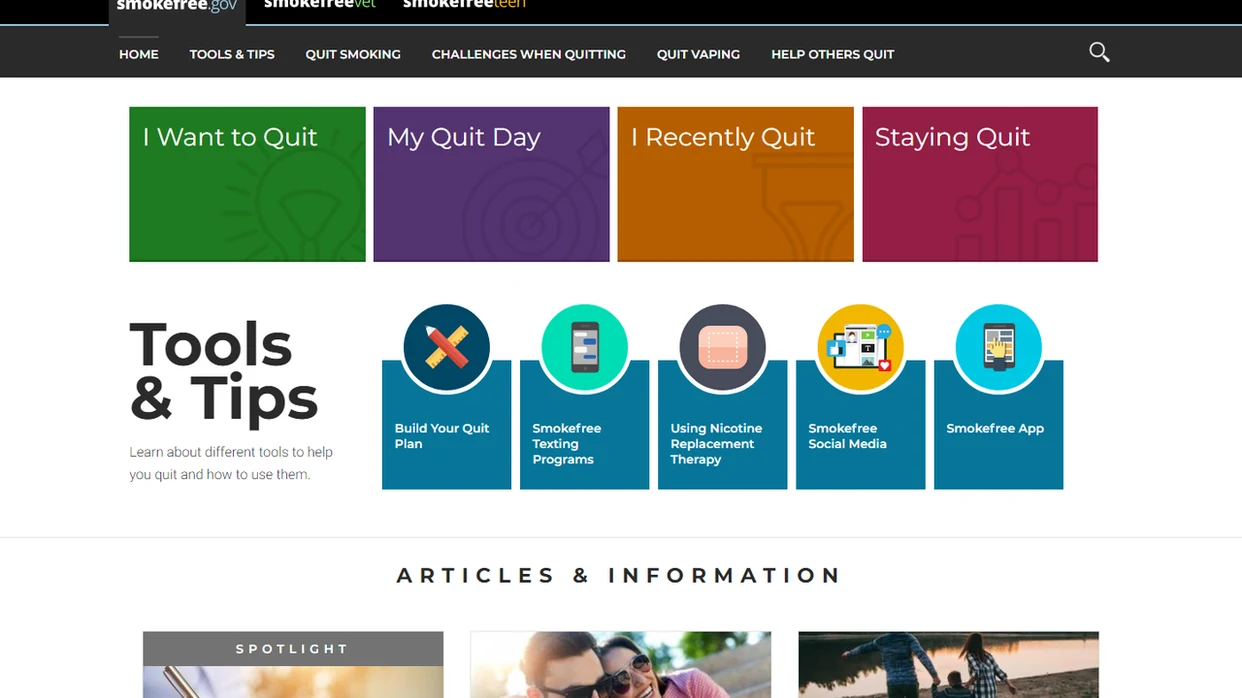
Popularity is not the same as proof. Some apps have large communities, like BecomeAnEX or Smokefree.gov programs, but every option should still be judged by evidence-based features and fit.
How We Review Quit Smoking Apps
Every recommendation on this site comes from the same five-step editorial review, not from paid placement.
- Feature audit against evidence-based criteria. We check each app for the five effectiveness traits above (behavioral tools, personalization, trigger logs, honest relapse handling, transparent limits).
- Hands-on use. Reviewers run the app through a full quit cycle, including a deliberate slip-up entry, to see whether the relapse flow actually helps or just resets to zero.
- Privacy check. We read the privacy policy, look at the App Store data-handling section, and note whether smoking, health, or location data is shared with advertisers.
- Evidence cross-reference. Claims made in the app's marketing are cross-checked against CDC, NHS, Cochrane, and other public-health sources before we cite them.
- Reviewer credential. Each page is reviewed by a named editor with a stated cessation, behavior-change, or product-education background, and the byline shows who reviewed it and when.
We do not accept paid rankings, sponsored links, or affiliate commissions that change which app gets recommended first. If a recommendation changes, the dateModified field on the page changes too.
Limitations
MeQuit can support quitting, but it cannot remove nicotine withdrawal by itself. That matters when the first week brings irritability, poor sleep, scratchy throat, or a quick heartbeat before an urge passes.
- An app cannot stop withdrawal symptoms on its own.
- Not every quit smoking app has been tested in rigorous clinical studies.
- Badges, streaks, and counters do not replace treatment for heavy dependence.
- Some apps overpromise easy or craving-free quitting, which is not realistic.
- Effectiveness drops if users stop opening the app after the first few days.
- A smoking cessation app should not replace medical advice for severe withdrawal or dependence.
- Results vary widely; no app can guarantee that you will quit.
- Community tools may help some users, but they can also feel noisy or distracting.
The pocket check is real.
For heavy daily smokers, app support is often safer as one layer of a broader quit plan because nicotine dependence can need medical guidance, NRT, counseling, or medication.