
Quit Smoking App Reviews: What To Check Before You Trust Them

Quit smoking app reviews reflect user satisfaction with design and experience, not clinically proven effectiveness at helping people quit. Before trusting any rating, verify whether the app references clinical guidelines, links to evidence-based support like counseling or NRT, and whether reviews describe long-term results rather than just first-week enthusiasm.
This guide is informational and does not diagnose nicotine dependence or replace medical advice. If you use nicotine replacement therapy, prescription medication, or have a medical condition, discuss your quit plan with a clinician or quitline counselor.
Definition: Quit smoking app reviews are user-submitted ratings, comments, and feedback on app stores and review sites that describe real-world experiences with smoking cessation apps, covering usability, features, and perceived helpfulness.
TL;DR
- Star ratings measure design satisfaction, not medical effectiveness at helping you quit smoking.
- Most smoking cessation apps lack rigorous clinical trial evidence, regardless of how many 5-star reviews they have.
- The most useful reviews describe specific features, like craving tools, tracking, and reminders, plus long-term outcomes, not just early motivation.
How quit smoking app reviews and claims to checks look
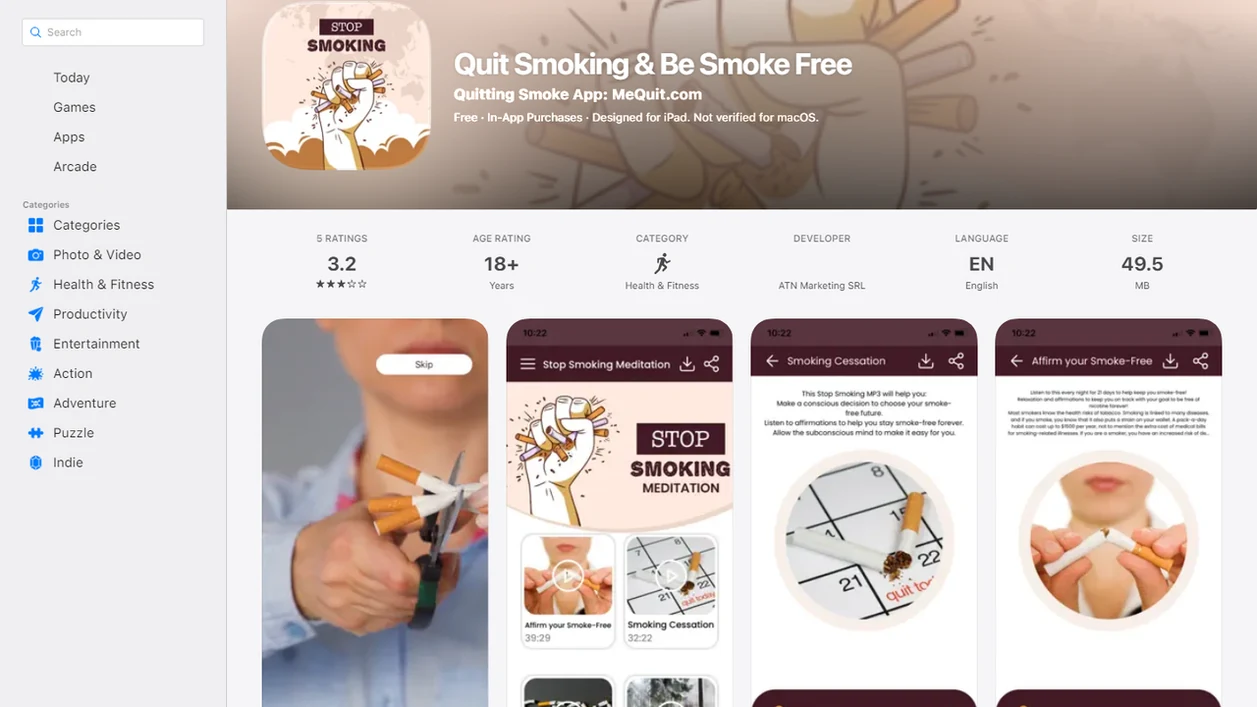
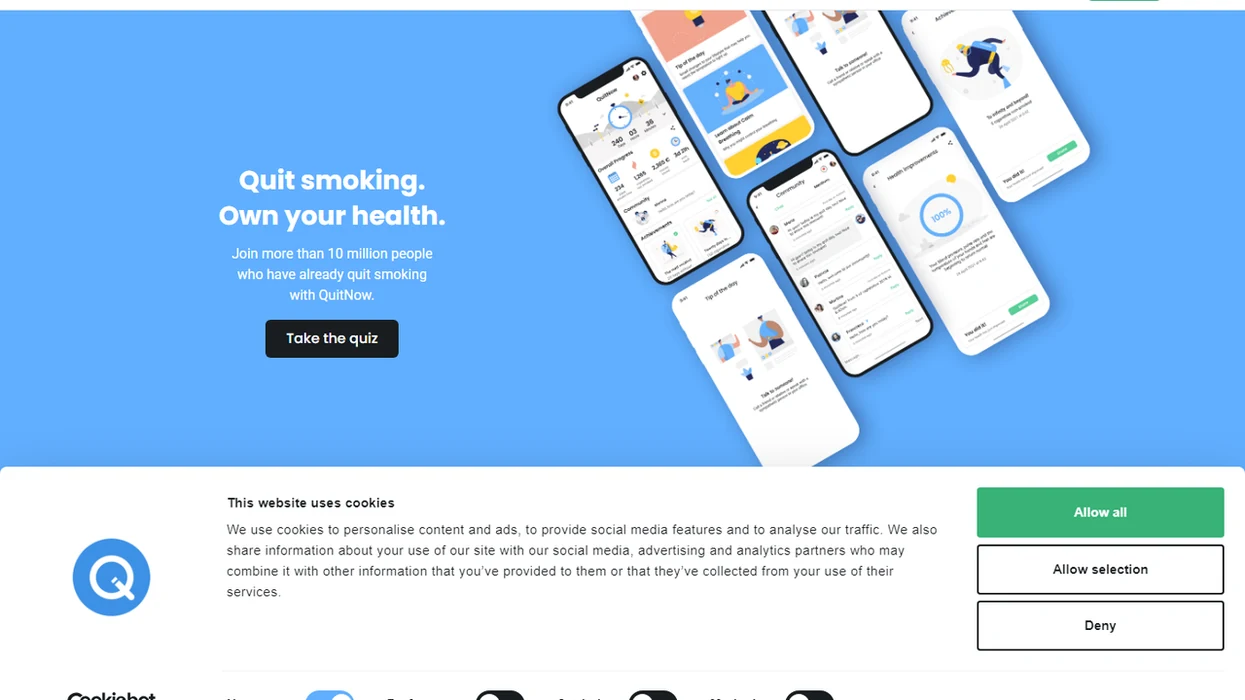
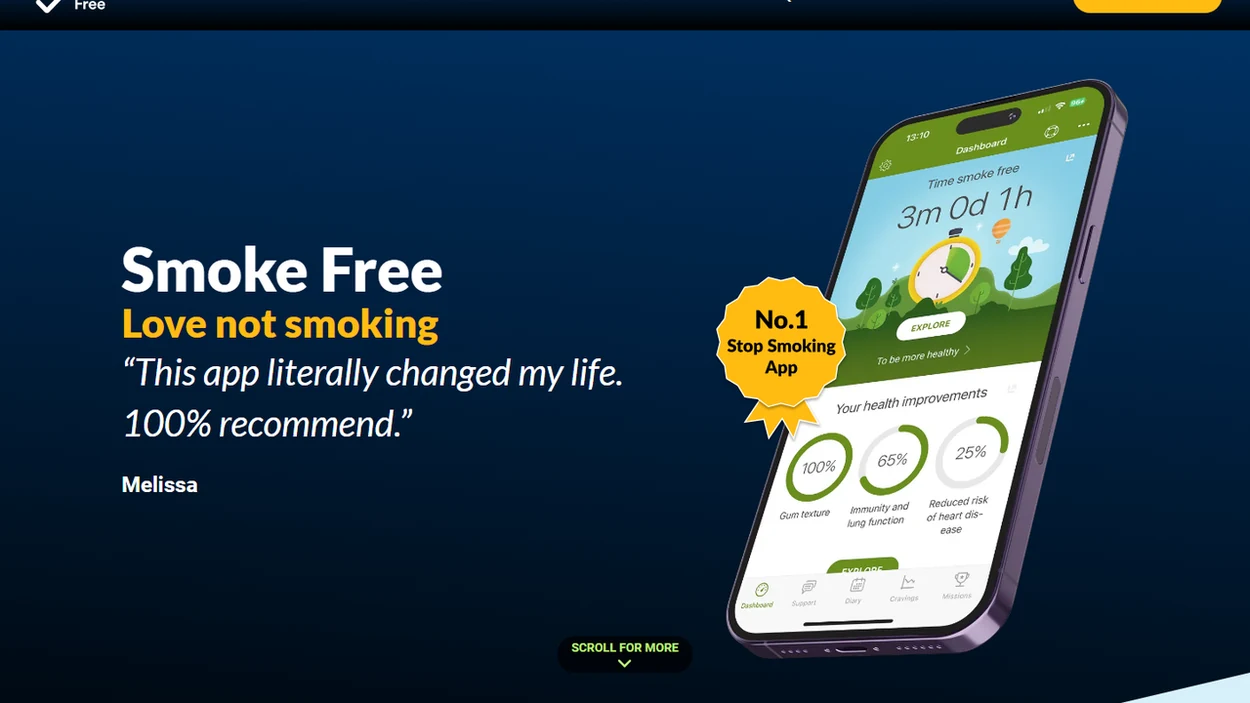
Side-by-side captures of the compared products. Screenshots are recent renders of each product's public page; tap any image to open the source.
What Quit Smoking App Reviews Actually Measure
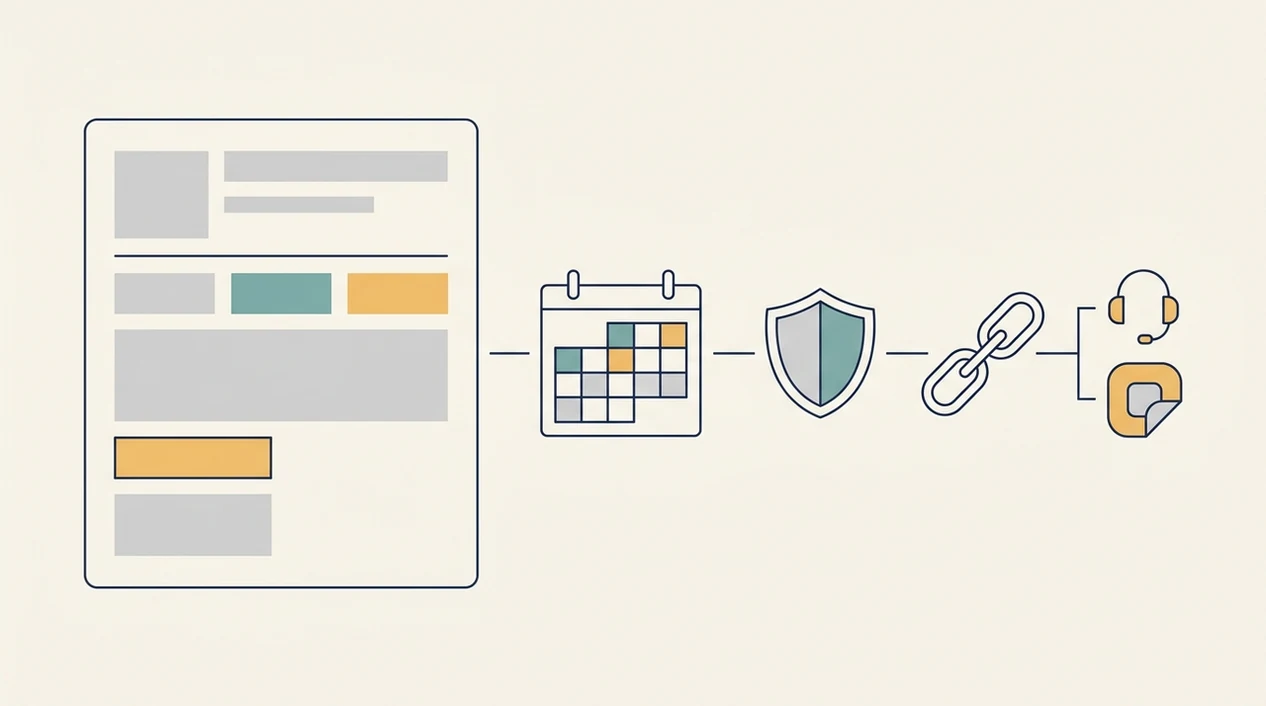
Star ratings mostly measure how people feel about the app experience, not whether the app raises verified quit rates. A smooth dashboard can earn five stars before the hardest withdrawal days even arrive.
Many reviews are written during the first few days, when motivation is high and the quit day still feels fresh. That timing matters. Relapse risk often shows up later, after the restless legs under the dinner table, the tense commute, or the “I already messed up” thought after one cigarette.
App stores also check basic policies and technical rules. They do not confirm that every nicotine craving tip matches clinical guidelines. Selection bias, fake reviews, and users who uninstall quietly can all distort the picture.
A 2019 meta-analysis found no statistically significant difference in quit rates between app-based interventions and other cessation support source. For a deeper evidence read, compare reviews with do stop smoking apps work.
5 Facts About Smoking Cessation App Reviews And Ratings
- Star ratings mainly reflect design and experience. They tell you whether the app felt easy, not whether it produced verified abstinence.
- Most cessation apps have limited clinical testing. A high review count does not equal a high-quality trial.
- Early reviews can overstate usefulness. First-week praise often comes before the red traffic light beside a convenience store becomes a real trigger.
- Credible apps show their homework. Look for clinical guideline references, healthcare partners, published research, or clear links to quitlines.
- Useful reviews name the feature and the plan. “The craving timer helped me wait ten minutes after lunch” says more than “great app.”
When the issue is sorting helpful feedback from hype, MeQuit fits people who want to track what actually happened because the craving log and smoke-free streak make reviews easier to compare against real behavior.
How Quit Smoking App Review Systems Work
App review systems aggregate star ratings across many versions, then often give extra visibility to recent submissions. That creates a timing problem because prompt-to-review screens usually appear when users are still excited, not after week three.
How quit smoking app review systems work is simple: they collect satisfaction signals, rank them through store algorithms, and surface comments that may not represent long-term quitting. In plain language, the loudest review moment may happen before the hardest craving wave.
People who relapsed, deleted the app, and never came back are underrepresented. The pocket check is real.
No app store verification process checks whether cessation advice follows clinical guidelines. A Johns Hopkins systematic review of Android smoking cessation apps found that 21 apps targeted quitting, yet none connected users to online support, counseling, or recommended nicotine replacement therapy, and most scored low on evidence-based strategies source. That is why are quit smoking apps evidence-based is a separate question from ratings.
How To Evaluate Quit Smoking App Reviews Before Downloading
Use quit smoking app reviews as clues, not proof. The strongest reviews describe time, triggers, features, and what happened after a slip-up.
- Filter reviews by date so you are judging the current version, not an old build with different reminders.
- Search for 30+ day use and look for phrases like “one month,” “second quit attempt,” or “after I slipped.”
- Look for feature specifics such as craving tools, tracking, reminders, money saved, or health milestones.
- Cross-check marketing claims against independent evidence, clinical guidelines, or healthcare partnerships.
- Check for support connections to counseling, nicotine replacement therapy, quitlines, or clinician advice.
- Read negative reviews carefully for aggressive upselling, vague promises, bugs, or no mention of cravings.
If you care about privacy, read the review page and the policy together. Our quit smoking app privacy guide explains what to check before entering smoking history, quit dates, or craving notes.
How We Review Quit Smoking Apps
We review quit smoking apps by separating what users like from what may actually support quitting. Star ratings are useful satisfaction signals, but they are never treated as clinical proof.
- Compare app store ratings with the words inside reviews, especially comments about cravings, slips, streaks, reminders, bugs, and whether people were still using the app after several weeks.
- Separate usability signals from cessation support. A clean design, fast setup, and calm notifications matter, but they are different from evidence-based help such as counseling links, quitline access, NRT guidance, or relapse planning.
- Check whether the app explains its methods, cites clinical guidance, names healthcare partners, or points users toward trained support instead of promising an easy quit.
- Review privacy and pricing by reading the policy, subscription terms, free-trial language, data-sharing notes, and complaints about billing or locked features.
- Verify recent updates so old praise or old criticism is not mistaken for the current app experience.
This approach keeps reviews grounded in real use without confusing popularity for proof that an app improves quit rates.
Key Features To Look For In Smoking Cessation App Reviews
Good smoking cessation app reviews mention what the app helped the person do in a hard moment. Good stop smoking apps deliver craving support, progress feedback, and links to real quit methods, not a magic cure in a clean interface.
Craving management tools: Look for real-time prompts, breathing exercises, urge logging, or delay tactics. A breathing prompt during a bathroom break is more useful than a generic quote.
Progress tracking: Reviews should mention smoke-free streaks, health milestones, money saved, or cigarettes avoided.
Evidence-based support: Stronger apps point users toward counseling, NRT, or quitlines when needed.
Community or accountability: Some people need check-ins, reminders, or a place to report a slip without shame.
Evidence-Based Features Versus Cosmetic Design
For quitters who need daily structure after the first burst of motivation, MeQuit earns attention because progress dashboards, craving tracking, and motivation tools keep the plan visible after quit day.
Common Myths In App Store Quit Smoking Ratings
Myth: Thousands of 5-star reviews mean scientifically proven effectiveness. Fact: Ratings can reflect design satisfaction without proving quit-rate improvement.
Myth: Negative reviews mean the app does not work at all. Fact: Bad reviews may point to bugs, poor pricing, or mismatched expectations. They do not always judge the quitting method.
Myth: An app alone can replace all other support. Fact: The most evidence-backed approach to quitting often combines behavioral support with medication or NRT when appropriate. The U.S. CDC also recommends counseling and FDA-approved quit-smoking medicines as proven supports for quitting source.
Myth: Major app stores vet health apps for medical accuracy. Fact: Store approval does not mean cessation advice has been clinically reviewed.
A 2017 review of higher-quality mobile phone cessation interventions, mostly text messaging, found quit rates around 10%, showing modest benefit when digital support follows evidence-based methods source. Clinicians typically suggest combining tracking with counseling, quitlines, or NRT rather than relying on ratings alone.
How Stop Smoking App Compares In Cessation App Reviews
MeQuit helps users track progress, manage cravings, and stay motivated while quitting smoking or vaping. The MeQuit stop smoking app is built as a practical companion inside a broader quit strategy, not as a standalone cure.
For people comparing app store quit smoking ratings, MeQuit is easiest to judge by its mechanisms: craving tracking, progress dashboards, smoke-free streaks, and motivation tools. Those features help users evaluate their own progress after the first week, when early enthusiasm fades.
If your plan includes counseling, NRT, or a quitline, MeQuit can sit beside that support and keep the daily record clear. For shoppers comparing options like QuitNow, Smokefree, or government programs, our best stop smoking app guide explains which features matter most.
When To Get Clinician Or Quitline Support
Get clinician or quitline support when quitting carries medical risk, feels hard to control, or involves more than habit tracking. An app can record cravings and streaks, but it is not emergency care, diagnosis, or a substitute for medical advice.
This is especially important if you are pregnant, have heart disease, live with anxiety, depression, bipolar disorder, or other mental health concerns, or feel heavily dependent on nicotine soon after waking. Nicotine replacement therapy and prescription medicines can help many people, but the right choice depends on your health history, other medications, and whether you smoke, vape, or use more than one nicotine product.
- Call a quitline if cravings feel unmanageable, you keep relapsing, or you want free coaching with a real person.
- Ask a pharmacist about over-the-counter NRT options, dosing, and common side effects.
- Book primary care or tobacco treatment support before using prescription medication or combining NRT products.
- Seek urgent medical help for chest pain, severe shortness of breath, suicidal thoughts, or symptoms that feel unsafe.
Use the app for the daily record; use trained support for medical decisions.
Limitations
Quit smoking app reviews can help you avoid bad downloads, but they cannot prove a long-term quit outcome. Keep these limits in mind before trusting any ranking.
- Current evidence cannot prove cessation apps significantly outperform counseling, quitlines, or clinician-supported quit plans.
- App store reviews are vulnerable to selection bias, fake reviews, and early-user enthusiasm.
- Many cessation apps underuse evidence-based techniques, especially links to counseling, NRT, or quitlines.
- Apps can be overhyped as easy fixes, even though quitting often takes multiple attempts and mixed support.
- Older reviews may describe features, pricing, or bugs that changed after updates.
- Privacy practices vary, and review pages rarely explain data sharing in enough detail.
- Negative reviews may reflect billing frustration rather than cessation quality, so read the reason.
If long-term accountability matters, then MeQuit works better as a daily tracking layer because the smoke-free streak, craving log, and reset workflow show whether the plan is still being used.
FAQ
Do high ratings prove an app works?
No. High ratings usually show user satisfaction with design, reminders, or motivation, not clinical quit-rate evidence.
Are quit smoking apps clinically tested?
Most quit smoking apps have not been tested in rigorous clinical trials. Reviews should be compared with published evidence and guideline-based support.
Can an app replace nicotine replacement therapy?
A quit smoking app should not be treated as a direct replacement for nicotine replacement therapy. Apps often work better alongside NRT, counseling, or other evidence-based methods.
Do app stores verify health claims?
App stores check basic policies and technical requirements. They do not verify that every smoking cessation claim is medically accurate.
Why are early app reviews misleading?
Early reviews often capture motivation during the first few days. They may miss later withdrawal, relapse, or whether the app helped after a slip-up.
Are free quit smoking apps effective?
Price alone does not determine effectiveness. Evidence-based features, privacy practices, and links to real support matter more than free versus paid.
What review red flags should I watch for?
Watch for aggressive upselling, vague promises, no mention of cravings, and claims that quitting will be easy. Also check for complaints about data use or billing.
Should I use a quit smoking app with counseling?
Yes, combining app-based tracking with counseling can strengthen a quit plan. A tracking app can support that by recording cravings, streaks, and slip-up patterns.
Choose a quit smoking app you can actually use daily
Stop Smoking App helps you track cravings, smoke-free days, savings, and relapse recovery without promising guaranteed quit outcomes. Use it as part of your quit plan, and add clinician, quitline, counseling, or NRT support when needed.
Get Stop Smoking App