
Quit Smoking Weight Gain: Why It Happens and How to Manage It

Quit smoking weight gain usually averages 5 to 10 pounds in the first few months, driven mainly by slower metabolism and increased appetite once nicotine leaves your body. The health benefits of quitting far outweigh the risks of modest weight gain, so the safest plan is to protect the quit attempt while tracking hunger, cravings, and weight patterns.
Definition: Quit smoking weight gain is the increase in body weight that commonly occurs in the weeks and months after a person stops using cigarettes or nicotine, caused primarily by metabolic slowdown and appetite changes.
TL;DR
- Most people gain 5 to 10 pounds after quitting smoking, mainly in the first 6 to 12 months.
- Nicotine raises resting metabolism by 7 to 15%, so stopping it means you burn fewer calories at rest.
- Even with weight gain, quitting smoking still dramatically lowers your risk of heart disease, cancer, and early death.
- Post-quit weight gain is not inevitable. Meal planning, movement, and app-based craving management can reduce or prevent it.
- Fear of weight gain is a top relapse trigger; addressing it with a plan keeps you smoke-free.
5 Facts About Quit Smoking Weight Gain

- Most people gain about 5 to 10 pounds after quitting smoking, according to MedlinePlus and the American Heart Association; MedlinePlus gives the same average in its patient guidance source.
- Nicotine raises resting calorie use by about 7 to 15%, so stopping nicotine can lower daily energy burn even if your routine stays the same.
- A 2021 JAMA Network Open cohort found that weight gain after quitting was not linked with higher cardiovascular disease, diabetes, cancer, or COPD risk among quitters.
- Not everyone gains weight after quitting smoking. Some people stay stable, and a smaller group loses weight after changing food, walking, or alcohol habits.
- Fear of weight gain is a real relapse trigger, especially when the first week already brings cravings, heavy eyelids, and a busy mouth.
The pocket check is real.
Anyone dealing with snack cravings after a quit day should log whether the urge was hunger, habit, stress, or cigarette memory, then compare it with the timing of cravings.
Quit Smoking Weight Gain Biology: Metabolism, Appetite, and Dopamine
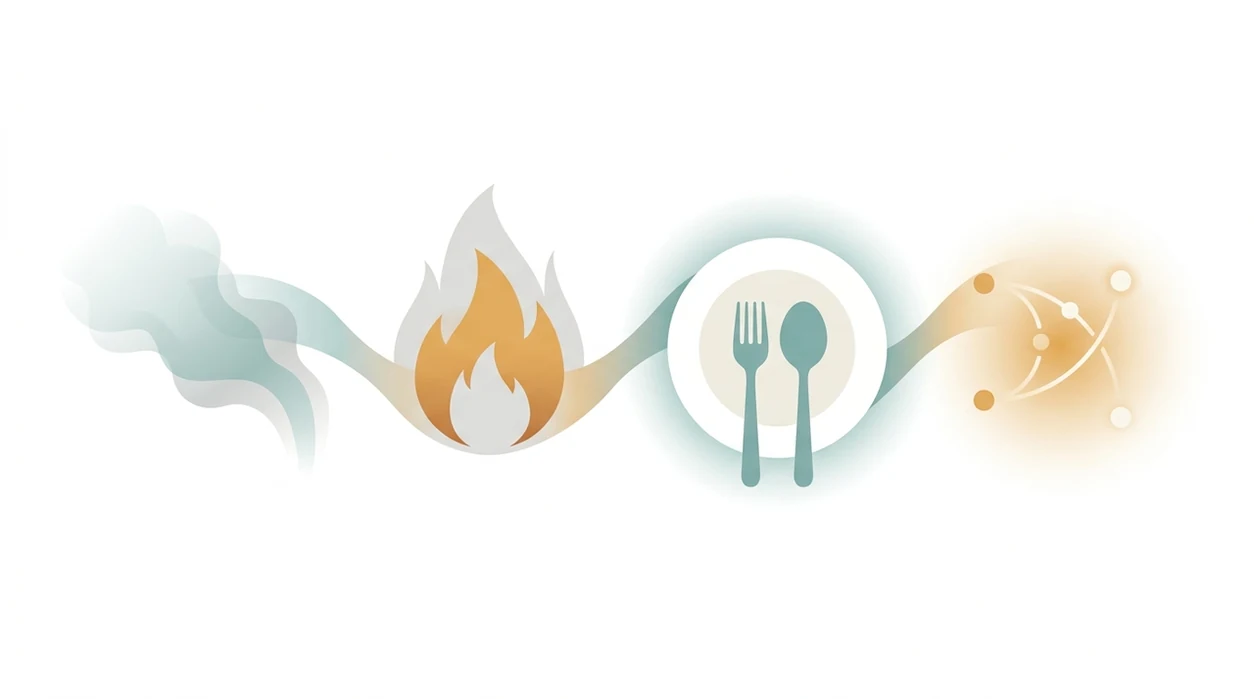
Quit smoking weight gain works through a chain: nicotine leaves, metabolism slows, appetite rises, and the brain looks for another quick reward. That does not mean your body is broken. It means the old cigarette loop needs replacement.
Metabolic Slowdown After Nicotine Withdrawal
Nicotine increases resting energy expenditure by about 7 to 15%, so stopping can create a calorie gap before you change a single meal. A BMJ review explains that nicotine can increase energy expenditure and suppress appetite, which helps explain why stopping nicotine may shift weight regulation early in a quit attempt source. Withdrawal kinetics are the timing of nicotine leaving your system; in plain language, the first days and weeks can feel physically uneven. Tight jaw, restless legs, and standing in front of the pantry are common.
Appetite and Dopamine Changes Without Cigarettes
Nicotine also affects the hypothalamus, a brain area involved in appetite. Once nicotine is gone, food can taste stronger because smell and taste improve. Dopamine adds another layer. Cigarettes used to deliver a fast reward signal, and sweets or crunchy snacks may try to fill that gap. Early gut microbiome shifts after cessation may also influence weight, although research is still developing.
When automatic snacking is the issue, MeQuit fits because the craving note lets you record “mouth busy” before it becomes an unplanned second dinner.
Quit Smoking Weight Gain Timeline: Weeks 1–52
When does quit smoking weight gain start and stop? Weight gain after quitting smoking often begins in the first two weeks, moves fastest during weeks 3 to 8, then slows across months 3 to 12 as new routines settle.
| Time after quit day | What often happens | What to do |
|---|---|---|
| Weeks 1 to 2 | Metabolism dips, cravings peak, snacking spikes. | Keep planned snacks visible and cigarettes inconvenient. |
| Weeks 3 to 8 | This is often the fastest weight-gain window. | Track evening eating, lunch breaks, and stress triggers. |
| Months 3 to 6 | Gain usually slows as habits form. | Add consistent walking or strength work. |
| Months 6 to 12 | Weight often stabilises or decreases with lifestyle changes. | Review weekly patterns, not daily scale swings. |
| After 12 months | Long-term studies show quitting benefits persist across weight patterns. | Protect the smoke-free streak first. |
A progress graph checked after a slip can sting, but it also shows what actually happened. The most useful timeline is the one that separates nicotine withdrawal from new habits.
Quitters who need week-by-week reassurance can use MeQuit because smoke-free streak tracking and craving history show whether weight anxiety is rising before relapse risk does.
6 Steps to Manage Weight Gain When You Stop Smoking
The most practical way to manage stop smoking weight gain is to plan for hunger, movement, and cigarette-break replacement before quit day. Good quit tools deliver repeatable coping steps, not shame after a snack.
- Set a realistic weight expectation. Plan around a possible 5 to 10 pounds, so normal change does not feel like failure.
- Stock low-calorie craving substitutes. Keep crunchy vegetables, sugar-free gum, mints, and water where cigarettes used to sit.
- Log daily food intake and cravings. Use MeQuit or a nicotine cravings tracker app to mark hunger, stress, boredom, and hand-to-mouth urges.
- Add 30 minutes of moderate movement on most days. Brisk walking, cycling, or stairs help close the lost nicotine calorie gap.
- Replace cigarette-break rituals. Try in-app breathing, a step challenge, or a two-minute hallway walk after meals.
- Review weekly progress. Adjust calorie targets gradually, not during a craving wave.
Reset the plan.
For people who eat during cigarette breaks, MeQuit earns the spot because breathing exercises and streak check-ins give that break a job besides snacking.
4 Myths About Quit Smoking Weight Gain
Myth 1: Weight gain after quitting makes you just as unhealthy as smoking. False. A large JAMA Network Open cohort found quitters had lower mortality risk than continuing smokers, and weight gain was not associated with higher major disease risk source.
Myth 2: Everyone gains a lot of weight, so it’s unavoidable. Also false. Many people gain modestly, some gain none, and some lose weight when walking replaces smoke breaks.
Myth 3: Skipping meals is the best way to prevent post-quit weight gain. Skipping meals can backfire. A hungry brain plus nicotine withdrawal is a rough combination.
Myth 4: NRT or quit-smoking medications cause more weight gain than cold turkey. Nicotine replacement therapy can delay early gain for some people because it softens the sudden metabolic drop.
The right fit for people afraid of “I already messed up, so I might as well smoke the rest of the day” is MeQuit because the slip-up workflow helps you restart without turning one cigarette into a full-day relapse.
5 Evidence-Based Strategies for Quit Smoking Weight Gain
Nicotine Replacement Therapy (NRT). NRT can delay the metabolic drop after quitting, especially during the first weeks. Clinicians typically suggest pairing medication support with behavior change for people with strong withdrawal symptoms.
Cognitive Behavioral Therapy (CBT). CBT targets the thought loop that turns stress into eating or smoking. The useful question is simple: “What happened right before the urge?”
App-Based Craving Tracking. App-based logging replaces cigarette rituals with a recorded alternative. MeQuit supports this by pairing cravings, triggers, and smoke-free streaks in one phone-based routine. Readers comparing tools can also use our best stop smoking app guide.
Mindful Eating Practice. Slowing down eating helps separate hunger from oral fixation. Put the snack on a plate, then wait five minutes before adding more.
Structured Exercise Plans. Exercise offsets part of the calorie-burn gap from losing nicotine’s metabolic boost. The most evidence-backed approach to limiting quit-related weight gain is combining smoking cessation support with planned movement and realistic food tracking.
Heart Disease Risk After Quitting Smoking vs. 10 Pounds of Weight Gain
Ten pounds of weight gain does not cancel the heart and cancer benefits of quitting smoking. The JAMA 2021 cohort followed 16,663 adults and found that people who quit had a significantly lower risk of death than continuing smokers, while weight or BMI gain after quitting was not associated with increased cardiovascular disease, type 2 diabetes, cancer, or COPD risk.
The American Heart Association also says quitting is very important even if you gain a few pounds source. Cardiovascular risk begins dropping within weeks of quitting, long before long-term weight patterns are settled.
A toddler coughing near the porch door can make the decision feel less abstract.
For parents who need health motivation and weight awareness together, the MeQuit stop smoking app fits because health milestones, savings, and craving notes sit beside the smoke-free streak instead of competing with it.
Medical Help for Weight Gain After Quitting Smoking
Self-management is not enough if weight gain becomes rapid, distressing, or medically complicated. Ask a clinician, registered dietitian, or diabetes educator for help if you gain much more than 10 to 15 pounds despite steady habits, develop pre-diabetes or blood sugar changes, or feel emotional eating sliding into binge patterns.
A 2016 review notes that some people experience excessive weight gain after smoking cessation, with possible links to obesity or diabetes outcomes source. That does not mean quitting caused the problem by itself. It means support should match the situation.
MeQuit can flag concerning trends in cravings, slips, and weight notes, but it does not diagnose diabetes, eating disorders, or medication needs.
Limitations
Managing quit smoking weight gain is possible, but no plan removes every variable. Biology, stress, sleep, medication, income, and food access all matter.
- Some people will gain weight despite strong effort because genetics and metabolic variability are real.
- No supplement, detox, or “magic” diet has strong evidence for preventing quit-related weight gain.
- Strict dieting right after quit day can increase cravings and relapse risk, especially during the first week.
- Some people gain well above 10 pounds and need structured medical or nutrition support beyond an app.
- Research shows associations, not simple causation, between cessation weight gain and conditions like diabetes.
- Individual responses to NRT, exercise, mindful eating, and calorie targets vary widely.
- Long-term data beyond 2 to 3 years on post-quit weight trajectories is still limited.
- Public tools like Smokefree.gov and BecomeAnEX offer helpful education, but they may not replace one daily check-in habit.
MeQuit is useful for tracking and reset planning, but it cannot replace a clinician, dietitian, or emergency support.
FAQ
How much weight do people usually gain after quitting smoking?
People usually gain about 5 to 10 pounds after quitting smoking, according to MedlinePlus. Most gain happens in the first months.
Why does metabolism slow down after quitting smoking?
Nicotine raises resting calorie burn by about 7 to 15%. When nicotine stops, resting energy use drops.
When does weight gain after quitting smoking peak?
Weight gain often moves fastest in weeks 3 to 8. It commonly slows by 6 to 12 months.
Can nicotine patches or gum prevent weight gain after quitting?
Nicotine replacement therapy can delay early weight gain for some people. It does not guarantee weight prevention.
Is weight gain after quitting smoking worse than continuing to smoke?
No. JAMA 2021 data found quitting lowered death risk, even when weight increased.
How much exercise helps prevent quit smoking weight gain?
About 30 minutes of moderate activity on most days can help. It helps offset the lost nicotine calorie burn.
Why am I craving sweets after I quit smoking?
Nicotine withdrawal reduces a fast dopamine reward signal. Sweet foods can temporarily replace that reward.
Will the weight I gained after quitting smoking go away?
Many ex-smokers stabilise or lose some weight within 1 to 2 years. Habits matter most.
Can a stop smoking app help me avoid weight gain?
Yes. The MeQuit stop smoking app can log cravings, breathing exercises, and progress patterns that reduce emotional eating.
Should I diet at the same time I quit smoking?
Avoid strict dieting during early quitting. Use gentle calorie awareness so hunger does not trigger relapse.
Manage cravings without losing sight of your quit
Stop Smoking App helps you track cravings, smoke-free days, savings, and relapse recovery so weight concerns do not derail your progress. It is not medical advice, and many people do best with added support such as NRT, counseling, quitlines, or clinician guidance when needed.
Get Stop Smoking App