
Smoking And Depression: Why Quitting Often Improves Mood Long Term

Quick answer: Smoking and depression reinforce each other through brain chemistry, withdrawal, stress, and learned coping habits. Nicotine can feel like it helps for a few minutes, but the relief fades quickly and often leaves the next craving wave stronger. Most people who quit see mood, anxiety, and stress improve within three to six months, especially with clinical support and practical quit tools.
> Definition: Smoking and depression describes the bidirectional relationship in which regular cigarette use increases the risk of depressive disorders while depression simultaneously increases the likelihood of smoking initiation and relapse.
TL;DR
- Smokers have roughly 62% higher risk of developing depression than non-smokers, according to a 2017 meta-analysis source.
- Nicotine withdrawal can mimic worsening depression, causing many quitters to relapse unnecessarily.
- After withdrawal settles, quitting smoking is linked with mood improvement comparable to antidepressant medication.
- A tailored quit plan works better when it combines clinical support, craving tracking, and daily behavior support.
- Stop smoking apps are helpful tools, not replacements for professional mental health care.
At A Glance: 5 Facts About Smoking And Depression
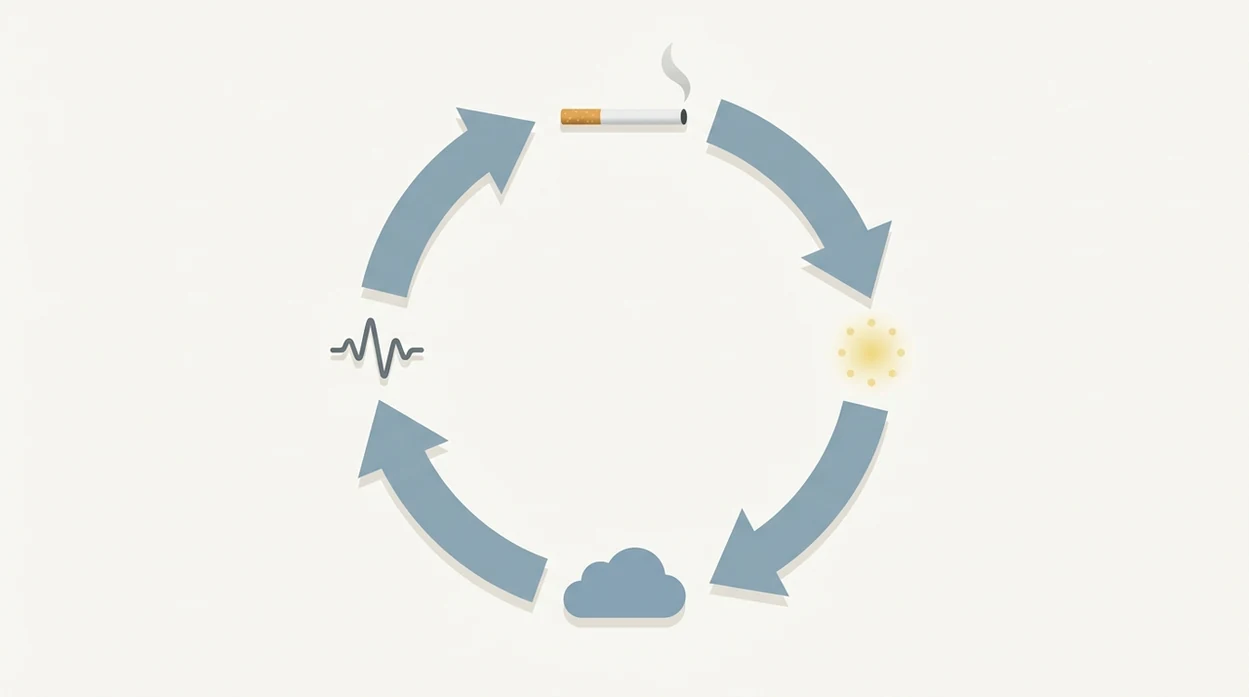
- Smoking and depression run both ways. Smoking raises the risk of depression, and depression raises the risk of starting, continuing, or returning to smoking.
- Nicotine gives a short lift, not stable relief. That quick dopamine bump can make a cigarette feel useful, but the next dip often arrives before the ash is cold.
- Smokers have about 62% higher depression risk. A 2017 meta-analysis found higher odds of later depression among smokers compared with non-smokers source.
- Quitting is linked with better mood. A BMJ meta-analysis found reductions in depression, anxiety, and stress among people who quit compared with those who kept smoking source.
- Support matters more than willpower. Clinicians typically recommend pairing a quit plan with counseling, medication when appropriate, and tools that track cravings, mood, and slip-ups.
One urge at a time.
How The Smoking And Depression Cycle Works
Smoking and depression can form a loop because nicotine changes mood fast, then withdrawal pulls mood back down. The brain learns, “cigarette equals relief,” even when the relief is mostly withdrawal ending.
Nicotine's Short-Lived Mood Lift
Nicotine stimulates dopamine release, which can briefly ease low mood or numb stress. Over time, regular smoking affects dopamine and serotonin pathways involved in mood regulation. It may also increase systemic inflammation, which researchers link with depressive symptoms. The CDC reports that adults with mental health conditions smoke at higher rates and account for a disproportionate share of cigarette use in the US.
Withdrawal Symptoms That Mimic Depression
As nicotine clears, many people feel irritable, flat, anxious, or restless. Tight shoulders, a busy mouth, and needing something to do with your hands can all show up before the thought “I need a cigarette.” Good stop smoking apps deliver craving and mood tracking, not therapy or emergency mental health care.
Does Smoking Cause Depression? What The Evidence Shows
Does smoking cause depression? The safest answer is that smoking appears to increase depression risk, but most researchers now favor a bidirectional model rather than one-way causation.
Longitudinal studies show smokers have about 62% higher risk of developing depression than non-smokers. Older National Comorbidity Survey data found major depression in 11.3% of current smokers versus 5.8% of never-smokers. Per the CDC, adults with mental illness or substance use disorders consume about 40% of all cigarettes smoked by US adults.
Still, causality is messy. Stress, trauma, alcohol use, poverty, medication changes, and social environment can all affect both smoking and depression. For people with low mood, a cigarette beside a red traffic light near a convenience store can feel like a coping tool. It is also nicotine dependence doing its job.
4 Myths About Smoking And Depression Debunked
Smoking and depression myths keep many people stuck, especially during the first week. The problem is not weakness. It is a learned habit loop plus nicotine withdrawal.
| Myth | What the evidence suggests |
|---|---|
| “Smoking helps my depression, so quitting will worsen it.” | Mood may dip during withdrawal, but depression and anxiety usually improve after quitting. |
| “Depression is the only reason I smoke.” | Low mood is a trigger, but nicotine dependence, routines, and cue-based habits also drive smoking. |
| “You shouldn’t quit if you’re depressed.” | With support, quitting is linked with reduced depressive symptoms over time. |
| “NRT or vaping is just as bad for mental health as smoking.” | Nicotine replacement therapy is generally considered much less harmful than smoking because it provides nicotine without tobacco smoke; evidence on vaping and long-term mental health is less settled. |
If your first thought after a slip-up is, “I already messed up, so I might as well smoke the rest of the day,” reset the plan instead.
Quit Smoking Depression Timeline: Why Mood Dips Before It Improves
Quit smoking depression often feels worse before it improves because withdrawal peaks early. Irritability, low mood, poor sleep, and anxiety are common in the first 1 to 3 weeks.
For some people, the hardest moment is not a dramatic craving; it is the quiet 9 p.m. gap when your hands feel empty and the old cigarette break used to mark the end of the day.
| Time after quitting | What may happen | What to do |
|---|---|---|
| Days 1 to 3 | Strong cravings, low patience, sleep disruption | Use NRT if prescribed, remove cigarettes, log triggers |
| Week 1 to 3 | Mood dips may peak | Treat symptoms as withdrawal, not proof you failed |
| Month 1 to 3 | Cravings become less constant | Review patterns and adjust support |
| Month 3 to 6 | Mood often improves | Keep relapse prevention active |
The most common medically supported way to reduce early quit distress is medication or nicotine replacement combined with behavioral support. The BMJ 2014 review found quitters had lower depression, anxiety, and stress than continuing smokers, and 2023 data found each extra year of cessation reduced depression risk by about 2%.
How To Use Stop Smoking App To Manage Depression And Cravings
A stop smoking app works best when you use it as a daily record of what actually happened, not as a scoreboard. Tools like MeQuit can help you notice patterns between mood, cravings, triggers, and slip-ups.
- Set a quit date and record your current mood baseline before the quit day.
- Log each craving with its trigger, such as sadness, boredom, lunch break, or sitting in traffic.
- Use mood logging daily so your clinician can review patterns instead of relying on memory.
- Follow craving prompts such as breathing, delay, movement, water, or text support.
- Share progress data with your healthcare provider to adjust medication, counseling, or nicotine replacement.
For people with depression, a nicotine cravings tracker app is often easier than memory-based tracking because mood and cravings blur together during the first week.
5 Evidence-Based Approaches For Quitting Smoking With Depression
Quitting with depression usually works better with layered support. One tool rarely covers the whole problem.
- Combination NRT. A nicotine patch plus gum, lozenge, or inhaler can steady withdrawal and make mood dips less sharp.
- Prescription medication. Varenicline and bupropion can reduce cravings; bupropion is also an antidepressant, so a prescriber should guide use.
- CBT or counseling. Therapy helps replace learned coping behaviors, like smoking after conflict or after-dinner dishes.
- Digital cessation tools. Apps such as MeQuit, Smokefree.gov tools, and QuitNow can support real-time craving and mood tracking.
- Combined care. Clinical support plus a behavioral tool usually works better than either one alone because both brain chemistry and routines need attention.
A best stop smoking app guide can help compare tracking, privacy, reminders, and relapse-reset features.
When To Seek Professional Help For Smoking And Depression
Seek professional help before quitting if your depression feels severe, unstable, or recently worse. A safer quit plan can reduce withdrawal swings and catch medication or mood changes early.
- Contact a clinician before your quit date if you have major sleep changes, panic, persistent hopelessness, recent medication changes, or a history of severe depression.
- Seek urgent support right away for thoughts of self-harm, feeling out of control, mania symptoms like not sleeping and feeling unusually energized, psychosis, or any crisis symptoms. Use local emergency services or a crisis line.
- Ask about treatment options such as nicotine replacement therapy, varenicline, bupropion, counseling, and whether any smoking-cessation medicine could interact with antidepressants or other prescriptions.
- Bring your logs from an app, notebook, or calendar showing mood, cravings, cigarettes, sleep, alcohol use, and slip-ups so your provider can adjust the plan with real evidence.
- Use apps as support for tracking and reminders only. They can show patterns, but they cannot diagnose depression, manage medication, or provide crisis care.
Limitations
Smoking and depression research is strong, but it does not predict every person’s quit experience. Your plan should fit your mental health history, medications, and current support.
- Most evidence is observational, so it cannot prove direct causation for every individual.
- Some people feel worse before they feel better, especially during the first 1 to 3 weeks.
- Stop smoking apps are useful tools, but they do not replace diagnosis, therapy, medication management, or emergency care.
- Research on e-cigarettes and long-term mental health outcomes is still evolving.
- Depression symptoms can vary by psychiatric condition, substance use, sleep, grief, and social stress.
- Medication changes should be handled by a clinician, not adjusted because an app score changed.
- If you have thoughts of self-harm, seek urgent help from local emergency services or a crisis line.
A stop vaping app may help track nicotine urges too, but vaping and smoking can have different cues.
FAQ
Does smoking increase depression risk?
Yes. A 2017 meta-analysis found smokers had about 62% higher risk of developing depression than non-smokers, though the relationship is bidirectional.
Does quitting smoking improve depression?
Yes, quitting smoking is associated with reductions in depression, anxiety, and stress compared with continuing to smoke. The BMJ 2014 meta-analysis found mental health improvements after cessation.
How long does quit-smoking depression last?
Withdrawal-related low mood often peaks in the first 1 to 3 weeks. Many people see clearer mood improvement by 3 to 6 months.
Can nicotine replacement worsen depression?
Nicotine replacement usually stabilizes nicotine levels and is not generally linked to worsening depression. Ask a clinician which form and dose fit your history.
Is bupropion safe for depressed smokers?
Bupropion is both an antidepressant and a smoking cessation medication. Safety depends on your medical history, so it should be prescribed and monitored.
Should I quit smoking if I'm depressed?
Yes, but it is wise to quit with clinical support. Evidence shows quitting is linked with lower depressive symptoms over time.
Why does smoking feel like it helps mood?
Nicotine briefly increases dopamine and relieves withdrawal discomfort. That creates the illusion that smoking treats depression.
Can a stop smoking app help with depression?
A tool like MeQuit can help track cravings, mood, triggers, and smoke-free streaks. It is not a replacement for therapy or medical care.
Does relapse after quitting cause depression?
A relapse can trigger guilt, shame, and a return to nicotine withdrawal cycles. Treat it as data, then reset the plan quickly.
Quit with more structure on hard mood days
Stop Smoking App helps you track cravings, smoke-free streaks, triggers, and progress while you build a quit plan. It is not medical advice or a medical device, and it works best alongside professional support when depression symptoms feel hard to manage.
Get Stop Smoking App