How To Track Cravings With Phone While Quitting Smoking
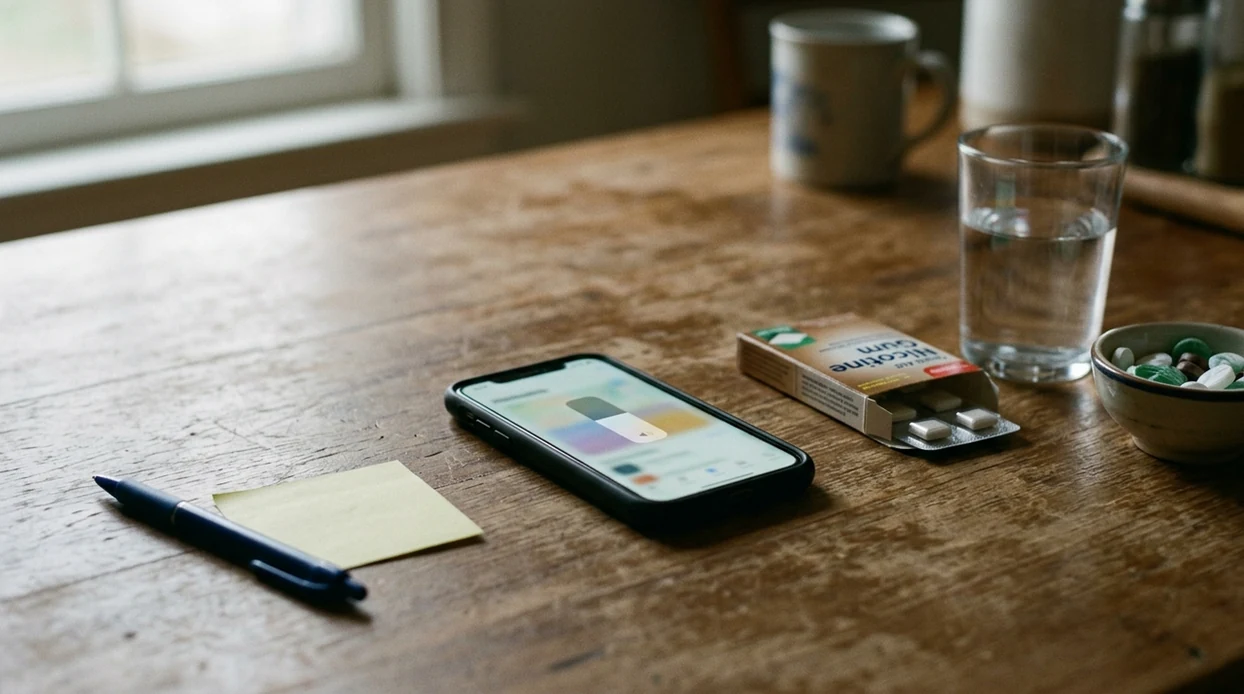
To track cravings with your phone, open any notes app or a dedicated stop smoking app and log the time, intensity, trigger, and what you did instead of smoking each time an urge hits. Reviewing these entries daily reveals patterns that help you plan around your weakest moments. This guide shows exactly how to track cravings with phone tools you already have, step by step.
A phone-based craving log is a brief, real-time record of each smoking or vaping urge, capturing time, intensity, trigger, and coping action on a smartphone so quitters can spot patterns and strengthen their quit plan.
- Log every craving in 10-20 seconds using a quick-entry template on your phone
- Record four fields each time: time, intensity (1-10), trigger, and what you did instead
- Review your craving log daily to spot trigger patterns and adjust your quit strategy
What a Phone-Based Craving Log Method Captures
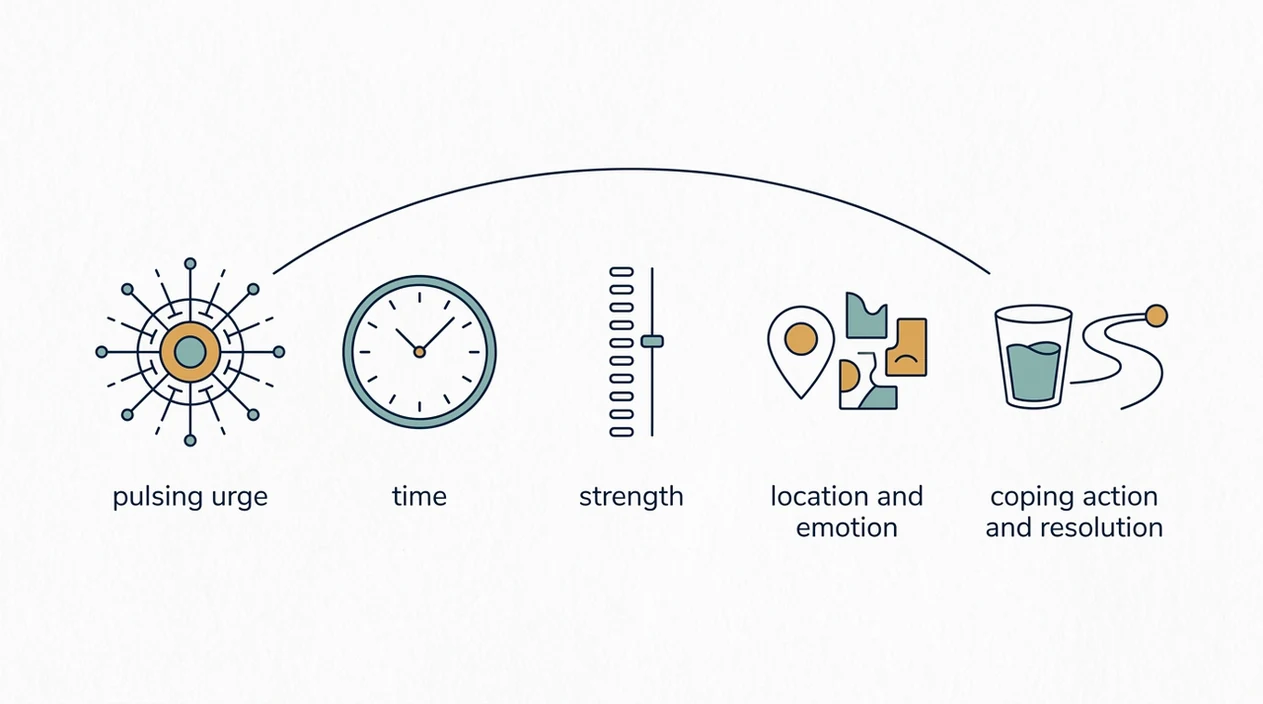
A craving log is a quick smartphone diary entry for one smoking or vaping urge. It is not a full mood journal; it is a cessation-specific record built to answer, “What set this off, and what helped me get through it?”
Use four fields every time:
| Field | What to write |
|---|---|
| Time | “7:40 a.m.” or “after lunch” |
| Intensity | Rate the urge from 1-10 |
| Trigger/context | Place, feeling, person, task, or routine |
| Coping action | What you did instead of smoking |
The last field is the one people skip. Don’t. “Walked around the block,” “chewed gum,” or “texted a friend after cravings” turns the log into a personal playbook. Later, when your jaw gets tight and your hands want something to do, you can repeat what already worked.
5 Facts About Tracking Cravings on Phone
- Log the craving when you first notice it, even if you only capture time and intensity. Waiting until bedtime turns real urges into guesses.
- Include the trigger and the coping action. That is what makes a craving log method useful for next time, not just accurate for today.
- Any free tool can work. Notes, calendar entries, reminders, checklists, or a nicotine cravings tracker app are all fine if you use them consistently.
- Review matters more than the app. A 90-second evening scan can show that most urges happen after dinner, during traffic, or before the first meeting.
- Phone tracking works best with evidence-based support. Clinicians typically recommend behavioral support, nicotine replacement therapy, prescription medication, or counseling when appropriate.
Good quit tools give you timing, patterns, and next actions, not a magic button that removes every urge.
How Phone-Based Craving Tracking Works
Phone-based craving tracking works because it captures the urge close to real time. Researchers call this ecological momentary assessment, or EMA. Plainly, it means you record what is happening while it is happening, instead of trying to remember it hours later.
Naming the urge also helps. Affect labeling means putting words on a feeling, such as “craving, 8/10, bored, car park.” That small label can reduce reactivity because you are observing the craving, not wrestling with it. Brain-imaging research on affect labeling has found that putting feelings into words can reduce limbic reactivity during emotional experiences source. Tight shoulders. Busy mouth. Name it first.
Over several days, the log starts showing clusters by time, place, mood, and routine. Behavioral support strategies can more than double long-term cessation odds compared with quitting without help, according to a review published through the National Institutes of Health source. Mobile cessation support has evidence too: a Cochrane review found that mobile phone-based stop-smoking interventions can increase quit rates, although effects vary by program design and user engagement source.
What You Need Before You Start Tracking Cravings
You need a smartphone, one place to log urges, and a rating scale chosen before your quit day. Keep it boring on purpose. If the setup takes ten taps, you probably won’t use it during a craving wave.
Start with one of these:
- A pinned note with four fields
- A voice memo folder named “Cravings”
- A checklist app
- A calendar entry shortcut
- A dedicated stop smoking app
You can add an iOS Shortcut or Android widget for one-tap logging. Tools like MeQuit, notes apps, and habit trackers can all work, but the template should stay under 20 seconds. Choose either 1-5 or 1-10 for intensity and stick with it. Switching scales makes your first week harder to read.
How To Track Cravings With Phone in 5 Steps
For most quitters, a short craving log is easier than a long journal because it fits inside the craving wave itself. Use the same five steps each day.
Step 1: Set Up a Quick-Log Template
Create a pinned note or app screen with four labels: time, intensity, trigger, and coping action. Put it where your thumb can reach it fast.
Step 2: Log the Craving Immediately
Open the template within seconds of noticing the urge. Add the time, intensity, trigger, and location or activity, even if you are pacing near the back door during a phone call.
Step 3: Record Your Coping Action
Write what you did instead of smoking. For example: water, gum, breathing, short walk, shower, game, or an app to help me during cravings.
Step 4: Review Your Craving Log Daily
Each evening, circle repeated triggers. The empty cigarette pack in the glove box might explain more than your memory does.
Step 5: Adjust Your Quit Plan Weekly
Once a week, change one thing based on the data. Move cigarettes out of reach, tweak nicotine replacement timing with medical guidance, or update app notifications.
Common Mistakes When Using a Craving Log Method
The biggest mistake is making the log too detailed. If each entry feels like homework, you will stop using it before the first week is over.
Another common problem is recording cravings but never reviewing them. A log that sits untouched is just a list. Look for repeat times, places, people, and emotions. If the same trigger appears three times, plan around it.
Don’t stop after a slip-up. The thought “I already messed up, so I might as well smoke the rest of the day” is common, but the slip entry is useful data. Write what happened, then reset the plan.
Tracking also does not replace support. Counseling can more than double quit odds in some studies, and many people do better when tracking is combined with nicotine replacement or medication. If notifications start feeling like nagging, reduce them. Too many pings can push people to delete the tool.
How To Verify Your Craving Tracking Is Working
After 7 days, your log should help you name your top three triggers. If you can say, “after lunch, sitting in traffic, and stress texts,” the tracking is doing its job.
You should also see one of two changes. Either average intensity starts trending down, or cravings pass faster because you act sooner. A health milestone read in bed can feel good, but your coping-action column matters more.
Look for at least three repeatable strategies. Gum, walking, texting someone, breathing, or using a tool that can replace cigarette breaks can all count.
If none of this is true, simplify. Fewer fields beat a beautiful template you avoid.
Limitations
Phone-based craving tracking is useful, but it has real limits. Treat it as a behavior tool, not a full treatment plan.
- It is not a standalone treatment. It works best with nicotine replacement therapy, prescription medication, counseling, or structured behavioral support.
- Self-reported data can be incomplete. During an 8/10 craving, people forget details or write the easiest answer.
- Overly detailed logs cause fatigue. Keep entries short enough to finish while the urge is still happening.
- Constant notifications can feel intrusive. Adjust reminders to your routine, not the other way around.
- Heavy smokers, pregnant smokers, and people with mental health conditions should ask a clinician for quit support.
- Craving patterns can shift months later. A week-one log may not predict a holiday, work stress, or a month-six trigger.
- Phone tools can make patterns visible, but they cannot remove nicotine withdrawal on their own.
FAQ
Does tracking cravings make them stronger?
No. Tracking cravings usually helps you label the urge instead of reacting automatically. This is related to affect labeling, where naming a feeling can make it easier to ride out.
Which app is best for craving logs?
The best app is the one you will open during a real craving because consistency matters more than extra features. A dedicated option like the MeQuit stop smoking app adds quit-specific tools such as streaks, savings, and trigger review.
How long should each craving entry take?
Each craving entry should take 10-20 seconds. If it takes longer, shorten the template so you keep using it.
Should I log cravings after a slip?
Yes. Slip entries are often the most valuable because they show the trigger chain clearly. Log what happened, then reset the plan.
How often should I review my log?
Review your craving log once each evening and do a deeper weekly pattern check. Daily review catches immediate triggers, while weekly review shows routines.
Can a notes app replace a quit app?
Yes, a notes app can replace a quit app for basic tracking cravings on phone. It will not usually provide automated reminders, progress dashboards, or stop smoking features like MeQuit.
When can I stop tracking cravings?
Track at least through the first 3 months if you can. Resume during high-risk periods, such as travel, stress, drinking, or seeing old smoking friends.
Does craving tracking work without NRT?
Craving tracking can work as a behavioral tool without nicotine replacement therapy. Outcomes often improve when it is combined with evidence-based treatments, especially for people with strong withdrawal.
Track cravings before they turn into cigarettes
Stop Smoking App (MeQuit) helps you log cravings, spot triggers, protect your streak, and stay focused on your next smoke-free choice. It is not a medical device, but it can support your quit plan alongside proven help when needed.
Get Stop Smoking App