
Quit Smoking Reboot: A Framework for Restarting Without Shame

A quit smoking reboot is a structured restart after a slip or relapse that treats the setback as data, not a failed identity. A tracking-based restart can help by turning the slip into a record of triggers, timing, mood, and next steps instead of a reason to spiral.
> Definition: A quit smoking reboot is a deliberate, structured restart of a cessation attempt after a slip or full relapse, focused on analyzing triggers, adjusting methods, and recommitting without self-blame.
TL;DR
- Relapse is statistically normal. About 55.1% of adult smokers tried to quit in 2018, but only about 7.5% succeeded.
- Each reboot works better when you log triggers, moods, places, people, and timing.
- Combining tools like NRT, counseling, and a stop smoking app can more than double your odds of quitting for good.
At a Glance: 5 Facts About a Quit Smoking Reboot
- In 2018, 55.1% of U.S. adult cigarette smokers tried to quit, but only 7.5% succeeded, according to the CDC source.
- A quit smoking reboot works best when you identify the trigger, mood, place, people, and routine that came before the cigarette or vape.
- Evidence-based support matters. NRT, prescription medication, quitlines, and counseling can raise the odds of a stronger restart.
- Structured tracking in MeQuit turns a reboot into a data-driven process because craving logs show patterns you may miss in the moment.
- The sooner you recommit after a slip, the less time shame has to turn one cigarette into a full-day relapse.
The single cigarette butt in the driveway can feel louder than a week of progress. Still, it’s information. Reset the plan.
Best Quit Smoking Reboot Strategies: A Named Shortlist
Trigger-and-mood journaling: Log what happened before, during, and after the slip. MeQuit fits this job because the craving log captures time, mood, trigger, and context in one place.
NRT adjustment or combination therapy: Patches, gum, lozenges, or prescription options may reduce withdrawal enough to make the reboot workable. The full medication tradeoff is covered in our NRT vs cold turkey guide.
Quitline or counseling integration: A trained counselor can help you plan for the exact situation that broke the streak.
New quit date ceremony: Pick a new quit date, remove supplies, and rewrite the first 24-hour plan. Small ritual, real line in the sand.
Accountability support: A partner, friend, or community can notice changes before you do, like fresher hallway air after a smoke-free week.
How We Picked These Quit Smoking Reset Methods
We picked quit smoking reset methods using four filters: clinical evidence, access, compatibility with app tracking, and behavior-change science. A restart should change the conditions that led to relapse, not just repeat the same plan with a louder pep talk.
Evidence came first. The FDA says approved nicotine replacement therapies can roughly double quit success when used properly source. CDC guidance also supports quitline counseling with medication, especially when cravings are strong.
MeQuit stop smoking app earns a place in a reboot plan because it helps track what actually happened after a slip: the trigger, the mood, and the next action. Good stop smoking apps deliver repeatable feedback loops, not miracle motivation.
Common Myths About Restarting Your Quit Smoking Journey
One cigarette does not erase all progress. A slip is a learning event; a relapse is a pattern that keeps going. The goal is to interrupt the pattern quickly.
Needing to restart quit smoking does not mean you can’t quit. Most successful quitters needed more than one attempt. That is not weakness. It’s the normal shape of nicotine recovery.
Another myth says a reboot just means “try harder.” Better restarts usually change something concrete: NRT dose timing, after-dinner routines, social support, or the way cravings get logged. If the lighter outline in a jeans pocket is still there, the old loop is still waiting.
Using NRT or medication is not cheating. It is evidence-based treatment. For cold-turkey restarts, our cold turkey quit smoking app guide explains how to add tracking without medication.
How a Quit Smoking Reboot Works: The Behavioral Science
A quit smoking reboot works by breaking the loop between nicotine reward, emotional shame, and automatic relapse. Nicotine affects dopamine reward pathways, which means a slip is partly a neurological event, not a character flaw.
The abstinence violation effect is the danger zone. That is the “I already messed up, so I might as well smoke the rest of the day” thought. Once shame takes over, problem-solving usually disappears. Cognitive reframing changes the question from “What is wrong with me?” to “What condition made smoking easier than staying quit?”
MeQuit supports that reframing because craving data creates a feedback loop. You log the time, mood, place, people, and urge strength. Then you look for repeat patterns, like stress after school pickup or a craving wave in traffic.
Medication or NRT combined with behavioral support is one of the most evidence-backed approaches because nicotine dependence is both physical and learned; a Cochrane review found varenicline and combination NRT among the most effective pharmacotherapy options for smoking cessation source.
How to Use a Stop Smoking App for Your Quit Smoking Reset
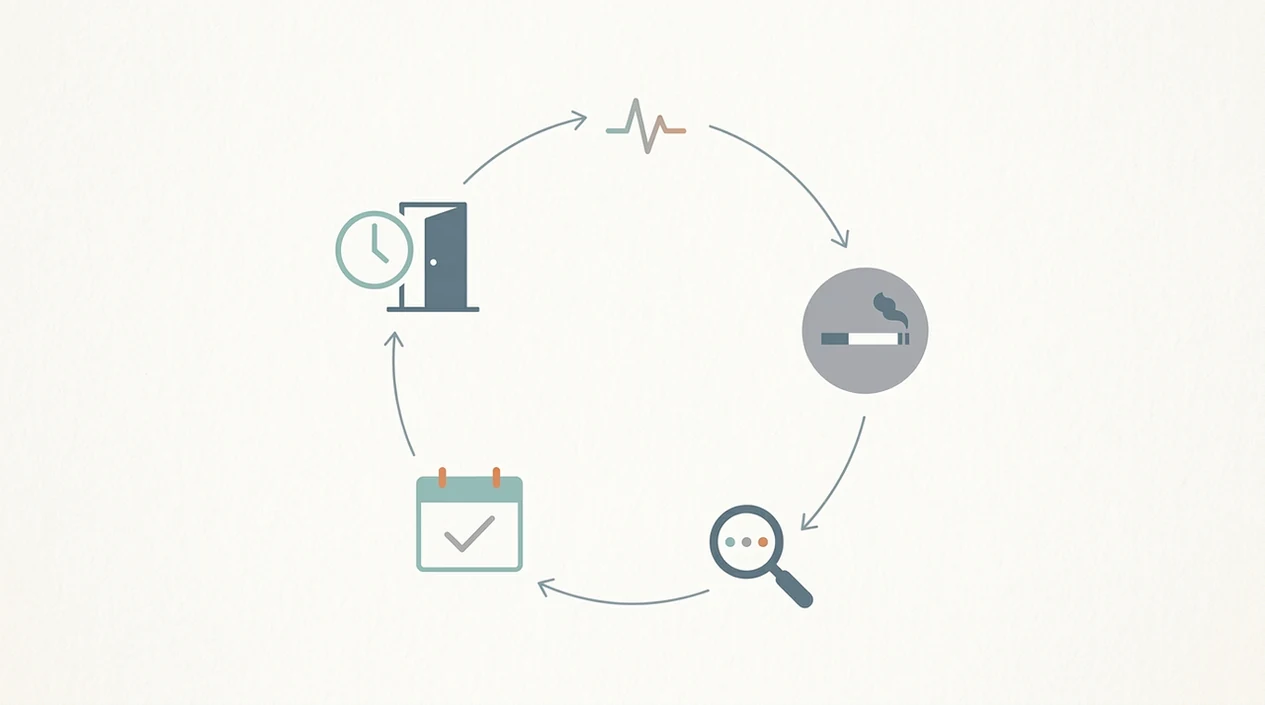
Use a stop smoking app for a quit smoking reset by turning the relapse into a short record, then building the next plan from that record. MeQuit is useful here because subjective frustration becomes objective data.
- Log the relapse. Record the date, cigarette or vape use, trigger, mood, place, and people involved.
- Review your craving history. Look for repeat times, like lunch break, late evening, or the drive home.
- Set a new quit date within 48 hours. A quick reset keeps one slip from becoming a new routine.
- Adjust your support stack. Add NRT, a quitline, counseling, or a different trigger plan.
- Reset your progress tracker. Commit to daily check-ins and watch the next smoke-free streak build.
If the priority is restarting fast without pretending nothing happened, MeQuit fits because the quit date reset and craving history sit inside the same workflow. For a fuller setup, use a personalized quit smoking plan app approach before the new quit day.
Best Reboot for Emotional Smokers: Trigger Journaling and Reframing
Emotional smokers need a reboot that names the feeling before it argues for nicotine. Most relapse articles skip this step, but shame, anger, loneliness, and panic often arrive before the cigarette.
Journal three points: how you felt before the slip, what the cigarette seemed to promise, and how you felt ten minutes after. Tight shoulders, a busy mouth, warm face during a stress surge. Write it plainly.
Anyone dealing with shame after a slip can use MeQuit as a reset tool because the craving log turns “I failed” into “What can I learn from this data point?” Counseling or a quitline can add support when the same emotion keeps showing up.
Best Reboot for Heavy Smokers: Combining NRT With App Tracking
Heavy smokers often need a layered reboot, not a willpower-only restart. FDA-approved NRT can roughly double quit chances, and NHS guidance says varenicline plus NRT may raise success over fivefold for some people.
Doctors and tobacco-cessation guidelines often recommend combining medication with behavioral support for people with strong dependence. Talk with a doctor before starting or changing bupropion, varenicline, or combination NRT.
When withdrawal is the issue, MeQuit stop smoking app fits because you can line up patch, gum, or lozenge timing with craving logs and see where coverage drops. Quitline counseling and medication are commonly recommended together because coaching helps with behavior loops while NRT or medication addresses withdrawal; CDC quitline resources describe combining counseling with cessation medicines as a standard evidence-based option source.
Trade-Offs in Any Quit Smoking Reboot Plan
A quit smoking reboot can fail if the same trigger stays untouched. If the charger cable is still beside the nightstand vape, the first half-awake reach is still easy.
Strong cravings and withdrawal can last for weeks, even with a good plan. Some people need multiple reboots before the smoke-free streak holds. There is no guaranteed one-and-done restart.
Gradual reduction, vaping, or tobacco substitutes may help some people reduce harm, but they can also prolong nicotine dependence. The quitting vs tapering decision should match your history, withdrawal level, and medical advice.
For parents who need accountability around school pickup, meals, and family stress, MeQuit covers the reboot because daily check-ins connect the smoke-free streak to real routines. Apps support the plan; they don’t replace medical care.
When to Get Medical Help During a Quit Smoking Reboot
Get medical help during a quit smoking reboot when quitting feels medically complicated, not just difficult. Pregnancy, heavy smoking, chest symptoms, depression, or severe anxiety are all reasons to add professional support before pushing through alone.
- Call urgent care or emergency services if you have chest pain, severe shortness of breath, fainting, or symptoms that feel dangerous or new.
- Tell a doctor or midwife if you are pregnant, trying to become pregnant, or breastfeeding, because medication and nicotine choices need individualized guidance.
- Ask a clinician or pharmacist about bupropion, varenicline, or combination NRT if withdrawal keeps breaking the reboot, you smoke heavily, or single-form NRT is not covering cravings.
- Contact a quitline or tobacco-cessation counselor when the same trigger keeps winning, especially if depression, panic, or severe anxiety is part of the loop.
- Use apps as support, not care. MeQuit can track cravings, routines, and slip patterns, but it cannot diagnose symptoms, check medication interactions, or replace a licensed professional.
A stronger reboot may be less about trying harder and more about getting the right help in the room.
Limitations
A quit smoking reboot is useful, but it is not a magic fix. This guide is educational and does not diagnose nicotine dependence or replace care from a clinician, pharmacist, therapist, or tobacco-cessation counselor. If withdrawal, mood symptoms, pregnancy, medication interactions, or heavy daily use are involved, get professional guidance before changing your quit plan. These limits matter:
- If you do not change triggers, routines, or access to cigarettes, the same relapse pattern can repeat.
- MeQuit and other digital tools do not replace medical advice, especially with heavy dependence, pregnancy, depression, anxiety, or other health conditions.
- Not everyone can safely use bupropion or varenicline. A doctor should assess medication risks and interactions.
- Vaping or tobacco substitutes are not guaranteed cessation paths and may keep nicotine dependence active.
- Even a well-built reboot can include weeks of cravings, sleep disruption, irritability, and low mood.
- Multiple reboots may still be needed. That does not mean the process is pointless.
- Smokefree.gov, BecomeAnEX, and NHS quit resources may offer stronger human coaching or public-health guidance than an app alone.
For step-by-step phone planning, our guide on how to make quit plan with phone pairs well with a reboot.
FAQ
Does one cigarette ruin my quit?
No. One cigarette is a slip, and it can be treated as a data point if you stop quickly and reset the plan.
How long does dopamine reset after quitting?
Dopamine pathways begin adjusting within weeks after quitting nicotine. Full reward-system recovery can take months, especially after long or heavy use.
Is using NRT after relapse cheating?
No. NRT is an evidence-based treatment that can roughly double quit success when used correctly.
How many quit attempts before success?
Most successful quitters need multiple attempts before staying smoke-free. A reboot is statistically normal, not proof that you cannot quit.
Should I reset my quit date after a slip?
Yes, set a new quit date promptly if the slip has interrupted your streak. Treat the counter as a fresh data cycle, not a moral score.
Can an app help me quit smoking?
Yes. The Stop Smoking App can support quitting by tracking cravings, smoke-free streaks, triggers, and motivation during a reboot.
Does relapse get harder each time?
Relapse does not inherently make future quitting harder. Each attempt can build better trigger awareness and coping skills.
When should I see a doctor for quitting?
See a doctor if you smoke heavily, have mental health concerns, are pregnant, or want to use bupropion, varenicline, or combination NRT.
Reboot Your Quit Plan With Stop Smoking App
Use MeQuit to track cravings, reset your streak, review triggers, and rebuild momentum after a slip. It is not medical advice, but it can support your quit plan alongside NRT, counseling, quitlines, or clinician guidance when needed.
Get Stop Smoking App