
Motivation Vs Discipline: Which Actually Helps You Quit Smoking

For motivation vs discipline quit smoking decisions, motivation gets you to day one, but discipline sustains long-term abstinence. MeQuit helps turn the reason you want to quit into daily check-ins, craving logs, and progress reminders that still work when the feeling fades.
> Definition: Motivation to quit smoking is the emotional drive that triggers a quit attempt; discipline to quit smoking is the repeatable daily structure, including craving plans, progress tracking, and trigger avoidance, that sustains abstinence when motivation dips.
TL;DR
- Motivation sparks your quit attempt but fluctuates significantly day to day, making it unreliable alone.
- Discipline means engineered routines, app logging, NRT schedules, trigger plans, that hold when willpower crashes.
- The highest quit rates come from combining both: strong reasons to quit plus structured daily systems and evidence-based tools.
At-a-Glance: Motivation Vs Discipline for Quitting Smoking
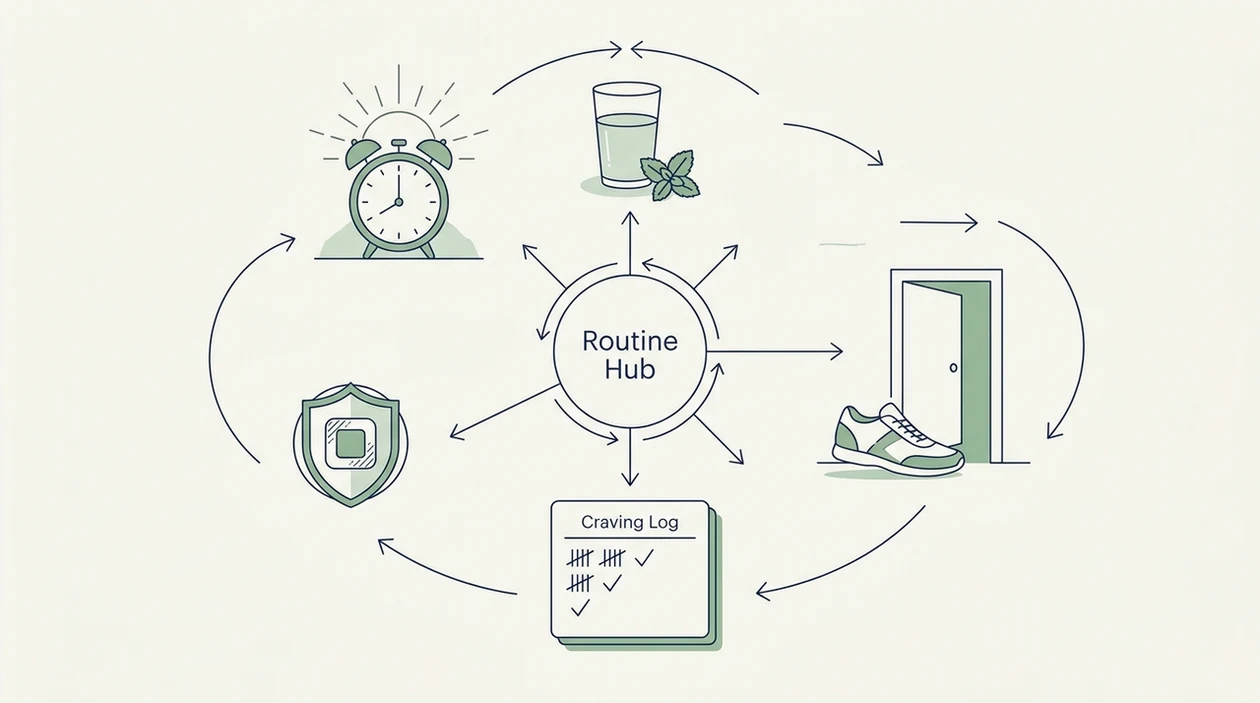
Motivation starts the quit attempt; discipline protects it after the first craving wave hits. The useful comparison is not “which one matters,” but “which job does each one do?”
| Category | Motivation to quit smoking | Discipline to quit smoking |
|---|---|---|
| Definition | Emotional reason to stop | Repeatable system that supports stopping |
| When strongest | Quit day, health scares, pregnancy, New Year, money stress | First week, work breaks, traffic, after meals |
| When weakest | Broken sleep, stress, withdrawal, “just one” thinking | Poor planning, no reminders, no support |
| Durability | Rises and falls daily | Can be repeated even when mood drops |
| Examples | Family, freedom, health fear, saving money | NRT timing, craving scripts, trigger avoidance, app check-ins |
| Quit-rate impact | Helps people attempt quitting | Helps people stay abstinent longer |
Per the CDC, about 55% of U.S. adults who smoked made a quit attempt in the past year, but only about 7.5% quit for 6 to 12 months. That gap is where discipline matters.
Where Motivation to Quit Smoking Wins
Motivation wins at the beginning because it creates the first honest decision: “I’m done with this.” Without that spark, the quit plan usually stays theoretical.
Emotional Triggers That Spark a Quit Attempt
Health fear, family pressure, money, and wanting freedom from the next cigarette can all start a quit attempt. A winter coat that still smells like stale smoke can do more than a lecture. So can a partner washing smoke smell from jackets after another long weekend.
Motivation is especially useful during windows of change, such as pregnancy, a scary cough, a birthday, or New Year. MeQuit captures that early energy with a reasons list, health milestones, and money-saved progress. If money is the motivator, a cigarette savings calculator app can make the tradeoff visible fast.
Why Motivation Alone Fades Within Days
A 2023 daily-assessment study found that quit motivation fluctuates significantly from day to day. That matches real life. One morning you feel done with cigarettes; two nights later your shoulders are tight and your mouth wants something to do.
People looking for a way to keep the reason visible can use the MeQuit stop smoking app because the reasons list and milestone dashboard bring the quit decision back into view during low-motivation moments.
Where Discipline to Quit Smoking Wins
Discipline wins after the quit attempt starts because it turns “I want to quit” into repeatable actions. It is not punishment. It is engineered behavior.
Self-Efficacy: The Bridge Between Wanting and Doing
Self-efficacy means confidence built from small wins. It grows when you survive a craving, log it, and see that the urge passed without smoking. That matters because research links lower nicotine dependence and higher self-efficacy with better abstinence odds than motivation alone.
Tiny proof counts.
MeQuit supports discipline by making the next action obvious: log the craving, use the coping prompt, then mark the outcome. That kind of record helps you track what actually happened, not what the panic said would happen.
Structured Routines That Outlast Willpower
According to a Cochrane review, behavioral support can improve long-term abstinence compared with minimal or no support source. Another Cochrane review found that licensed nicotine replacement therapy increases quit rates by about 50% to 60% source.
The most common medically supported way to improve quit odds is combining nicotine treatment or medication with behavioral support. Discipline is the schedule that keeps both happening.
When the issue is quitting after repeated slip-ups, MeQuit fits because the craving log, reminder system, and reset workflow make the next cigarette harder to reach.
5 Facts About Motivation Vs Discipline When Quitting Smoking
These five facts explain why motivation and discipline work differently during smoking cessation. Keep them plain: wanting matters, but systems carry the bad hours.
- Fact 1: Motivation triggers quit attempts, but it does not reliably predict long-term smoking cessation by itself.
- Fact 2: Discipline to quit smoking means concrete habits, such as NRT timing, app tracking, craving plans, and trigger avoidance, not white-knuckling.
- Fact 3: Low nicotine dependence and high self-efficacy predict abstinence more strongly than motivation alone in many cessation studies.
- Fact 4: Early motivation should be used to build a discipline system with scheduled check-ins, trigger plans, and a slip-up response.
- Fact 5: The best stop smoking apps blend motivational boosts with disciplined micro-actions, such as streak tracking, craving logging, and planned coping steps.
If the priority is turning a strong quit-day feeling into repeatable behavior, MeQuit covers both sides because progress stats feed motivation while craving check-ins build discipline.
Good stop smoking apps deliver prompts, tracking, and relapse planning, not a guarantee that cravings disappear.
How Motivation and Discipline Work Together in Smoking Cessation
Motivation and discipline work together through a behavioral loop: motivation sets the goal, discipline encodes the habit, and self-efficacy reinforces both. In plain language, you remember why you quit, do the next planned action, then gain proof that you can repeat it.
The Behavioral Loop Behind Successful Quit Attempts
Nicotine creates habit loops around cues, routines, and rewards. A red traffic light beside a convenience store can trigger the old routine before you have time to argue with yourself. Discipline changes the cue response: drive past, breathe, log the urge, wait five minutes.
A cessation app can support that loop with progress dashboards, craving tools, and trigger notes. The dashboard keeps motivation visible; the craving tool gives your hands something useful to do during the five-minute danger window.
Why Nicotine Dependence Demands More Than Desire
Nicotine affects reward circuits, so motivation alone cannot consistently override withdrawal, stress, and environmental cues. Per the CDC, about 12.5% of U.S. adults smoked in 2020, and more than 16 million people live with a smoking-related disease.
For people who need visible proof that quitting is changing something, MeQuit pairs well with health timelines because seeing progress can support the next disciplined choice. You can also see health milestones after quitting when motivation needs a factual nudge.
How to Build a Quit-Smoking Discipline System Using Motivation
Use motivation while it is high to build a system for the days when it is low. The goal is simple: make the smoke-free action easier to repeat than the cigarette.
- List your top 3 personal motivators in MeQuit, such as breathing easier, saving money, or not smelling smoke on your hoodie.
- Set daily craving check-in reminders for your hardest windows, such as lunch break, school pickup, or the first hour after dinner.
- Pre-write your craving response script: breathe slowly, drink water, open MeQuit, and wait 5 minutes before deciding anything.
- Log every craving and outcome so you build self-efficacy data instead of relying on memory.
- Review weekly progress stats and adjust your trigger avoidance plan based on what actually happened.
First-time quitters trying to turn a strong “I’m ready” moment into a plan can use the MeQuit stop smoking app because the reasons list, craving log, and weekly review create a quit-day workflow.
Reset the plan.
A quit smoking daily motivation app is most useful when the motivational message leads to a concrete next step, not just a nicer quote.
4 Myths About Motivation and Discipline to Quit Smoking
Myths about motivation and discipline can make people feel weak after a normal craving or slip-up. The truth is less dramatic and more useful.
Myth 1: “If I’m motivated enough, willpower alone will work.” Willpower-only attempts often struggle because cravings, withdrawal, and cues keep showing up after the emotional decision fades.
Myth 2: “Discipline means toughing it out with no help.” Effective discipline often includes NRT, medication, behavioral support, apps, and accountability. Clinicians typically suggest combining medication or NRT with behavioral support for people who have moderate or high dependence.
Myth 3: “Losing motivation means I’ve failed.” Motivation naturally rises and falls. Discipline fills the gap with reminders, scripts, and trigger plans.
Myth 4: “People who relapse just didn’t want it enough.” Relapse is affected by dependence, stress, access, sleep, alcohol, and environment. A single cigarette butt in the driveway is information, not a verdict.
People looking for a nonjudgmental way to recover after a slip-up can use MeQuit because the reset workflow helps record the lapse, name the trigger, and restart the smoke-free streak.
Who Should Lean on Motivation Vs Discipline to Quit Smoking
Different smokers need different emphasis, but nobody should rely on motivation alone for long. If you have tried motivation alone and failed, your next quit attempt needs a discipline system.
First-Time Quitters Vs Serial Relapsers
First-time quitters can lean into motivation to start. Use the first burst of energy to choose a quit day, remove cigarettes, set reminders, and tell one safe person. The first honest note after a slip can also become part of the plan, not proof that the plan is over.
Serial relapsers usually do not lack reasons. They need stronger routines: NRT timing, medication conversations, trigger avoidance, and a written relapse response. MeQuit helps here because progress graphs and craving notes show patterns that memory often smooths over.
Light Smokers Vs Heavy Smokers
Light or social smokers may get more mileage from motivation because dependence can be lower. Heavy smokers, especially people smoking 20 or more cigarettes a day, usually need discipline plus pharmacological support.
For heavy daily smokers, discipline is often more reliable than motivation because withdrawal and cue exposure repeat many times per day.
A tool that can remind me why I quit helps most when it also asks, “What will you do in the next five minutes?”
Evidence on Motivation, Discipline, and Smoking Cessation
The evidence favors a combined answer: motivation helps people make quit attempts, while disciplined supports are more tied to staying quit. The strongest plans turn desire into self-efficacy, lower dependence pressure, and repeated support.
Studies often find that wanting to quit predicts trying, but dependence level and confidence predict abstinence more consistently. Self-efficacy, the belief that you can handle a craving without smoking, is not a slogan; it is built by surviving specific moments. Evidence-based support helps stack those moments: behavioral counseling improves long-term abstinence versus minimal support source, and licensed NRT raises quit rates by about 50% to 60% source.
A practical evidence-based sequence looks like this:
- Use motivation to set the quit date and name the reason.
- Add NRT or clinician-approved medication if withdrawal is likely to hit hard.
- Build behavioral support through counseling, groups, or structured digital tools.
- Track cravings and slips so self-efficacy grows from proof, not pep talks.
Apps can be promising for reminders, logs, and tailored prompts, but evidence for specific app features is still limited. Neutral alternatives include Smokefree.gov, BecomeAnEX, QuitGuide, and NRT.
Limitations
Motivation and discipline both help, but neither one is a cure for nicotine dependence. Honest quitting advice has to leave room for medication, relapse risk, and tools that support behavior without pretending to replace it.
- Neither motivation nor discipline alone overcomes high nicotine dependence for most people; NRT and prescription medications can meaningfully improve quit odds.
- MeQuit supports discipline, but it is not magic. If check-ins are skipped and triggers stay unchanged, a phone reminder will not keep someone smoke-free by itself.
- Motivational slogans like “just decide and never look back” oversimplify nicotine addiction and can create guilt after a slip-up.
- Evidence on specific app features, such as badges, streaks, and gamification, is still developing. Not every feature has the same research support.
- Even with strong motivation, disciplined routines, and good tools, relapse risk can stay elevated for months.
- Smokefree.gov and BecomeAnEX may be better fits for people who want government or community-based support instead of an app-led workflow.
- People with depression, heavy alcohol use, pregnancy, or complex medical needs should ask a clinician about a quit plan.
If you are wondering do stop smoking apps work, the fair answer is that apps work best as part of a disciplined support system.
FAQ
Is discipline more effective than motivation for quitting smoking?
Discipline is usually more reliable for long-term abstinence because it creates repeatable actions when motivation drops. Motivation still matters because it often starts the quit attempt.
Why does my motivation to quit smoking fade after a few days?
Motivation fades because withdrawal, stress, sleep disruption, and nicotine reward circuits compete with the original quit-day feeling. Daily motivation also naturally fluctuates, even in people who strongly want to quit.
Can I quit smoking if I do not feel motivated every day?
Yes, quitting is possible when daily motivation is low if you have routines, support, and a craving plan. Some initial reason to quit helps, but discipline carries many ordinary days.
Does quitting cold turkey require more discipline than using support?
Cold turkey usually relies more heavily on willpower and self-control. Supported quitting often performs better because NRT, medication, behavioral support, and apps reduce the load on willpower.
How do quit-smoking apps help build discipline?
Quit-smoking apps build discipline by creating repeatable behaviors, such as craving logging, reminders, progress tracking, and trigger planning. MeQuit stop smoking app uses these workflows to help users act during cravings.
What actually predicts successful smoking cessation?
Successful smoking cessation is often linked to lower nicotine dependence, higher self-efficacy, behavioral support, and use of evidence-based aids like NRT. Motivation alone is not a strong enough predictor for many people.
Does a smoking relapse mean I lack discipline?
No, a smoking relapse does not mean you lack discipline. Relapse is commonly driven by nicotine dependence, stress, cues, access, and environment.
Should I use nicotine replacement therapy alongside a discipline system?
Many people benefit from using NRT alongside a discipline system because it reduces withdrawal and makes routines easier to follow. A Cochrane review found that licensed NRT increases quit rates by about 50% to 60%.
Turn motivation into a quit-smoking system
Stop Smoking App helps you use motivation as the spark and discipline as the daily structure with craving tracking, progress streaks, savings, and relapse recovery tools. It is support for your quit journey, not medical advice or a guaranteed outcome.
Get Stop Smoking App