Smoking And Erectile Dysfunction: How Quitting Can Help Reverse It

Smoking and erectile dysfunction are directly linked through vascular damage; smokers face 1.81 times the risk of ED compared with non-smokers in a systematic review of 28,586 men source. Quitting smoking may improve erectile function over weeks to months, though recovery depends on age, smoking history, and other health conditions. Persistent ED should always be evaluated by a clinician.
> Definition: Erectile dysfunction (ED) is the persistent inability to get or maintain an erection firm enough for sexual activity, and smoking is a modifiable risk factor because it damages the blood vessels and nitric oxide pathways that erections depend on.
TL;DR
- Smokers have nearly double the risk of erectile dysfunction versus non-smokers.
- The link is dose-dependent, so more cigarettes and more years usually mean higher ED risk.
- Quitting smoking may improve erections, but recovery varies and is not guaranteed for all men.
At A Glance: 5 Facts About Smoking And Erectile Dysfunction
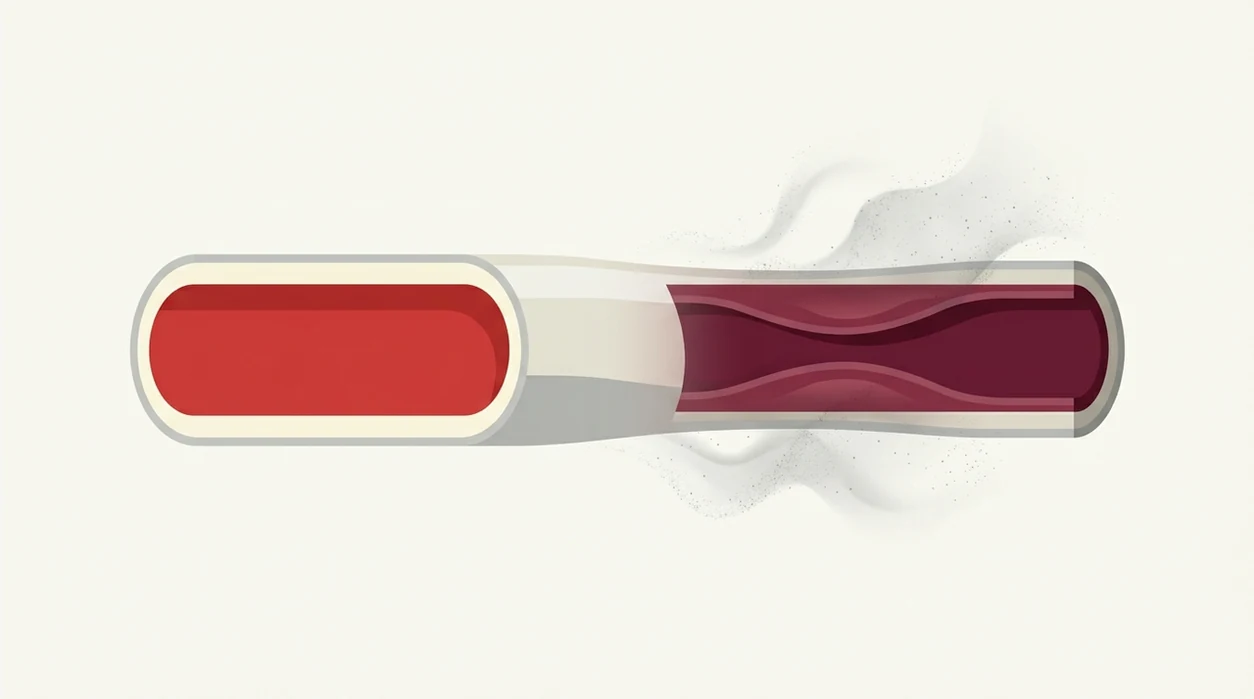
- Smoking damages the blood vessels needed for erections, especially the small arteries that carry blood into the penis.
- ED risk rises with exposure. Heavier smoking and more years of smoking are linked with higher risk.
- Smoking-related ED can affect younger men too, not only men over 50.
- Quitting may improve erectile function, but full recovery is not guaranteed if vascular damage is advanced.
- ED can be an early warning sign of cardiovascular disease, especially when it is persistent or new.
That last point matters. A missed erection after a stressful day is different from repeated difficulty over weeks. If the pattern keeps showing up, don’t just blame nerves or age. Track what actually happened, then bring it to a clinician.
How Smoking Causes Erectile Dysfunction: The Vascular Mechanism
Smoking causes erectile dysfunction mainly by injuring blood vessels, reducing nitric oxide, narrowing arteries, and limiting blood flow into the penis. Nicotine also causes short-term vasoconstriction, which means blood vessels tighten right when erections need relaxed, open flow.
Blood Vessel Damage And Nitric Oxide Disruption
Erections depend on endothelial function. In plain English, the inner lining of blood vessels has to signal the arteries to relax. Cigarette smoke disrupts nitric oxide availability, so that signal gets weaker. Chronic tobacco exposure may also affect nerve signaling, which can make arousal and erection response less reliable.
The tight jaw during a craving wave is not the only body signal. Blood vessels are reacting too.
Why Penile Arteries Are Especially Vulnerable
Penile arteries are smaller than many heart arteries, so early narrowing can show up there first. Atherosclerosis, or plaque buildup, reduces the available space for blood flow. For many men, the most common medically supported way to improve smoking-related vascular risk is quitting tobacco combined with clinical assessment when symptoms persist.
Quit Smoking Erectile Dysfunction Recovery: Timelines And Evidence
Does quitting smoking improve erectile dysfunction? For some men, yes, erectile function improves within weeks to months after quitting, but quitting is not a guaranteed standalone cure.
Recovery depends on age, how long you smoked, how much you smoked, and whether diabetes, high blood pressure, medication side effects, low testosterone, depression, or heart disease are also involved. The evidence is cautious. Some men improve a lot. Some improve partly. Others may not recover full function if vascular damage is severe.
Still, quitting helps the larger problem. Cardiovascular health, circulation, stamina, and future disease risk can improve even when ED needs separate treatment. Clinicians typically recommend medical evaluation for persistent ED because it can signal vascular disease, not just a bedroom problem.
For men with smoking-related ED, quitting is often more useful than waiting because it removes an ongoing source of blood vessel injury.
Common Myths About Smoking And Erectile Dysfunction
Myth 1: Only older men get smoking-related ED. Smoking can contribute to ED in younger men too. A review found heavy smokers using more than 20 cigarettes per day had about double the likelihood of severe ED compared with lighter smokers in a younger, less comorbid group. source
Myth 2: If erections still happen sometimes, smoking isn’t involved. ED can be intermittent at first. A red traffic light beside a convenience store can trigger a cigarette, and the vascular effect can still build over time.
Myth 3: Switching to vaping eliminates ED risk entirely. Vaping may reduce some cigarette-related exposures, but nicotine still tightens blood vessels.
Myth 4: Quitting always restores full function. Quitting may help, but age, smoking history, and other medical factors shape recovery.
A good quit-smoking tool gives reminders, craving logs, and progress signals, not a promise that ED will disappear without medical care.
How To Use A Quit-Smoking Plan To Support Erectile Function Recovery
Use a quit-smoking plan to reduce ongoing vascular injury, track patterns, and make follow-up with a clinician easier. Tools like MeQuit can help with daily tracking, but they don’t diagnose or treat ED.
- Set a quit date and write down baseline symptoms, including how often ED happens.
- Log daily cigarette intake and cravings in an app, especially triggers, time of day, and slip-ups.
- Consult a clinician about ED, cardiovascular risk, and cessation options such as nicotine replacement or prescription support.
- Monitor physical changes weekly, including stamina, morning erections, cravings, and smoke-free days.
- Use progress milestones to stay motivated, like health markers, money saved, and your smoke-free streak.
A nicotine cravings tracker app is most useful when you log the urge before smoking, not after the day has already blurred together. Reset the plan.
A quit-smoking tracker can be a companion for logging cigarettes or vaping patterns, but it is not a medical tool for diagnosing or treating erectile dysfunction.
ED As An Early Warning Sign Of Cardiovascular Disease From Smoking
ED can show up before diagnosed cardiovascular disease because penile arteries are smaller than coronary arteries. Some research suggests ED may precede heart disease diagnosis by about 2 to 5 years. source
That does not mean every bad night is a heart warning. Short-term performance problems can happen with stress, alcohol, poor sleep, or anxiety. Persistent ED is different. If the pattern lasts, appears suddenly, or comes with chest pain, breathlessness, leg pain, or new fatigue, get medical care.
The glove box cigarette pack feels like a private habit. Vascular disease is not private to one body part. For men who smoke, persistent ED should be treated as a health signal, not only a sexual problem.
When To See A Clinician For Erectile Dysfunction
See a clinician if erection problems keep recurring over several weeks or months, even if they come and go. Get urgent help sooner if ED appears suddenly with chest pain, breathlessness, leg pain, weakness, numbness, severe headache, or other cardiovascular or neurological symptoms.
Quitting smoking supports circulation and long-term health, but it does not replace an ED evaluation. A clinician can look for common, treatable contributors that are easy to miss when the focus stays only on cigarettes.
- Book an appointment if ED is persistent, worsening, or new for you, especially if you smoke or have cardiovascular risk factors.
- Describe the pattern clearly, including timing, morning erections, libido changes, alcohol use, stress, and any sudden change.
- Review your medications with the clinician, because blood pressure drugs, antidepressants, opioids, and other prescriptions can affect erections.
- Ask about basic checks such as blood pressure, diabetes screening, lipid levels, testosterone, and heart-risk assessment.
- Seek immediate care if ED arrives with chest symptoms, breathlessness, calf or thigh pain with walking, facial droop, confusion, or one-sided weakness.
Vaping, Nicotine Pouches, And Erectile Dysfunction Risk
Nicotine can cause vasoconstriction no matter how it enters the body. That includes cigarettes, vapes, nicotine pouches, and smokeless tobacco.
Human ED evidence is much stronger for combustible cigarettes than for newer nicotine products, so claims about vaping and nicotine pouches should be treated as lower-certainty risk signals rather than settled equivalence.
The evidence is strongest for cigarette smoking. Long-term ED data for vaping and newer nicotine products is still limited, so certainty is lower. However, switching products does not remove nicotine’s blood vessel effects. It may reduce exposure to some smoke toxins, but it can keep the nicotine loop active.
A stop vaping app may help if the charger cable beside the nightstand vape keeps pulling you back into automatic use. Apps such as MeQuit and other quit tools can support craving tracking, but persistent ED still belongs in a clinician visit.
Limitations
This article explains the link between smoking and ED, but it cannot tell you the exact cause of your symptoms.
- Smoking is not the only cause of ED. Diabetes, hypertension, medications, low testosterone, depression, anxiety, and relationship stress can all contribute.
- Quitting smoking is beneficial for health, but it is not a proven standalone cure for every man with ED.
- Evidence is strongest for cigarettes. Less is known about vaping, nicotine pouches, and newer nicotine products.
- Online articles cannot diagnose ED. Sudden, persistent, or worsening ED needs clinical evaluation.
- Stop-smoking apps support behavior change, craving tracking, and motivation, but they do not replace prescription ED treatment or cardiovascular assessment.
- Nicotine replacement therapy may still expose you to nicotine, but it can be part of a supervised quitting plan.
If you are comparing tools, a best stop smoking app guide can help you check privacy, tracking, reminders, and relapse support before you pick one. MeQuit stop smoking app is one option for logging cravings and smoke-free progress while you work with medical advice.
FAQ
Is smoking-related ED permanent?
Smoking-related ED is not always permanent, but recovery depends on vascular damage, smoking history, age, and other health conditions. Some men improve after quitting, while others do not fully recover.
How long after quitting does ED improve?
Some men notice improvement within weeks to months after quitting. Improvement varies, and quitting is not guaranteed to restore full erectile function.
Does vaping cause erectile dysfunction?
Nicotine in vapes can tighten blood vessels, which may affect erections. Long-term ED data for vaping is still limited compared with cigarette smoking.
Can young men get smoking-related ED?
Yes, young men can get smoking-related ED. Smoking can damage blood flow before older age or obvious heart disease appears.
Does smoking one cigarette affect erections?
One cigarette can cause short-term vasoconstriction, which may reduce blood flow temporarily. Chronic ED usually reflects repeated exposure and other health factors.
Does chewing tobacco cause ED?
Nicotine from smokeless tobacco can affect blood vessels. The strongest ED evidence is for cigarettes, but nicotine exposure from any source may matter.
Should I see a doctor for ED?
Yes, persistent or sudden ED should be evaluated by a clinician. ED can be an early sign of cardiovascular disease.
Does quitting smoking improve blood flow?
Yes, vascular repair begins after quitting, and circulation can improve over time. That may help erectile function for some men.
Can a quit-smoking app help with ED?
Apps like MeQuit can support quitting by tracking cravings, smoke-free streaks, and slip-ups. They do not treat ED directly or replace medical care.
Build A Quit Plan That Supports Your Health
Stop Smoking App helps you track smoke-free days, cravings, triggers, and progress while you work toward quitting. It is not medical advice, but it can support a broader quit plan that includes NRT, counseling, quitline support, or clinician guidance when needed.
Get Stop Smoking App