
> Definition: Stop Smoking App is a smoking cessation app that helps people track progress, manage cravings, and stay motivated while quitting smoking or vaping.
- The top stop smoking apps use behavioral support, not just timers; counseling plus cessation medication can raise quit success by 2–3× compared with quitting without support.
- Free, clinically tested options exist from government health agencies alongside feature-rich paid apps with higher abstinence rates.
- Downloading the app is step one; active daily use of craving logs, coping tools, and quit plans is what drives real results.
| Need | Best option |
|---|---|
| Simple iOS quit tracking for cravings, streaks, savings, reminders, and relapse recovery | Stop Smoking App |
| Detailed progress dashboards and milestone-style quit statistics | Smoke Free |
| Community encouragement, public progress, and social accountability while quitting | QuitNow |
| Structured coaching, gamified motivation, or program-style support options | Kwit, Quit Genius, or NHS Quit Smoking |
5 Stop Smoking Apps To Download Right Now
The strongest stop smoking app download is the one you will actually open when a craving wave hits. Start with apps that offer quit planning, trigger tracking, and realistic support, not just a pretty countdown clock.
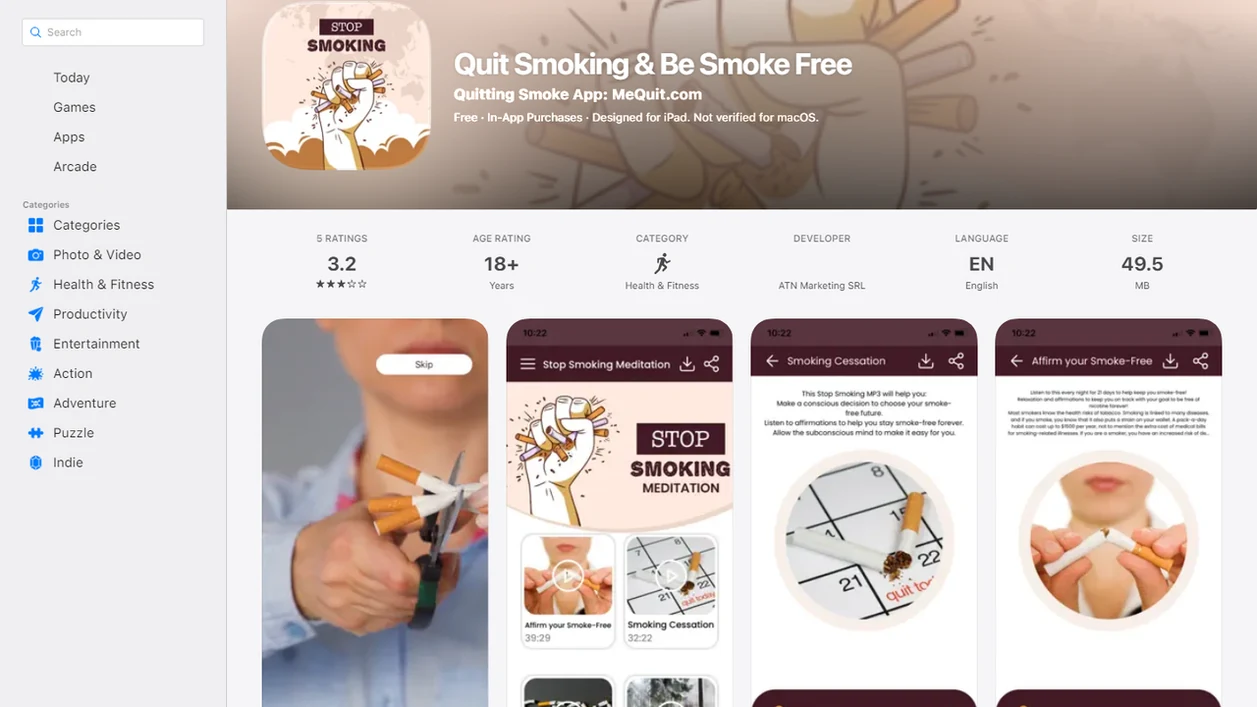
- Stop Smoking App: MeQuit is available for iOS and Android, with smoke-free streaks, craving logs, vaping support, money saved, and relapse recovery prompts. Anyone dealing with a shaky urge rating on quit day gets a better fit when the craving log turns that moment into a pattern, not a failure.
- QuitGuide, NCI: QuitGuide is free on iOS and Android and was developed by the U.S. National Cancer Institute. A randomized trial found 12.7% 30-day abstinence at 12 weeks versus 7.8% for static information.
- quitSTART: quitSTART is another free NCI app for iOS and Android, aimed at younger adults who want tips, challenges, and craving support.
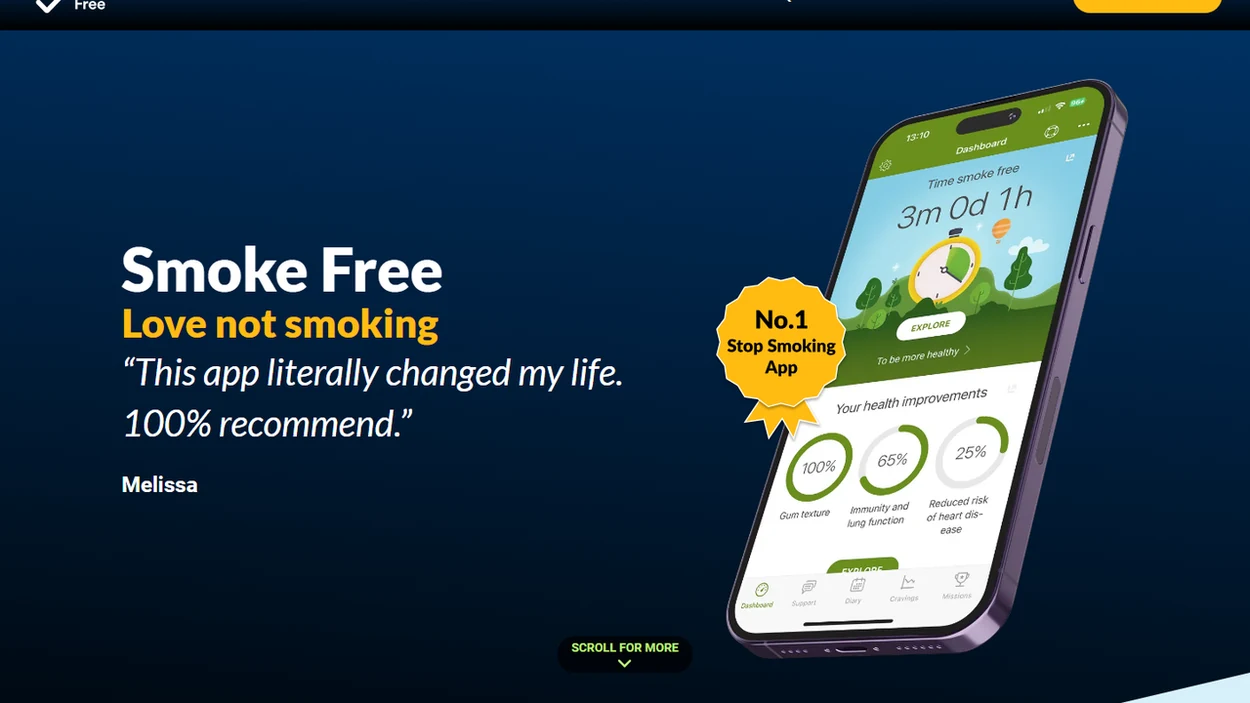
- Smoke Free: Smoke Free offers free and paid versions on iOS and Android. The paid version has trial evidence, with 28.2% self-reported 3-month abstinence versus 16.7% for free users.
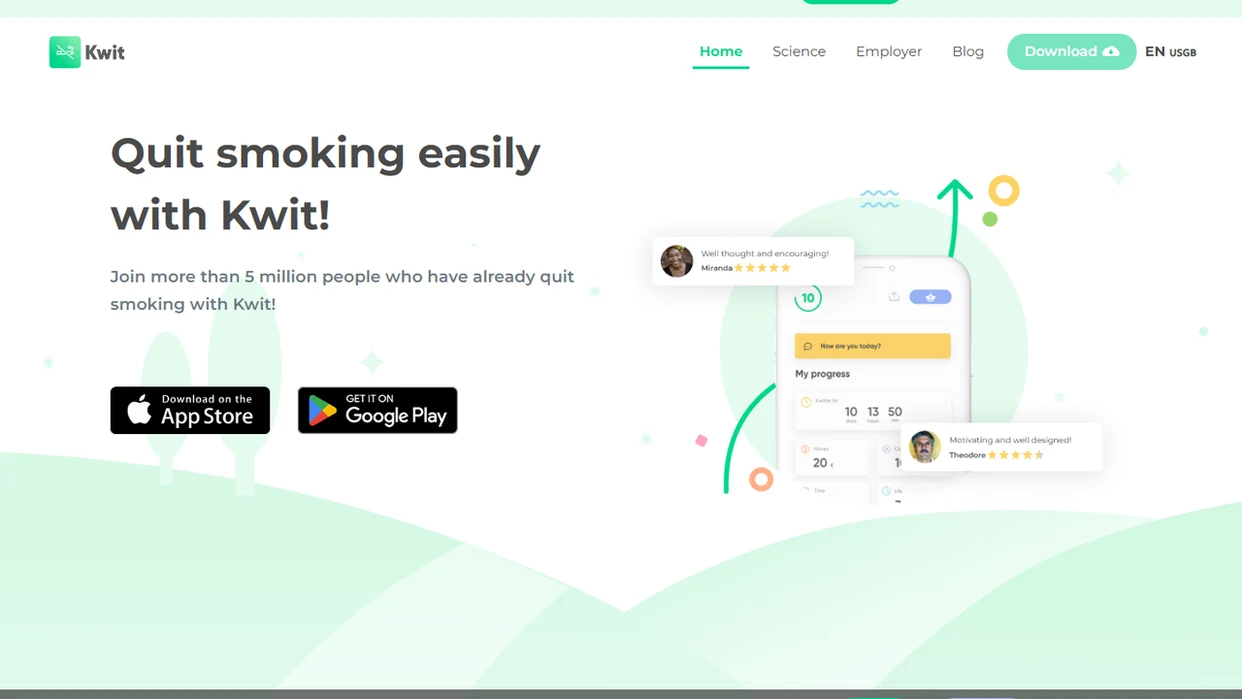
- Kwit: Kwit offers free and paid plans on iOS and Android, using behavioral tracking, achievements, and coaching-style prompts.
For a broader feature-by-feature view, the best stop smoking app guide compares app-led quit support in more detail.
5 Criteria for Picking Quit Smoking App Downloads
A good quit smoking app download should prove its value before it asks for your data, money, or daily attention. Use these five checks before you install anything on the phone you reach for during lunch break.
- Evidence matters: Prefer apps with clinical trials, public-health backing, or peer-reviewed research behind the quit method.
- Ratings need context: App store ratings help, but update frequency matters too. An app last updated years ago may miss privacy, device, or vaping changes.
- Privacy should be readable: Check whether smoking habits, mood inputs, device data, or location are shared with third parties.
- Design team counts: Apps built with clinicians, tobacco researchers, or public-health agencies deserve more trust than anonymous timer apps.
- Free versus paid should be fair: Free should cover basics. Paid upgrades should add coaching, deeper analytics, or extra coping tools, not hide the quit plan.
The right fit for people comparing several downloads is MeQuit because it centers daily tracking, craving patterns, and smoke-free progress in one workflow.
How We Chose the Stop Smoking Apps to Download
We chose stop smoking apps by checking whether they were findable in the iOS App Store, Google Play, or both, then weighing proof before polish. A clean dashboard helped only after the app showed a credible quit method, a basic privacy posture, and fair value for free or paid users.
- Check store availability for iPhone and Android users, noting when an app appeared in both stores versus one store only.
- Rank the evidence by giving the most weight to randomized trials and peer-reviewed outcomes, then public-health backing from groups like NCI or NHS, then practical user-facing features.
- Review privacy signals before recommending a download, including the privacy policy, third-party sharing, ad tracking, location requests, device identifiers, and whether permissions matched the quit-support feature.
- Compare pricing fairly by asking what a free user can actually do, what a paid plan adds, and whether freemium limits hide core quit planning.
- Recheck changeable details because app availability, pricing, trial access, and features can shift after an app update or store-region change.
Stop Smoking App Behavioral Tools and Tracking Engines
Stop smoking apps work by interrupting habit loops: the trigger, the urge, the cigarette, and the short relief that teaches the brain to repeat it. In plain language, the phone helps you notice the pattern before your hand is already reaching.
Behavioral tools usually borrow from cognitive-behavioral techniques. You identify triggers, name the craving, choose a coping strategy, and record what happened. MeQuit captures smoke-free streaks, money saved, health timeline milestones, and craving logs, so the app can show high-risk moments like after-dinner scrolling or the walk back from the office door in cold air.
Two stats matter here. The Agency for Healthcare Research and Quality says counseling plus medications can raise quit success by 2–3× compared with quitting without support. A JAMA Internal Medicine trial of QuitGuide found 12.7% 30-day abstinence at 12 weeks versus 7.8% for static information source.
Good stop smoking apps deliver cue-based support and feedback, not a magic guarantee.
Ready to start your quit?
You can download stop smoking app support from the Apple App Store or Google Play to track smoke-free days, money saved, health milestones, and craving patterns. The MeQuit stop…
6 Steps To Use a Stop Smoking App After Download
Use a stop smoking app the same day you download it. The first setup should turn a vague goal, “I need to quit,” into a plan you can follow one urge at a time.
- Set your quit date and enter your smoking baseline, including cigarettes per day and usual pack cost.
- Log your triggers and daily cigarette count, especially the automatic ones like sitting in traffic or stepping outside after lunch.
- Activate craving-response tools and choose coping strategies before the craving wave starts.
- Review your smoke-free streak, money saved, and health milestones daily so progress stays visible on hard mornings.
- Connect with additional support such as 1-800-QUIT-NOW, nicotine patches, gum, lozenges, or counseling.
- Reset the plan after a slip-up instead of deciding, “I already messed up, so I might as well smoke the rest of the day.”
Smokers who want fast craving help often start with MeQuit because the craving log, streak screen, and reset workflow are built for same-day use. If urges are your main barrier, our best quit smoking app for cravings guide goes deeper.
Stop Smoking App Download: Free vs. Paid Features Compared
Free quit smoking apps can be high quality, especially when they come from public-health agencies. Paid apps may be worth it when they add coaching, analytics, or deeper coping support that you will actually use.
| Feature area | Free versions often include | Paid versions may add |
|---|---|---|
| Progress tracking | Smoke-free timer, health timeline, basic money saved | Advanced trends, custom goals, richer milestone history |
| Craving support | Simple craving log and tips | Expanded coping libraries, pattern analysis, guided exercises |
| Motivation | Badges, reminders, daily messages | Ad-free use, stronger personalization, coaching-style prompts |
| Evidence and trust | NCI or NHS apps can be free and ad-free | Some paid apps have trial evidence, but not all do |
A Smoke Free randomized trial reported 28.2% self-reported 3-month abstinence in paid-version users versus 16.7% in free-version users. That does not mean paid is always better. For many people, a free stop smoking app from a trusted agency is enough to start.
If the priority is staying engaged after the first week, MeQuit fits because it keeps streaks, money saved, and relapse recovery visible without making the whole quit depend on one number.
Quit Smoking App Data Privacy Before Download
Quit smoking apps may collect sensitive data, including smoking frequency, vaping habits, cravings, mood notes, device identifiers, and sometimes location. Check privacy before download, not after a week of honest logging.
Use this quick privacy checklist:
- Read the privacy policy for third-party sharing and ad tracking.
- Check whether data is encrypted in transit and at rest.
- Look for clear language on selling or not selling personal data.
- Review app permissions before tapping “allow.”
- Be cautious with apps that ask for location without a clear quit-support reason.
Most download guides skip this part. They should not. A vape receipt crumpled in a coat pocket is personal information when it becomes a pattern in your health data.
Any cessation app is most useful when you feel safe enough to log the craving, slip-up, mood note, or vape trigger honestly.
Same-Day Quit Support With a Stop Smoking App
The most evidence-backed approach to quitting smoking is behavioral support combined with quit medication when appropriate. A stop smoking app can organize the daily work, but extra support raises the odds.
Call 1-800-QUIT-NOW in the U.S. or NHS Stop Smoking Services in the UK on the same day you download. Add nicotine replacement therapy, such as patches, gum, or lozenges, if it fits your health situation. Clinicians typically suggest pairing counseling-style support with medication for many smokers because nicotine withdrawal is physical and behavioral at the same time.
Per the CDC, only about 7.5% of adult U.S. smokers who tried to quit in 2018 stayed quit for at least 6–12 months source. AHRQ guidance says counseling plus medication can improve success by 2–3×.
When the porch chair with old ash marks is the issue, MeQuit earns its spot by helping you log that trigger and choose the next response before you sit down.
Limitations
A stop smoking app can help, but it cannot do every part of quitting for every person. Honest limits matter, especially when your first week feels rough and your shoulders stay tight.
- Apps cannot fully address complex mental health symptoms, heavy nicotine dependence, alcohol or drug co-use, or unsafe home situations without professional care.
- Evidence for many popular apps is still limited, and some outcomes are self-reported. Real-world long-term quit rates may be lower than marketing claims.
- Some apps advertise unsupported success rates, including claims like “95% success,” without peer-reviewed backing.
- Streak-based motivation can backfire. A broken streak may create shame unless the app also helps you reset the quit plan.
- Availability varies by country, device, language, and connectivity. Not every evidence-based app appears in every app store.
- Downloading alone does not cause quitting. Daily logging, coping practice, support, and making the next cigarette harder to reach do the work.
- MeQuit is not a medical device, a diagnosis tool, or a replacement for urgent mental-health care.
For people worried about slip-ups, the best stop smoking app for relapse explains how reset workflows should work.