Things To Avoid When Quitting Smoking: 10 Common Traps That Cause Relapse
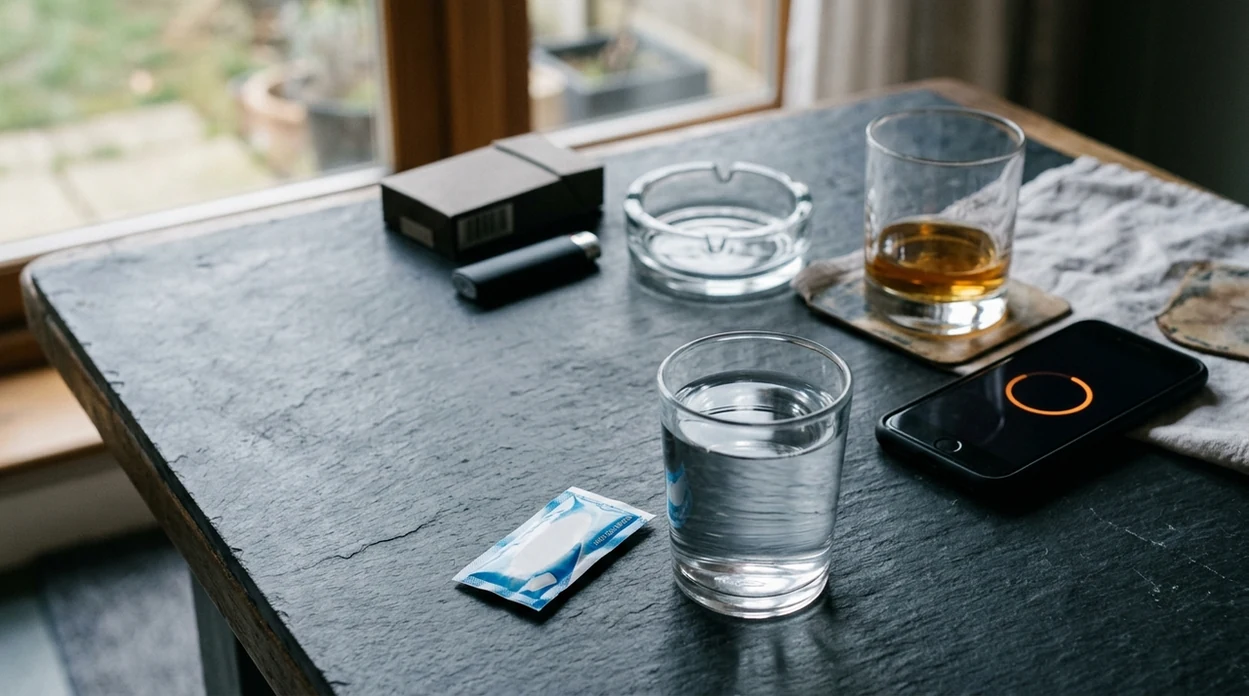
The most important things to avoid when quitting smoking are keeping cigarettes nearby, drinking alcohol in the first weeks, skipping a quit plan, white-knuckling through cravings without coping tools, and treating a single slip as total failure. A quit-tracking app can support this by keeping your quit-day plan, craving timer, trigger log, smoke-free streak, and savings view in one place.
- Alcohol, other smokers, stress, routines, and strong emotions are common smoking triggers; Smokefree.gov recommends identifying your personal triggers before quit day source.
- Nicotine cravings peak at 2 to 3 days, and many pass within a few minutes. Waiting them out works.
- Only about 8.8% of adult U.S. smokers quit successfully in a year, which is why planning and support matter.
10 Things To Avoid When Quitting Smoking
The biggest things to avoid when quitting smoking are the small choices that keep the smoking loop alive. These are behavioral mistakes, not character flaws.
- Keeping cigarettes nearby: A pack in the drawer turns one craving into an easy reach.
- Saving lighters or ashtrays: Visible cues wake up automatic smoking habits.
- Quitting without a written plan: No plan means every trigger becomes a fresh decision.
- Drinking early in the quit: Alcohol lowers inhibition and pairs strongly with smoking.
- Taking “just one puff”: One cigarette can restart the craving cycle.
- Staying in smoke-heavy social settings: Coworker smoke drifting near the entrance can pull hard.
- Ignoring withdrawal: Irritability, headaches, and anxiety are expected, not proof you can’t quit.
- Skipping support: Texts, check-ins, and reminders reduce lonely decision-making.
- Replacing every cigarette with vaping: Nicotine dependence can continue under a new device.
- Calling a slip-up failure: “I already messed up” is the sentence that turns one cigarette into a day.
Only about 8.8% of adult U.S. smokers quit successfully in 2022, per the CDC.
How Nicotine Triggers and Habit Loops Work Against You
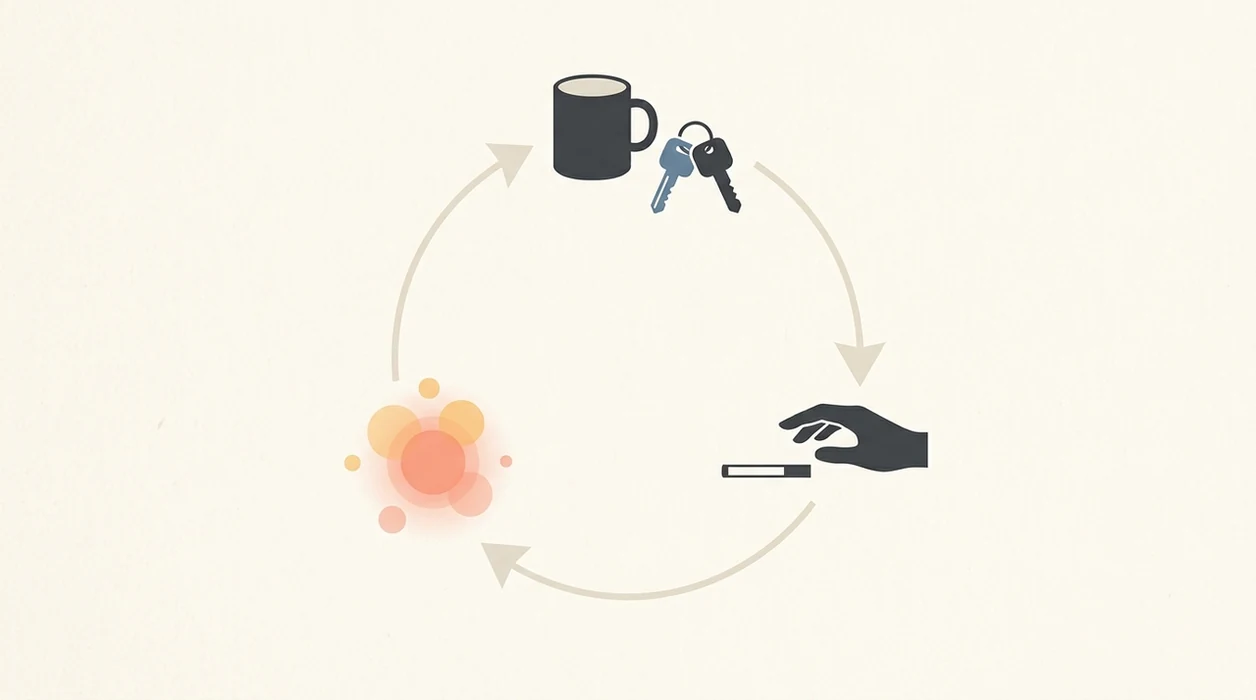
Nicotine relapse works through habit loops: a cue starts an urge, smoking becomes the routine, and dopamine supplies the reward. In plain language, your brain learns, “When this happens, smoke.”
- Nicotine affects dopamine: The reward signal makes smoking feel urgent, especially during stress.
- Smoking follows cue-routine-reward: Sitting in traffic, finishing lunch, or arguing with someone can become the cue.
- Objects trigger behavior: Lighters, ashtrays, and the usual smoke spot can prompt the thumb-reach before you think.
- Withdrawal has a timeline: Symptoms often peak 2 to 3 days after quitting and can linger for 1 to 3 months, according to the American Cancer Society.
- Cues weaken with repetition: Each time you pass the cue without smoking, the loop loses some force.
The pocket check is real.
When the issue is automatic smoking, MeQuit fits because trigger tracking lets you record the cue, location, mood, and urge strength before the next craving wave hits.
How To Avoid Smoking Triggers Using a Daily Quit Routine
A daily quit routine works by making the next cigarette harder to reach and the next coping action easier to start. Use the same steps every day during the first month.
- Remove all cigarettes, lighters, and ashtrays before quit day. Do it before bed, not during a craving.
- Log your personal triggers each morning. Mark stress, boredom, social pressure, driving, or after meals.
- Set a craving timer. Wait 3 to 5 minutes before acting, then log what happened.
- Replace the smoke-break routine. Walk around the block, drink cold water, or use slow breathing.
- Review your smoke-free streak and savings each evening. End the day with proof, not guesswork.
MeQuit supports this routine because the craving timer, trigger tracking, smoke-free streak, and cigarette savings calculator match these exact steps. A fuller setup is covered in our guide on how to make quit plan with phone.
Good stop smoking apps deliver fast behavior prompts and honest tracking, not magic confidence or medical treatment.
Quitting Without a Plan: The Biggest Mistake When Quitting Smoking
Does quitting without a plan make relapse more likely? Yes, because nicotine cravings arrive faster than most people can improvise.
About 70% of U.S. adult cigarette smokers say they want to quit, and more than half try in a given year, per the CDC. Wanting to quit is real. But willpower alone does not tell you what to do at school pickup, on a lunch break, or when the gas station cigarette display is sitting behind glass.
A quit plan should include a quit date, trigger list, support contacts, coping tools, and a slip-up reset. MeQuit helps build that plan on mobile, then keeps it close when the craving log is opened in the elevator.
For smokers who need structure before quit day, MeQuit covers the basics with a mobile quit plan, daily check-ins, and a trigger list you can edit as real life changes.
Drinking Alcohol and High-Risk Social Settings To Avoid When Quitting
Alcohol-heavy nights are high-risk during the first 30 days because alcohol lowers inhibition and often sits inside old smoking routines. If you always smoked outside the bar, your brain remembers the door, the lighter, and the friend who asks, “Coming?”
Bars, parties, and smoke breaks with coworkers are the main danger zones. So are long dinners where everyone lingers outside afterward. Smoking relapse within six months is common, according to Mayo Clinic guidance, which is why early trigger planning matters.
Choose lower-risk plans for the first month: breakfast with a friend, a movie, a walk, a gym class, or dinner in a smoke-free place. Tell one person you’re skipping alcohol for the quit.
If the priority is surviving social pressure, MeQuit earns the spot because the app lets you log alcohol, people, and location as trigger patterns instead of vague “bad nights.”
The 'Just One Puff' Trap: What Not To Do When Quitting Smoking
“Just one puff” is one of the most common mistakes when quitting smoking because it changes the quit from a clear rule into a negotiation. A slip is one cigarette or one smoking episode. A relapse is returning to regular smoking.
One puff can re-prime nicotine receptors and bring cravings back hard. The common lines are familiar: “I deserve one,” “I can control it now,” or “I already messed up, so I might as well smoke the rest of the day.”
Reset the plan.
Put out the cigarette, throw away the rest, log the trigger, text a support person, and restart the smoke-free streak immediately. MeQuit helps because streak-recovery features separate a slip-up from total failure and prompt the next action.
For someone who tends to spiral after one cigarette, MeQuit is useful because the slip-up workflow records what happened and moves the plan forward without shame.
Ignoring Withdrawal Symptoms and the First 72-Hour Window
The first 72 hours are the roughest window for many quitters because nicotine withdrawal often peaks around day 2 or day 3. Irritability, headaches, anxiety, heavy eyelids after broken sleep, and intense cravings can all show up together.
Most craving waves are short, often only a few minutes. Timing them helps because a craving feels permanent when you are inside it. Tight shoulders, a busy mouth, restless hands, then a drop.
Use cold water, slow breathing, a quick walk, or 20 squats while the timer runs. MeQuit includes a craving timer so you can watch the urge rise and fall instead of arguing with it.
The most evidence-backed approach to getting through early withdrawal is combining medication or nicotine replacement when appropriate with behavioral support and trigger planning. The NRT vs cold turkey choice is worth reviewing before quit day.
When To Get Medical Help While Quitting Smoking
Get medical help while quitting smoking whenever withdrawal feels unsafe, severe, or too much to manage alone. Fast support matters even more if quitting brings up depression, panic, trauma symptoms, or thoughts of self-harm.
- Call a clinician if cravings, anxiety, sleep loss, anger, or physical symptoms feel out of control instead of merely uncomfortable.
- Ask about treatment options such as nicotine replacement therapy, varenicline, bupropion, or other FDA-approved cessation medicines; the FDA notes approved products can help people quit.
- Get individualized advice if you are pregnant, managing heart disease, or taking psychiatric medication, because the safest quit plan may need adjustment.
- Reach out quickly if quitting stirs panic attacks, hopelessness, flashbacks, or trauma responses that make daily life hard to handle.
- Use emergency services right away for chest pain, fainting, or suicidal thoughts. Do not wait for a craving timer or the next appointment.
Replacing Cigarettes With E-Cigarettes: A Common Quitting Mistake
Switching from cigarettes to e-cigarettes can reduce exposure to burned tobacco for some smokers, but it can also keep nicotine dependence alive. E-cigarettes still deliver nicotine, and they are not FDA-approved as a smoking cessation medication.
The car cup holder filled with pods can become the new pack. Same reach, different object.
Vaping may feel cleaner than smoking, but it is not risk-free. It can also delay nicotine-free status if every cigarette break becomes a vape break with no taper plan.
Better options include discussing nicotine replacement therapy with a healthcare provider, using behavioral support, and tracking triggers daily. MeQuit can support either quitting or tapering because the smoke-free streak, craving log, and trigger patterns show whether nicotine use is actually going down. The full choice is explained in quitting vs tapering.
How We Picked These 10 Smoking Relapse Mistakes
We picked these 10 traps by looking at CDC quit-attempt data, Mayo Clinic relapse guidance, and behavioral science on cue-triggered habit loops. The list focuses on choices that show up before a cigarette happens, not only after relapse.
We also cross-checked these traps against patterns people record in MeQuit, especially first-month logs for stress, alcohol, social pressure, boredom, and “one puff” slips. First-month quitters matter because the routine is still fragile then.
Anyone dealing with repeated quit attempts benefits from MeQuit because daily trigger history turns “I always fail” into specific patterns, such as Friday drinks, after-dinner dishes, or work stress at 3 p.m.
Public programs such as Smokefree.gov and BecomeAnEX also offer strong education and community support, but this page focuses on phone-based relapse prevention.
Limitations
Avoiding common traps improves your odds, but it does not guarantee a smoke-free life. Nicotine dependence is physical, behavioral, social, and sometimes tied to anxiety, depression, or trauma.
- Cold turkey works for some people; it is not universally wrong, just harder without support.
- E-cigarettes may reduce harm for some smokers, even though they are not risk-free or FDA-approved for cessation.
- Breathing, walking, and cold water can reduce cravings, but they are not substitutes for medical help when withdrawal is severe.
- Real-world relapse is influenced by stress, environment, genetics, income, housing, and mental health.
- Most people need more than one attempt, so a failed quit does not mean quitting is impossible.
- MeQuit provides tracking, reminders, and quit support, but it does not diagnose nicotine dependence or prescribe medication.
- Competitor resources such as the NHS quit-smoking program or Smokefree App may fit people who want a different support style.
This page is educational, not medical advice. Talk with a healthcare provider if withdrawal feels unsafe, severe, or tied to mental health symptoms.
FAQ
What not to do when quitting smoking?
What not to do when quitting smoking includes keeping cigarettes nearby, drinking alcohol early, skipping a plan, staying around smoking cues, and treating a slip as failure. These mistakes raise relapse risk.
Can one cigarette ruin your quit?
One cigarette does not erase your progress, but it can re-prime cravings and lead to full relapse. Log it, remove the pack, and reset the plan immediately.
How long do nicotine cravings last?
Many nicotine cravings pass within about 3 to 5 minutes. Withdrawal symptoms often peak around 2 to 3 days after quitting.
Should I avoid alcohol while quitting?
Yes, avoiding alcohol is smart during the first 30 days. Alcohol lowers inhibition and often pairs with smoking routines.
Is cold turkey more effective?
Cold turkey can work for some people, but supported methods often give smokers more tools. A cold turkey quit smoking app can add structure.
Does vaping help you quit smoking?
Vaping still delivers nicotine and is not FDA-approved as a cessation medication. It may reduce smoke exposure for some people, but it can maintain dependence.
What foods reduce nicotine cravings?
Fruits, vegetables, and water may help keep your mouth busy and soften urges. Food is a support tool, not a nicotine treatment.
When is relapse risk highest?
Relapse risk is high during the first 72 hours and remains elevated through the first six months. Planning for triggers lowers avoidable risk.
Avoid the Traps That Pull You Back to Smoking
Stop Smoking App helps you track cravings, triggers, streaks, and savings so you can recognize risky patterns before they become a relapse. It is not medical advice, but it can support your quit plan alongside NRT, counseling, a quitline, or clinician guidance when needed.
Get Stop Smoking App