How To Stop Smoking: A Practical Guide For First-Time Quitters

Learning how to stop smoking starts with setting a firm quit date, choosing an evidence-based method like nicotine replacement or counseling, and building a concrete plan for handling cravings and triggers. Combining behavioral counseling with FDA-approved cessation medication is recommended because the combination improves quit rates more than either approach alone, according to U.S. Public Health Service/AHRQ guidance source.
> Definition: Quitting smoking is the process of ending nicotine dependence by combining a quit plan, evidence-based cessation tools, trigger management, and ongoing support to permanently stop using cigarettes or other tobacco products.
Medical scope: This guide is educational and does not replace advice from a doctor, pharmacist, midwife, or licensed counselor, especially if you are pregnant, have heart disease, have a seizure history, or take psychiatric medication.
TL;DR
- Pick a quit date 1–3 weeks out and tell people about it so you're accountable.
- Combine nicotine replacement or medication with counseling or an app, dual support roughly doubles success rates.
- Map your personal triggers, such as coffee, stress, and driving, then pre-plan a specific substitute action for each one.
- A slip is not a failure; most successful quitters needed more than one attempt.
- Track progress daily with a quit app to stay motivated through withdrawal peaks.
| Need | Best option |
|---|---|
| Track cravings, triggers, smoke-free streaks, and money saved in one simple quit plan | Stop Smoking App |
| Detailed milestone tracking with a large library of quit-smoking progress data | Smoke Free |
| Community-style motivation and public progress sharing while quitting | QuitNow or Kwit |
| Structured coaching, clinician-supported programs, or health-system guidance | Quit Genius or NHS Quit Smoking |
5 Facts Every First-Time Quitter Must Know About How To Stop Smoking
- A quit date works better when it has a runway. Choose a date 1–3 weeks away, then use that time to remove cigarettes, plan trigger swaps, and warn the people around you.
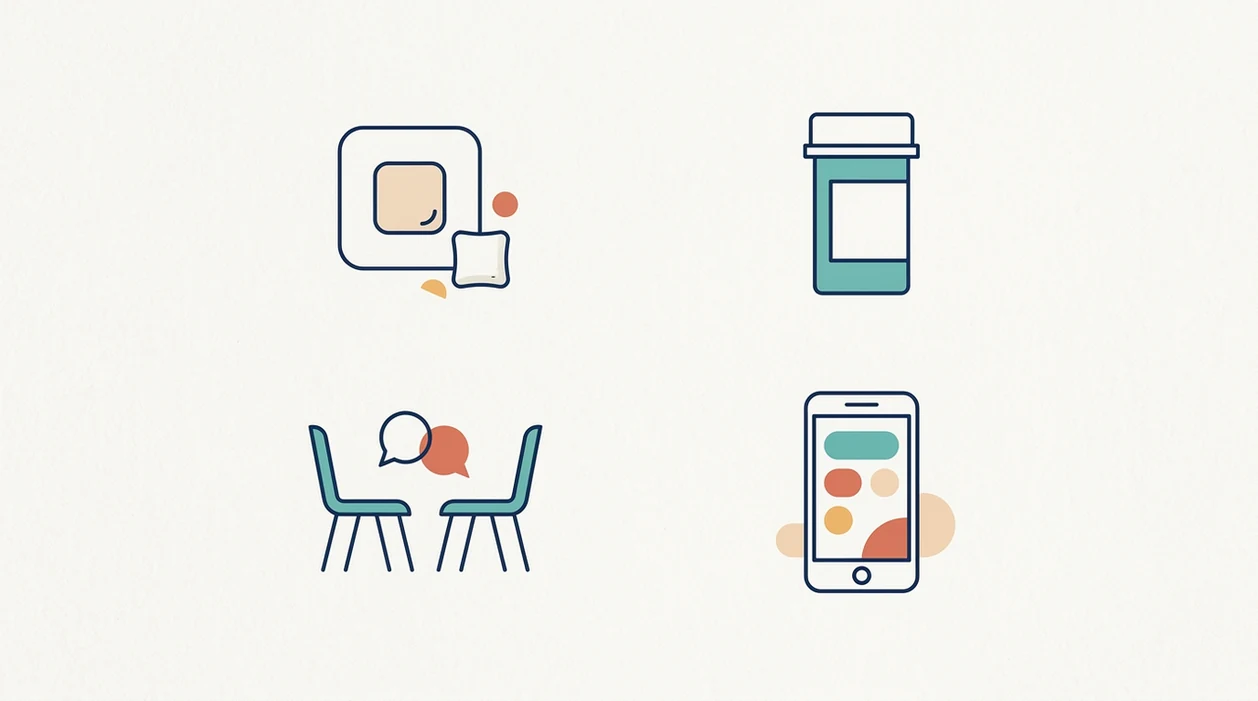
- Medication plus behavioral support is the strongest common approach. The most common medically supported way to stop smoking is cessation medication or nicotine replacement combined with counseling or structured behavioral support.
- Withdrawal is temporary, not a character flaw. Cravings often peak in the first 1–2 weeks, then usually soften as the body adjusts.
- Triggers need new routines. Meals, driving, stress, and the first morning drink can cue smoking even when nicotine levels are not low.
- A slip-up is data. Many people need several quit attempts, and the useful question is, “What happened right before it?”
The thumb reach is real.
Clinicians typically recommend evidence-based cessation treatment, especially medication plus counseling, because combined care improves quit odds more than either one alone, according to AHRQ guidance source.
4 Quitting Smoking Myths That Hold First-Time Quitters Back

Cold turkey is not the only “real” way to quit smoking. Some people do it, but many first-time quitters do better with nicotine replacement, medication, counseling, app support, or a mix.
One cigarette after quit day does not erase the attempt. The danger is the thought, “I already messed up, so I might as well smoke the rest of the day.” Write down what triggered the slip, then reset the plan before the next cigarette becomes automatic.
Nicotine replacement therapy is not the same as smoking. NRT gives controlled nicotine without cigarette smoke, tar, and carbon monoxide, so withdrawal becomes easier to manage.
Motivation matters, but it is not the whole job. The better question is practical: what will you do at the red traffic light beside a convenience store, when your old route used to include a cigarette?
Nicotine Dependence Biology and Why Willpower Alone Fails
Nicotine dependence works through reward pathways, withdrawal kinetics, and conditioned cues. In plain terms, cigarettes teach the brain to expect fast relief, then daily routines start pulling the trigger before you even think.
Nicotine rapidly reaches the brain and reinforces dopamine-driven reward pathways, which is one reason cravings can feel automatic rather than purely voluntary, according to the National Institute on Drug Abuse source. When nicotine drops, irritability, anxiety, poor sleep, hunger, and cravings can show up. That is neurochemistry, not moral weakness.
Habit loops add another layer. The brain links smoking with the porch, the commute, the lunch break, or the after-dinner pause. Those cues can fire cravings even when nicotine levels are not the main issue.
That is why structured quitting beats white-knuckling. Medication can lower withdrawal pressure, while behavioral support helps you practice a different move when the craving wave hits.
Best Way To Stop Smoking: 4 Evidence-Based Methods Compared
The best way to stop smoking for many people is to combine a medication-based method with behavioral support. One tool handles withdrawal; the other handles routines, triggers, and the “what now?” moments.
Nicotine Replacement Therapy (NRT)
NRT includes patches, gum, lozenges, inhalers, and sprays. FDA-approved nicotine replacement products can roughly double quit chances compared with quitting without them, per the CDC.
Prescription Cessation Medication
Varenicline and bupropion can reduce cravings and withdrawal for many smokers. They are not for everyone, so talk with a clinician if you have pregnancy, seizures, mood changes, or other health concerns.
Counseling and Quit Apps
Phone quitlines, in-person counseling, digital CBT, and quit apps help you track what actually happened. Quit tools such as MeQuit, the National Cancer Institute’s QuitGuide, and SmokefreeTXT can support craving logging, smoke-free streaks, and daily motivation, but none is a magic button that removes addiction.
For readers comparing approaches, the NRT vs cold turkey guide explains why support can beat “just stop” for many people.
Quit Date Checklist Before You Start Quitting Smoking
A quit date checklist turns a good intention into a usable plan. Pick a quit day 1–3 weeks from today, then make the next cigarette harder to reach before withdrawal starts.
Use this checklist:
- Choose the date and put it on your phone calendar.
- Tell family, friends, and coworkers what you are doing.
- Remove cigarettes, lighters, ashtrays, and spare packs from home, car, and work.
- Stock up on NRT, or get the prescription filled before quit day.
- Set up a quit app in advance, including reminders and trigger notes.
- Write your reasons to quit in one place.
A stale smoke smell on a winter coat can be a stronger reason than a statistic. Keep that reason visible. If you want a phone-first setup, a personalized quit smoking plan app can help organize the checklist before day one.
6-Step Quit Plan To Stop Smoking
Here is how to use a stop smoking plan on quit day and during the first week. Keep it simple enough to follow when your shoulders are tight and your mouth feels busy.
- Set your quit date and log it in MeQuit or another tracking tool before the day arrives.
- Identify your top 5 smoking triggers and write one substitute action for each, such as gum, water, a walk, or a text.
- Start NRT or medication on quit day, or follow the timing your clinician prescribed.
- Log every craving with the time, trigger, intensity, and what you did instead.
- Review your daily progress dashboard each evening to reinforce smoke-free time, money saved, and health gains.
- Reset the plan after any slip-up and adjust the trigger response instead of abandoning the attempt.
Reset fast.
If you need a more detailed setup, the guide on how to make quit plan with phone walks through the planning pieces.
5 High-Risk Smoking Triggers and Craving Tactics
High-risk triggers are predictable, so prepare specific moves before they hit. A craving tactic should be small, immediate, and repeatable.
| Trigger | Tactic |
|---|---|
| Morning coffee | Switch to tea for two weeks, or drink coffee in a different chair or room. |
| After meals | Brush your teeth, chew sugar-free gum, or take a 7-minute walk. |
| Driving | Remove the car lighter, keep mints in the console, and change your usual route. |
| Stress | Try 4-7-8 breathing, then log the craving before deciding what to do. |
| Alcohol and friends | Avoid heavy drinking early on and tell friends, “I’ve quit, don’t offer me one.” |
Restless legs under the dinner table can feel like an emergency. It usually is not. Ride the craving wave for 10 minutes, then check whether it changed.
5 Common Mistakes First-Time Quitters Make When Trying To Stop Smoking
Most first-time quit mistakes are planning mistakes, not personal failures. Fixing them early makes the next hard moment less chaotic.
- Relying on willpower alone. Nicotine dependence responds better to tools than to self-criticism.
- Having no slip-up plan. Decide now what you will do after one cigarette.
- Keeping emergency cigarettes. “Just in case” packs become permission slips.
- Skipping trigger mapping. If you do not name the cue, you cannot plan the substitute.
- Ignoring withdrawal symptoms. NRT, counseling, and clinician support exist for exactly this part.
Some people also choose a plan that does not match their pattern. If you smoke heavily in fixed routines, the quitting vs tapering question may be worth thinking through before quit day.
Quit Smoking Progress Metrics After Your Last Cigarette
Progress is easier to trust when you measure it. Track smoke-free days, money saved, cravings logged, and health milestones in the MeQuit stop smoking app or another quit tracker.
During the first month, many people notice changes in taste, smell, breathing, and blood pressure. Cravings should often reduce in frequency and intensity after 2–4 weeks, though rough days can still appear.
The hallway smells different first.
A health milestone read in bed can help when motivation is thin, but symptoms matter too. If cravings remain severe after 4 weeks, talk with a doctor about adjusting medication, adding counseling, or checking whether another factor is making withdrawal harder.
When To Get Medical Help While Quitting Smoking
Get medical help if quitting feels medically complicated, emotionally unsafe, or if withdrawal is not easing after several weeks. You do not have to wait until the plan falls apart; a pharmacist, quitline counselor, or clinician can help you adjust early.
- Call a clinician before using quit-smoking medication if you are pregnant, trying to become pregnant, or breastfeeding, because the safest option may depend on timing, dose, and your health history.
- Ask about medication choices if you have seizures, heart disease, severe anxiety or depression, or a complex prescription list that could interact with bupropion, varenicline, or nicotine products.
- Seek urgent help immediately for chest pain, fainting, severe depression, thoughts of self-harm, or suicidal thoughts. If danger feels immediate, call emergency services or a crisis line.
- Use a pharmacist or quitline when you are unsure about patch strength, gum or lozenge timing, or combining long-acting and short-acting NRT.
- Contact a doctor if cravings remain intense after a few weeks, sleep is collapsing, or you keep slipping despite following the plan.
Limitations
No stop smoking guide can promise one method will work for every person. The right plan depends on dependence level, health history, daily routines, stress load, and personal preference.
- Quit apps provide reminders, tracking, and motivation, but they are not a substitute for medical treatment when nicotine dependence is strong.
- NRT and prescription medications can reduce cravings, but they do not remove the need to change routines.
- Many people need several quit attempts before they stop permanently.
- Detoxes, supplements, and willpower-only claims are not well supported by strong evidence.
- Success statistics are population averages; individual results vary widely.
- Pregnancy, heart disease, seizure history, severe anxiety, or complex medication use should be discussed with a clinician.
- Counseling access can be uneven, and some people need more support than an app or checklist can provide.
According to the National Center for Biotechnology Information, cessation medications and counseling are evidence-based treatments, with the strongest results often coming from combining both source.
FAQ
Is quitting smoking cold turkey effective?
Cold turkey works for some people, but combining support methods usually improves the odds of success. A cold turkey quit smoking app can help if you choose that route.
How long do smoking withdrawal symptoms last?
Most physical withdrawal symptoms peak in the first 1–2 weeks. Many symptoms ease substantially within a month.
Does nicotine replacement therapy still contain nicotine?
Yes, nicotine replacement therapy contains nicotine in controlled doses. It does not contain the tar, carbon monoxide, and many toxic chemicals found in cigarette smoke.
Can I combine nicotine patches and gum?
Yes, combination NRT often uses a long-acting patch with short-acting gum or lozenges for sudden cravings. Ask a pharmacist or clinician about dosing.
How can I stop smoking naturally?
Behavioral options include avoiding triggers, changing routines, exercising, breathing exercises, and social support. These can help, but severe withdrawal may still need medical support.
What happens when you quit smoking suddenly?
Sudden quitting can cause cravings, irritability, insomnia, anxiety, increased appetite, and trouble concentrating. Symptoms are usually strongest early and then improve.
Do quit smoking apps actually work?
Quit smoking apps can help with tracking, craving management, reminders, and motivation. Apps such as MeQuit are most useful when combined with a clear quit plan and evidence-based support.
How many quit attempts does it usually take before success?
Most successful quitters make more than one attempt. Each attempt can reveal triggers, weak spots, and better supports for the next plan.
Can I quit smoking while pregnant?
Yes, quitting during pregnancy is strongly recommended, but medication choices differ. Speak with a doctor or midwife as soon as possible.
Does smoking one cigarette reset my quit progress?
No, one cigarette does not erase health gains or require starting over. Treat it as a slip-up, identify the trigger, and restart immediately.
Start Your Quit Plan With Stop Smoking App
Use Stop Smoking App to track cravings, smoke-free days, savings, and relapse recovery as you work through your quit plan. For medical questions, heavy nicotine dependence, pregnancy, mental health concerns, or medication support, combine the app with clinician guidance or a quitline.
Get Stop Smoking App