
Quit Smoking App Data Sharing: What Third Parties Get Your Information

Quit smoking app data sharing is widespread. A 2019 JAMA Network Open study found that 92% of depression and smoking cessation apps shared data with third parties, often routing information to Google or Facebook through advertising identifiers source. Most quit-smoking apps fall outside HIPAA protection, so your smoking habits, cravings, smoke-free streak, and device data may be handled under weaker consumer protection rules.
This guide is privacy education, not medical, legal, or clinical advice. If you are quitting while pregnant, using cessation medication, managing a mental health condition, or experiencing severe withdrawal symptoms, use app privacy checks alongside guidance from a clinician or quitline.
Definition: Quit smoking app data sharing refers to the collection, storage, and transmission of user-entered smoking habits, cravings, progress data, device identifiers, and behavioral information to third-party companies such as analytics services, advertising networks, and tech platforms.
TL;DR
- 92% of smoking cessation and mental health apps in a 2019 study shared data with third parties, including Google and Facebook.
- Most quit-smoking apps are not covered by HIPAA and instead fall under weaker FTC consumer protection oversight.
- Privacy-respecting alternatives exist, such as the NHS Quit Smoking app, which says it stores only anonymised data within the UK and does not pass app data to third parties.
Five Facts About Quit Smoking App Data Sharing
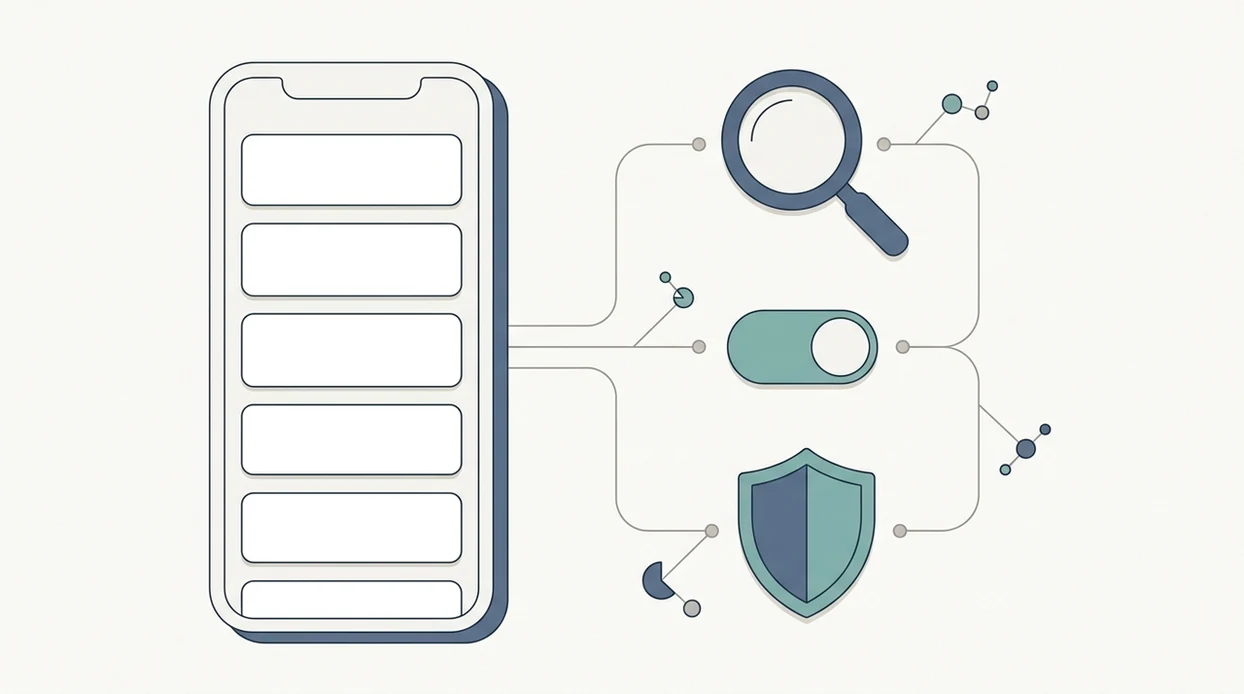
- Most apps in the JAMA study shared data. In the 2019 analysis, 33 of 36 depression and smoking cessation apps, or 92%, sent some data to third parties.
- Google and Facebook were common recipients. Among studied apps, 81% sent data to Google or Facebook. That can happen even when your name never appears on the screen.
- Direct health-status sharing was less common. Only 6% transmitted individually reported health status, but technical data can still say a lot about quit-day behavior.
- HIPAA usually does not apply. Most commercial quit-smoking apps are not run by your doctor, insurer, or covered health system.
- Privacy-respecting designs are possible. The NHS Quit Smoking app states that app data is not passed to third parties and anonymised activity data stays in the UK source.
The pocket check is real. If you open a craving log outside the office door, that moment may create more than a private note.
How Quit Smoking App Data Sharing Works Behind the Scenes
Quit smoking app data sharing usually works through software development kits, or SDKs, embedded inside the app. These small code packages handle analytics, advertising, crash reports, push notifications, and sometimes attribution.
Ad SDKs and Analytics Pipelines in Nicotine Apps
An app may store your cigarette count in its own database. That is first-party storage. Third-party transmission happens when the app sends event data through an API call to an outside server, such as Google, Facebook, or an analytics vendor. In the JAMA study, 73% of transmitting apps used anonymised advertising identifiers. Those IDs are not your name, but they can connect patterns across apps, devices, and time.
Here is the plain version: a craving wave at 3:17 p.m., a notification tapped in the elevator, and a smoke-free streak update can become behavioral signals. Good quit-smoking apps deliver craving tools and progress tracking, not invisible profiling as the price of basic support. For evidence questions separate from privacy, our guide asks are quit smoking apps evidence-based.
Smoking Apps That Share Data: Named Examples and Patterns
Smoking apps that share data are usually commercial apps using ad-supported, analytics-heavy, or growth-marketing models. The risk is not one brand name. It is the pattern: free app, ad SDKs, broad permissions, vague policy.
Public Health Apps vs Commercial Smoking Cessation Apps
- Commercial ad-supported apps: These are the highest-risk category because advertising identifiers and behavioral events may fund the product.
- Public health apps: The NHS Quit Smoking app is a clear counterexample because its policy says app data is not passed to third parties.
- Apps with no privacy policy: In the JAMA study, 9 of 36 apps had no privacy policy. That is a hard stop for sensitive smoking data.
- Apps with contradictory claims: Three apps falsely said no third-party sharing would occur.
- Privacy-first commercial tools: Tools like MeQuit should be judged by policy clarity, permissions, SDK disclosure, and whether core quitting features work without ad tracking.
When comparing named quit-smoking apps such as NHS Quit Smoking, Smoke Free, Kwit, QuitNow, EasyQuit, and MeQuit, check each current privacy policy rather than assuming a privacy label reflects live SDK behavior.
A porch chair with old ash marks can be enough motivation to quit. It should not also become an advertising profile.
How We Evaluate Quit Smoking App Data Sharing
We evaluate quit smoking app data sharing by looking for evidence of what leaves the app, who receives it, and whether quitting support is tied to tracking. A safer app is not automatically the most clinically effective app; privacy review is a separate lane.
- Read the policy for named recipients. Look for specific processors, analytics tools, crash-reporting services, ad networks, and platform partners, not just “trusted third parties.”
- Compare the labels with the fine print. Match Apple or Google privacy labels against the policy language and the permissions the app asks for on your phone.
- Favor core features without ad tracking. Craving timers, quit dates, savings calculators, and streaks should work without personalised ads or advertising identifiers.
- Check control rights. Note whether the app explains account closure, data deletion, export, and what happens to backups or anonymised records.
- Keep privacy claims separate from health claims. FDA status, evidence ratings, and counseling quality matter, but they do not answer whether your craving log is shared with analytics or ad systems.
How to Check a Quit Smoking App's Data Sharing Practices
How to use a privacy check before choosing a quit smoking app:
- Read the privacy policy before downloading. Look for smoking habits, cravings, device identifiers, analytics, advertising, and third-party processors.
- Check app store privacy labels. Apple and Google labels are useful, but they are not a full network-traffic audit.
- Review app permissions. Deny location, contacts, camera, and microphone unless the quit feature clearly needs them.
- Look for SDK disclosures. Search the policy for “Google,” “Meta,” “Facebook,” “analytics,” “advertising,” “crash reporting,” and “partners.”
- Limit tracking at the OS level. Turn off ad personalisation and revoke app tracking permission where your phone allows it.
- Switch apps if the story does not add up. A missing policy, broad permissions, or unclear sharing is enough reason to reset the plan.
For a wider privacy checklist, compare this with our quit smoking app privacy guide. For nicotine dependence, CDC guidance recommends combining counseling or behavioral support with FDA-approved cessation medicines when appropriate, rather than relying on reminders alone source.
Common Myths About Nicotine App Third Parties and Privacy
Myth: A privacy policy means no data is shared. A policy often explains sharing; it does not promise privacy. Read the verbs: collect, disclose, transfer, process.
Myth: HIPAA covers all smoking app data. Most consumer nicotine apps are not covered entities. Your quit-day notes may sit outside medical privacy law.
Myth: device IDs are harmless. Advertising IDs and usage patterns can be cross-referenced. A vape shop sign on the bus route plus repeated app opens after work can form a pattern.
Myth: only medical apps handle sensitive health data. A cigarette savings calculator, nicotine cravings tracker, and smoke-free streak tracker can all describe health behavior.
For people comparing support options, a privacy-respecting app is often easier to trust than an ad-funded app because the data incentives are simpler.
HIPAA, FTC, and Legal Gaps in Smoking App Data Protection
Most third-party health apps are not covered by HIPAA when they are not offered by a covered health provider, health plan, or their business associate; HHS explains that many consumer health apps fall outside HIPAA, while the FTC can act against deceptive or unfair privacy practices HHS source FTC source. That matters because the FTC Act focuses on unfair or deceptive practices, not a detailed medical privacy rule for every craving log.
The legal gap is practical. If you enter “first cigarette at 6:40 a.m.” or log a slip-up after sitting in traffic, the app may treat that as consumer app data. In the EU and UK, GDPR gives broader rights over personal data, but enforcement still depends on notices, consent, and actual data flows. The gray area is behavioral health data inside ordinary commercial apps. If a tool also makes medical claims, our are stop smoking apps FDA approved explainer covers that separate question.
Red Flags That a Smoking App Shares Data Unsafely
A smoking app shares data unsafely when its data practices are hidden, contradictory, or excessive for the quit feature being offered. Watch for these red flags before you put your first week into the app.
- No privacy policy at all. Do not enter smoking history into an app that gives no written data rules.
- “No sharing” claims paired with ad SDKs. That contradiction deserves caution.
- Unneeded permissions. Location, contacts, and camera should have a plain quit-related reason.
- Vague legal language. Phrases like “trusted partners” without names are not enough.
- Ad tracking tied to basic features. A craving timer should not require personalised advertising.
Small friction helps. If an app makes the next cigarette harder to reach but makes tracking consent impossible to understand, choose another tool.
When to Get Professional Help While Using a Quit Smoking App
Get professional help if quitting starts to feel medically risky, emotionally destabilising, or bigger than an app can safely handle. Privacy checks can protect your data, but they do not replace a quit plan built with a clinician, pharmacist, counselor, or quitline coach.
- Call a clinician if withdrawal feels severe. Intense anxiety, low mood, sleep disruption, chest symptoms, or cravings that feel out of control deserve real-time support, not just another notification.
- Ask before mixing quit-smoking medicines. Nicotine patches, gum, lozenges, varenicline, bupropion, and other medicines can be effective, but combinations and doses should be checked against your health history.
- Get tailored advice if your situation is higher risk. Pregnancy, being under 18, heart disease, lung disease, or complex mental health needs can change the safest quitting approach.
- Contact a quitline when cravings lead to relapse or unsafe coping. If you are chain-smoking after a slip, using alcohol or other substances to cope, or feeling unsafe, use a quitline or urgent local support.
- Keep the app in its lane. Use it for tracking, reminders, and pattern spotting; use professionals for diagnosis, medication decisions, and cessation planning.
Limitations
Data-sharing research can show strong warning patterns, but it cannot tell you everything about every app today.
- “Anonymised” data can sometimes be re-linked through device IDs, timing, and cross-app tracking.
- Privacy policies may be outdated, incomplete, or written so densely that normal users miss the key point.
- Network-traffic studies are snapshots. An app update can add, remove, or change SDK behavior.
- Users cannot inspect every analytics pipeline, server-side profile, or advertising match process.
- Regulations often lag behind technology, which creates enforcement gaps.
- Study samples are small compared with the total number of quit smoking and stop vaping apps in app stores.
- App store privacy labels are self-reported in many cases, so they may not capture every behind-the-scenes transmission.
If you need medical advice, a smoking app cannot replace a clinician. Our guide on whether a can quit smoking app replace doctor explains that boundary.
FAQ
Do quit smoking apps sell my data?
Direct sale is not always the issue. Many apps share data with ad networks, analytics providers, or platform services that can use identifiers and behavior signals.
Does HIPAA protect smoking app data?
Most commercial quit-smoking apps fall outside HIPAA. They are usually governed by FTC consumer protection rules instead.
Which smoking apps don't share data?
The NHS Quit Smoking app says it does not pass app data to third parties. Look for apps that name processors clearly and do not require ad tracking for core features.
Can a quit smoking app track my progress?
Yes. Progress tracking is a core feature, but smoke-free streaks, cravings, and cigarette counts may be stored or shared depending on the app policy.
Is quitline data confidential?
Quitline data is usually handled under program confidentiality rules and health-service procedures. That is different from typical commercial app data sharing.
What data do nicotine apps collect?
Nicotine apps may collect smoking habits, cravings, quit dates, progress logs, device IDs, location, and app usage patterns. Some also collect demographics or notification interactions.
Can I stop an app sharing my data?
You can limit ad tracking, revoke permissions, disable personalised ads, and delete accounts where supported. If the policy is unclear, switch to a privacy-respecting app such as MeQuit or a public health option.
Are app privacy labels always accurate?
No. Privacy labels can be self-reported and may not reflect SDK-level data transmission. MeQuit users should still review permissions and policy details before entering sensitive quit information.
Quit with clearer progress tracking
Stop Smoking App helps you track cravings, streaks, savings, and relapse recovery while you build a practical quit plan. Use it alongside NRT, counseling, a quitline, or clinician guidance when extra support is needed.
Get Stop Smoking App