Physical Changes After Quitting Smoking: Your First-Year Recovery Map

Physical changes after quitting smoking begin within 20 minutes: your heart rate drops, blood pressure starts normalizing, and carbon monoxide clears from your blood within hours. Over the first year, you can expect improved taste and smell, easier breathing, better circulation, and a roughly 50% reduction in excess coronary heart disease risk. MeQuit stop smoking app helps you notice those changes as they happen, not three months later when the first week already feels blurry.
> Definition: Physical changes after quitting smoking are the sequential, measurable physiological improvements, from heart rate normalization within minutes to halved heart disease risk at one year, that occur when a person stops using cigarettes.
TL;DR
- Your body starts healing within 20 minutes of your last cigarette, not weeks or months.
- By 2–12 weeks, circulation and lung function improve enough to make exercise noticeably easier.
- At the one-year mark, your excess coronary heart disease risk drops by about half compared to a current smoker.
At-a-Glance: Body Recovery After Quitting Smoking Timeline
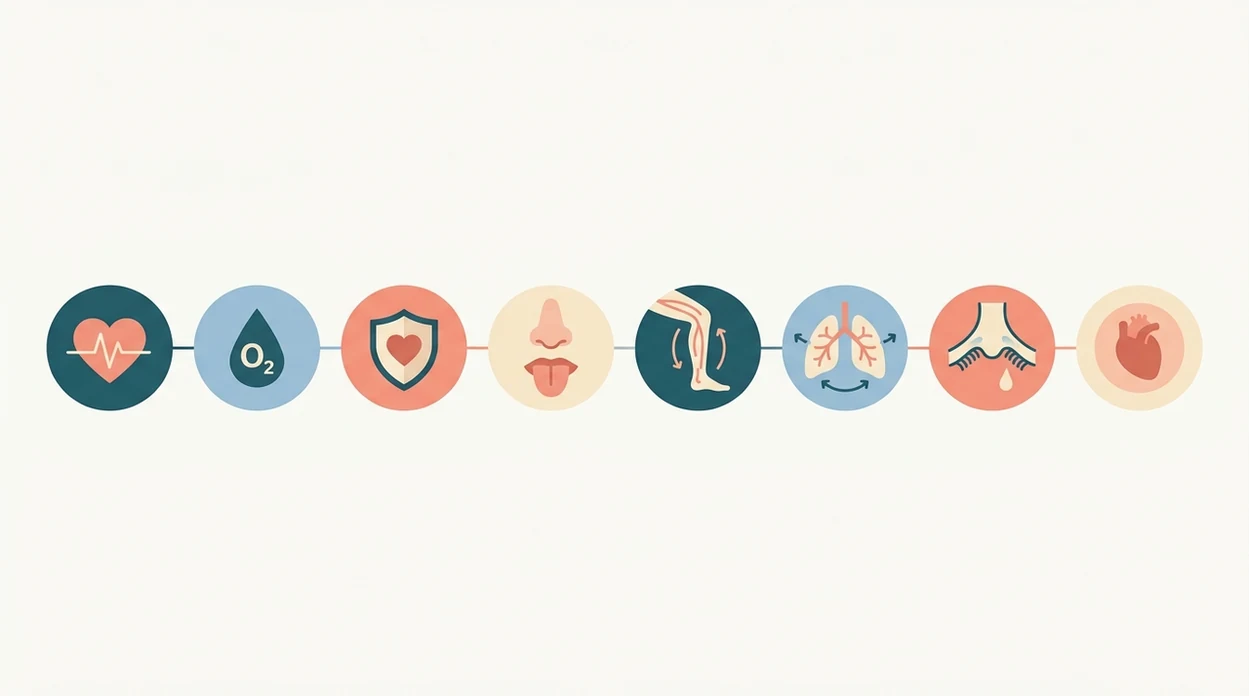
Body recovery after quitting smoking starts fast, but the full recovery arc takes months and years. The table below gives average milestones; pack-years, age, lung disease, and daily nicotine level can shift the timing.
| Time since last cigarette | What often changes physically |
|---|---|
| 20 minutes | Heart rate and blood pressure begin moving toward normal, per the CDC. |
| 8 hours | Carbon monoxide falls, so blood carries oxygen more effectively. |
| 24 hours | Heart strain begins dropping as oxygen levels improve. |
| 48 hours | Taste and smell often sharpen. Food may seem louder somehow. |
| 2 weeks | Circulation starts improving; walking may feel less heavy. |
| 1–3 months | Lung function and shortness of breath often improve. |
| 6 months | Coughing and mucus clearance may be noticeably better. |
| 1 year | Excess coronary heart disease risk is about half that of a continuing smoker, according to NCI and Surgeon General evidence. |
Anyone dealing with vague “am I actually healing?” doubt can use MeQuit because the milestone view turns invisible recovery into dated heart, lung, and circulation checkpoints.
5 Must-Know Facts About Physical Changes After Quitting Smoking

Physical changes after quitting smoking are not all pleasant at first. Healing and withdrawal can happen at the same time, which is why the first week can feel confusing.
- Recovery begins within minutes, not weeks; heart rate and blood pressure start improving before the day is over.
- Nicotine withdrawal often peaks around days 2–4, then usually eases across weeks 2–4.
- Lung function and circulation can improve within 2–12 weeks, according to the WHO source.
- People who quit by around age 40 reduce smoking-related death risk by about 90% compared with those who continue, according to a major NEJM study source.
- No supplement, steam routine, or “lung detox” instantly cleans smoke damage; sustained abstinence lowers risk over time.
The most evidence-backed approach to body recovery after quitting smoking is staying abstinent while using behavioral support, medication when appropriate, and trigger planning.
If the priority is seeing proof during the rough part, MeQuit fits because the smoke-free streak and recovery meters show progress even on days when cravings are loud.
What Happens to Your Body After Quitting Smoking: Week-by-Week Map
What happens to your body after quitting smoking follows a rough sequence: oxygen improves first, withdrawal peaks next, then circulation and lung repair become easier to feel. The full quit smoking timeline adds more long-term disease-risk milestones.
Minutes to 72 Hours: Heart Rate, Blood Pressure, and Carbon Monoxide
Heart rate and blood pressure begin dropping within 20 minutes. By 24 hours, carbon monoxide is falling, and oxygen delivery improves. Some people notice a quick heartbeat before an urge passes. That can be withdrawal, not danger, but chest pain needs medical care.
Weeks 1–4: Taste, Smell, and Peak Withdrawal
Taste and smell often return during the first week. Nicotine cravings, irritability, poor sleep, and brain fog usually hit hardest between days 2 and 7. A tight jaw during a craving wave is common. Annoying, but temporary.
Months 2–6: Circulation, Lung Function, and Skin Recovery
By weeks 2–12, circulation and lung function can improve. By months 2–3, stairs may feel less punishing. By months 4–6, cilia in the bronchial tubes keep clearing mucus, and skin tone may look less gray.
Months 7–12: Halved Heart Disease Risk and Sustained Energy
By months 9–12, lung infections may become less frequent, energy often steadies, and excess coronary heart disease risk is about half that of a continuing smoker.
How Body Recovery After Quitting Smoking Works
Body recovery after quitting smoking works through toxin clearance, vascular repair, airway cleanup, and slower tissue rebuilding. Nicotine has a half-life of about two hours, and most nicotine leaves the body within about 72 hours, though cravings can outlast the chemical.
Carbon monoxide is different. It competes with oxygen on red blood cells, so when smoking stops, oxygen transport improves within about 24 hours. Blood vessels also begin repairing the vascular endothelium, the inner lining that helps regulate nitric oxide and blood flow. In plain English: vessels get better at relaxing.
Lungs take longer. Cilia, the tiny sweeping hairs in the bronchial tubes, start working again and move trapped mucus upward. That can mean more coughing before less coughing. Skin, gums, and taste buds often change faster because cellular turnover is quicker there than in scarred lung tissue.
Good stop smoking apps deliver repeated cues, craving records, and recovery feedback, not a magic lung cleanse.
How to Track Physical Changes After Quitting Smoking
Track physical changes after quitting smoking by recording a baseline, then checking small changes on a schedule. Memory is unreliable during withdrawal; a shaky thumb on an urge rating tells a truer story than “I felt awful all week.”
- Set your quit date and log it in MeQuit before your first smoke-free morning.
- Record baseline metrics: resting heart rate, breathing ease, taste sensitivity, and how many stairs make you pause.
- Log daily symptoms and cravings during weeks 1–4, including sleep, coughing, mood, and trigger times.
- Review milestone notifications for heart, lung, and circulation meters at each recovery phase.
- Track fitness gains monthly, such as walk distance, stair-climbing ease, or how long you can move without stopping.
- Reset if you slip; one cigarette doesn't erase weeks of recovery.
People who relapse after a stressful call can use MeQuit because the reset workflow asks what happened, what trigger showed up, and what makes the next cigarette harder to reach.
Common Myths About What Happens to Your Body After Quitting Smoking
The biggest myth is that nothing changes for weeks. In reality, measurable recovery starts within 20 minutes, even if your mood has not caught up yet.
Another myth says it is too late after decades of smoking. It is not. Risk drops at any age, and the NEJM age-40 finding shows how large the benefit can be when quitting happens earlier. Lung function can also improve within months, even when older damage does not fully reverse.
Weight gain worries many quitters. A modest gain does not cancel the cardiovascular and cancer-risk reduction from quitting. Plan snacks, movement, and sleep, but do not trade a smoke-free streak for scale panic. For the first month specifically, quitting smoking benefits after 30 days can help set realistic expectations.
Switching fully from cigarettes to vaping may reduce some smoke exposure, but continued nicotine use can still affect blood vessels and keep the hand-to-mouth habit alive. The pocket check is real.
Why Some People Feel Worse Before Body Recovery Kicks In
“I quit smoking, why do I feel worse?” Usually, the answer is withdrawal plus airway cleanup, not failure. Irritability, insomnia, brain fog, constipation, headaches, and increased coughing can appear right when the body is starting to heal.
Coughing may rise because cilia are reactivating and moving old mucus. Mood swings often peak days 3–7 and ease during weeks 2–4. Anxiety and low mood can feel personal, but withdrawal is not “the real you.” It is a temporary brain chemistry adjustment.
See a doctor urgently for chest pain, fainting, coughing blood, severe shortness of breath, or depression with thoughts of self-harm. Otherwise, use support to ride the wave. Clinicians typically suggest combining medication options, counseling, and behavior tracking for people who struggle with repeated quit attempts.
If your priority is getting through restroom-stall urges between classes or shifts, MeQuit covers the gap with breathing prompts, craving logs, and push reminders.
When to Seek Medical Help After Quitting Smoking
Seek medical help right away if symptoms feel dangerous, sudden, or outside normal withdrawal. Recovery timelines can explain common patterns, but they cannot diagnose heart disease, lung disease, or a new medical problem.
- Get urgent care for chest pain, fainting, coughing blood, or severe breathlessness, especially if symptoms are new or getting worse.
- Contact a clinician if withdrawal symptoms keep disrupting sleep, work, breathing, appetite, or daily life beyond the usual first few weeks.
- Ask promptly for mental-health support if depression deepens, anxiety feels unmanageable, or you have thoughts of self-harm; crisis help should not wait.
- Discuss nicotine replacement, varenicline, bupropion, or other quit-smoking medications with a clinician, particularly if cravings keep causing slips.
- Share your smoking history, pack-years, vaping use, and any heart or lung conditions so advice fits your actual risk, not just an average timeline.
Feeling rough after quitting can be normal. Feeling unsafe is different. The smartest move is not “toughing it out”; it is getting the right level of help early.
Limitations
Recovery timelines are useful, but they are not a promise for every body. MeQuit can help you track what actually happened, but it cannot diagnose symptoms or replace medical care.
- Timelines are population averages; genetics, pack-years, secondhand smoke, and medical history change recovery speed.
- Severe COPD, emphysema, or advanced cardiovascular disease may not fully reverse, even after quitting.
- Some people have withdrawal symptoms beyond the typical 2–4 week window.
- No app, supplement, sauna, tea, or detox product instantly cleans lungs or erases cancer risk.
- Continued vaping or “just one” cigarette still affects blood vessels, lungs, and heart.
- Lung cancer risk takes about 10 years to fall by half, according to Cancer.gov source.
- Weight, diet, exercise, alcohol use, sleep, and stress also affect how recovery feels.
Smokefree.gov and NHS Better Health offer strong public-health guidance; MeQuit is better used as a daily tracking layer beside that advice.
FAQ
When do lungs start healing after quitting?
Cilia in the airways can begin reactivating within about 72 hours. Lung function is often measurably better within 2–12 weeks.
Does skin improve after quitting smoking?
Yes. Better blood flow can improve skin tone, oxygen delivery, and collagen support over weeks to months.
Why do I cough more after quitting?
Coughing can increase because cilia are regrowing and clearing trapped mucus from the airways. This is often a healing sign, not new damage.
How long until breathing feels normal?
Most quitters notice easier breathing within 1–3 months. Severe lung damage can take longer and may not fully reverse.
Will my circulation fully recover?
Circulation often improves within 2–12 weeks and can continue improving for months. Severe vascular disease may not fully reverse.
Does quitting smoking affect sleep?
Nicotine withdrawal can disrupt sleep during weeks 1–3. Many people report better sleep quality by month 2.
Can I reverse heart disease by quitting?
Quitting lowers excess coronary heart disease risk by about 50% at one year and continues reducing risk. Existing heart damage may still remain.
Is weight gain inevitable after quitting?
Weight gain is common, often around 5–10 pounds, but not inevitable. It does not cancel the cardiovascular and cancer-risk reduction from quitting.
How does an app help track recovery?
MeQuit stop smoking app tracks milestone meters, craving logs, smoke-free streaks, and push notifications. These features help users connect daily effort with body recovery.
Track Your Body’s Quit-Smoking Progress
Stop Smoking App helps you log cravings, smoke-free days, triggers, and savings as your body changes after quitting. It is not medical advice, but it can support your quit plan alongside NRT, counseling, a quitline, or clinician guidance when needed.
Get Stop Smoking App