
Quit Smoking Flatline: Why Motivation Dips and How to Push Through

A quit smoking flatline is the 2-to-6-week plateau when intense cravings fade but motivation drops, mood goes flat, and progress feels invisible. It is a normal sign your brain is recalibrating its reward system, not a sign your quit is failing. MeQuit helps during this phase because the MeQuit stop smoking app turns “nothing is changing” into logged mood patterns, smoke-free streaks, and money-saved proof.
> Definition: A quit smoking flatline is a temporary psychological plateau during smoking cessation where cravings ease but mood, motivation, and perceived progress stall, typically appearing 2–6 weeks after your quit date.
TL;DR
- The flatline is a normal brain-healing phase, not a failure signal. Your body is already recovering even when you feel flat.
- Boredom, identity loss, and reward-system recalibration drive the plateau more than physical withdrawal at this stage.
- Planning for the flatline with app-based tracking, mood logging, and behavioral support makes you up to 3× more likely to quit for good.
5 Facts About the Quit Smoking Flatline Every Quitter Should Know
- The quit smoking flatline is temporary. It usually feels like low drive, dull mood, and “no progress quitting smoking,” not like day-one withdrawal.
- It often appears after 2–6 weeks. Nicotine withdrawal may be easing, but reward pathways are still adjusting after repeated nicotine spikes.
- Health progress keeps happening. Blood pressure, circulation, carbon monoxide levels, and early lung recovery can improve even when motivation feels blank.
- Relapse risk can rise here. The danger is the thought, “I already did the hard part, so why don’t I feel better?”
- Support changes the odds. Behavioral counseling and quitline support improve quit rates; the CDC notes that counseling and medication are both effective cessation supports source, and Cochrane reviews have found telephone counseling increases quit success compared with minimal support source.
If the priority is proving that progress is still happening, MeQuit fits because it shows smoke-free streaks, savings, and health milestones in one daily check-in.
4 Myths About the Quit Smoking Plateau That Trigger Relapse
Myth 1: “The quit isn’t working.” The quit smoking plateau often means your brain is healing without giving you dramatic feedback yet.
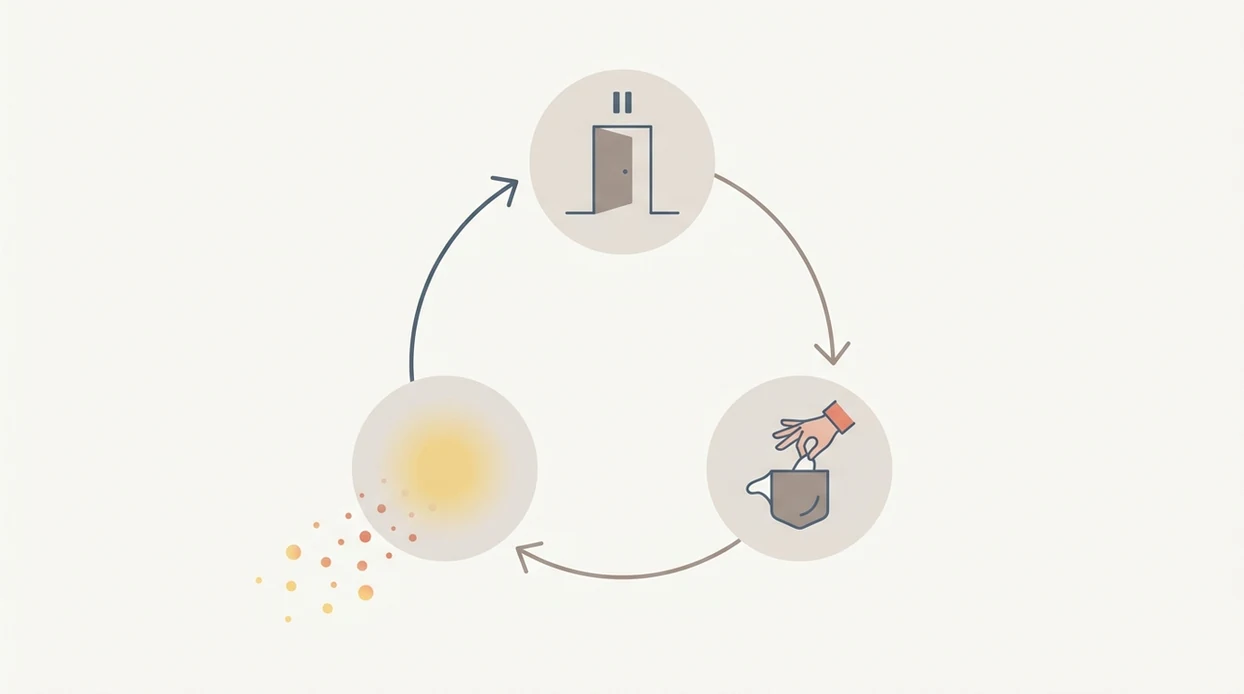
Myth 2: “Once nicotine leaves, I should feel normal.” Nicotine clears faster than habit loops fade. The pocket pat-down before a movie can still happen weeks later.
The pocket check is real.
Myth 3: “This flat feeling lasts forever.” Most people notice mood and energy slowly return through weeks 8–12, though the timeline varies.
Myth 4: “Apps and counseling can’t help.” The plateau is not purely physical. The NHS reports that stopping smoking is linked with reduced anxiety, depression, and stress, with mental-health improvements comparable to antidepressants source.
For people who feel tricked by the quiet middle weeks, MeQuit helps because mood logging separates a temporary flatline from a real loss of progress.
How the Quit Smoking Flatline Works
The quit smoking flatline works by removing nicotine’s reward spikes before your natural baseline reward feels strong again. Cravings can get quieter first, while motivation, pleasure, and “I’m doing great” feelings take longer to come back online.
Nicotine repeatedly teaches the brain to expect a fast dopamine lift, meaning a reward signal that says, “do that again.” After quitting, the baseline can feel muted for a while, even when withdrawal is improving. At the same time, old cue-routine-reward loops keep firing: coffee becomes the cue, stepping outside is the routine, and relief used to be the reward; traffic, work breaks, after-dinner cleanup, and phone calls can do the same thing. Normal flatline symptoms include boredom, low drive, emotional dullness, and impatience that come and go. Severe, worsening, or persistent depression, panic, inability to function, or thoughts of self-harm are different and deserve professional help. Tracking, counseling, and routine replacement work because they give the brain new evidence: a logged craving passes, a quitline call interrupts the loop, and a walk or text check-in starts becoming the new reward.
Dopamine and Habit Loops Behind the Quit Smoking Flatline
The quit smoking flatline happens because nicotine reward spikes stop before your normal reward system feels steady again. In plain terms, the brain is relearning how to feel “okay” without a cigarette doing the work.
Dopamine Recalibration After Nicotine
Nicotine affects dopamine pathways, the brain circuits tied to reward, drive, and reinforcement. After quitting, baseline dopamine can feel muted for a while. A 2020 review found that the nicotine withdrawal cycle can worsen mood and anxiety before improvement after cessation source.
Habit Ghosts and Identity Loss
Habit loops are cue-routine-reward patterns. The cue remains even when nicotine is gone. A red traffic light beside a convenience store can still light up the old routine.
Good stop smoking apps deliver cues, tracking, and response practice, not a guarantee that every urge disappears on schedule.
Quit Smoking Flatline Timeline: Weeks 1–12 Symptoms
The quit smoking flatline usually sits between early withdrawal and later confidence. Not everyone follows this exact timeline, but the pattern is common enough to plan for it.
| Time since quit day | What often happens | Common symptoms |
|---|---|---|
| Week 1–2 | Acute withdrawal and high motivation | Strong cravings, sleep changes, irritability, frequent urges |
| Week 2–6 | Flatline zone | Emotional blunting, boredom, low motivation, “no progress” feeling |
| Week 6–12 | Gradual recovery | More stable mood, better energy, fewer automatic triggers |
For people comparing a quit smoking plateau with early withdrawal, the flatline tends to feel less sharp but more discouraging because the wins are quieter.
When the issue is invisible progress, MeQuit earns the spot because the timeline view makes hidden recovery visible without asking you to feel inspired first.
7 Strategies to Break Through a Quit Smoking Plateau
The most evidence-backed approach to getting through a quit smoking plateau is structured behavioral support combined with daily trigger practice. Medication or NRT may help withdrawal, but the flatline also needs routine repair.
App-Based Mood Tracking and Streak Visualization
- Mood logging: Use MeQuit to record mood once daily, not only during crisis moments.
- Craving notes: Track what actually happened, including boredom, anger, or tiredness.
- Streak rewards: Let smoke-free days and money saved become visible proof.
The right fit for people who stop believing their own progress is MeQuit because the streak tracker and savings counter give the brain something concrete to measure.
Behavioral Support and Quitlines
4. Counseling: Behavioral support can roughly triple quit success compared with quitting alone. 5. Quitlines: Telephone quitline support can make quitting about 60% more likely to succeed. For the exact effect size, cite the support type being discussed: combined behavioral counseling plus cessation medication has stronger evidence than either alone, while telephone counseling improves quit rates versus brief or minimal support source. 6. New routines: Replace the after-dinner cigarette with a timed walk, shower, or text check-in. 7. Plan review: A personalized quit smoking plan app works better when it changes after real slip-up data.
5 Stop Smoking App Steps for the Flatline
Use a stop smoking app during the flatline by turning vague discouragement into a simple daily workflow. This is how to use MeQuit when motivation drops.
- Log mood daily to spot the flatline pattern early, especially if heavy eyelids and short patience show up together.
- Review your health-recovery timeline when progress feels invisible and your brain says nothing is changing.
- Set a craving-response plan with coping prompts, breathing breaks, and a “wait 10 minutes” rule.
- Check your streak and money-saved counter for tangible proof before deciding the quit is stalled.
- Reach out through community support or a quitline when motivation bottoms out.
People who need a plan before the flatline hits can pair MeQuit with how to make quit plan with phone guidance so quit day does not depend on memory alone.
Hidden Health Progress When Quitting Smoking Feels Stuck
“Why do I feel no progress quitting smoking?” Because mood can lag behind body repair. Blood pressure, carbon monoxide levels, circulation, and breathing capacity can improve while your reward system still feels underpowered.
The CDC reports that about 55% of U.S. adult smokers tried to quit in the past year, but only about 7.5% successfully quit during that period. Still being smoke-free in week 3 is not small. It is evidence that you are doing a hard thing.
For quitters stuck between NRT, tapering, or cold turkey, the NRT vs cold turkey question matters less than whether the plan includes support when motivation fades. MeQuit supports either route because it tracks cravings, triggers, and relapse-risk moments after the first week rush is gone.
Limitations
MeQuit can support the quit smoking flatline, but it cannot remove every hard part of quitting.
- Not everyone has a clear flatline. Some people feel a slow, uneven adjustment instead. - A psychological plateau can overlap with clinical depression or anxiety. Apps are not a substitute for professional mental-health care. If low mood includes thoughts of self-harm, feeling unsafe, or being unable to function, contact emergency services, a crisis line, or a licensed clinician immediately. A stop smoking app can support tracking and coping, but it should not triage urgent mental-health symptoms. - Planning for the flatline does not guarantee no relapse. Many people need more than one quit attempt. - Evidence-based tools can improve success, but they cannot eliminate discomfort, boredom, or identity loss. - Research on “quit smoking flatline” as a named term is limited. Most guidance comes from withdrawal, relapse, and behavior-change studies. - Smoking history, nicotine dependence, sleep, stress, medications, and co-occurring conditions can change the timeline. - Competitors such as Smokefree.gov, BecomeAnEX, and QuitNow may suit people who want government tools, peer forums, or different community formats.
If a slip-up happens, reset the plan quickly. A cold turkey quit smoking app approach still needs relapse recovery, not shame.
FAQ
How long does the quit smoking flatline last?
The quit smoking flatline often appears between weeks 2 and 6 after quit day. Some people feel better sooner, while others notice mood recovery closer to weeks 8–12.
Is the flatline a sign I should smoke again?
No. The flatline is usually a sign of reward-system recalibration, not a sign your quit failed.
Does nicotine replacement therapy help during the flatline?
NRT can reduce physical withdrawal and cravings. The flatline is often psychological too, so coping prompts, counseling, and routine changes still matter.
Can the quit smoking flatline feel like depression?
Yes, emotional blunting can feel similar to depression. Seek professional help if low mood is severe, persistent, or includes thoughts of self-harm.
Does everyone experience a quit smoking plateau?
No. Some people have a clear plateau, while others notice gradual ups and downs without one flat phase.
Why do I feel bored after quitting smoking?
Smoking filled small gaps with a cue, action, and reward. After quitting, those habit ghosts can make normal pauses feel empty.
Can a stop smoking app help with the flatline?
Yes. The MeQuit stop smoking app helps by tracking mood, showing streak progress, and offering coping prompts during low-motivation moments.
When should I call a quitline during the flatline?
Call a quitline when motivation drops to its lowest, cravings feel risky, or mood symptoms last beyond 6–8 weeks. You do not need to wait for a relapse.
Get Through the Flatline With Visible Progress
Stop Smoking App helps you track cravings, streaks, savings, and relapse recovery so the plateau feels less invisible. It is not medical advice, but it can support your quit plan alongside counseling, NRT, quitline support, or clinician guidance when needed.
Get Stop Smoking App