
Quit Smoking Support Groups That Are Actually Worth Joining

The best quit smoking support groups combine peer accountability with evidence-based tools like coaching, quit plans, and medication guidance, not just inspirational posts. Top options include the CDC's 1-800-QUIT-NOW quitline, Nicotine Anonymous, the American Lung Association's Freedom From Smoking program, Reddit's r/stopsmoking community, and the MeQuit stop smoking app for built-in tracking and craving-management tools.
> A quit smoking support group is a structured community, online or in person, where people trying to stop using cigarettes, vapes, or other tobacco products share progress, manage cravings, and get peer encouragement alongside evidence-based cessation resources.
- Look for groups backed by public health organizations, not just unmoderated forums.
- Support groups improve outcomes most when paired with quit aids like NRT or prescription medication.
- Free programs sometimes trade cost for limited personalization, so weigh anonymity vs. accountability before choosing.
Best Quit Smoking Support Groups: Named Shortlist
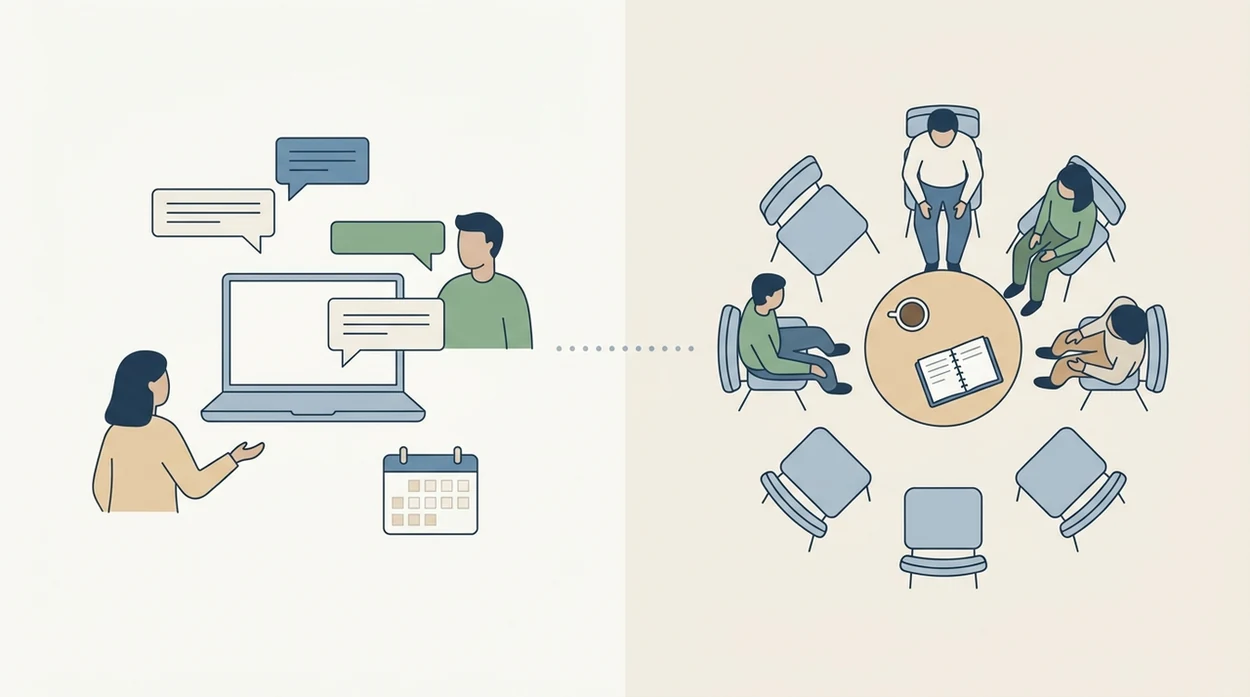
The strongest quit smoking support groups give you more than “stay strong” comments. They offer a clear format, a real quit pathway, and a place to admit what happened after a hard craving wave.
- 1-800-QUIT-NOW, CDC quitline: Free phone-based coaching is available in all 50 states. Trained coaches support people quitting cigarettes, vaping, and other tobacco products.
- Freedom From Smoking, American Lung Association: This evidence-based program uses an 8-session group clinic or online format. It fits people who want lessons, worksheets, and a planned quit day.
- Nicotine Anonymous: Free peer-led meetings follow a 12-step model. Meetings are available in person and virtually, though the spiritual framework won’t fit everyone.
- Reddit r/stopsmoking: A large, anonymous community can help at 11 p.m. when the lighter outline in a jeans pocket feels loud. Medical advice is inconsistent.
- MeQuit: People who want group support plus private daily structure can use MeQuit to log cravings, view progress milestones, and keep a smoke-free streak tracker running between meetings.
3 Mechanisms Quit Smoking Support Groups Use
Quit smoking support groups work through accountability, peer modeling, and behavior change support. They make the next cigarette harder to reach because someone, or something, expects you to report what happened.
First, social accountability creates external commitment. Saying “I’m on day three” to a coach or group can interrupt the automatic reach after lunch. Second, peer modeling helps. Seeing another person ride out tight shoulders and a busy mouth makes the craving feel survivable, not weird.
Third, trained coaches add structure that peer-only groups may lack. Coaches can help with quit plans, medication questions, and relapse recovery. Peer groups bring lived recognition. Both matter, but they are not the same thing.
The most evidence-backed approach to quitting tobacco is behavioral support combined with FDA-approved pharmacotherapy when appropriate. A Cochrane review found that proactive telephone counseling plus nicotine replacement therapy improves quit rates compared with NRT alone.
How to Choose a Stop Smoking Support Group Online or In Person
Choose a stop smoking support group online or in person by matching the format to your nicotine product, privacy needs, and follow-up style. A group you can actually attend beats a better-looking program you avoid.
- Identify your nicotine product. Name cigarettes, vaping, smokeless tobacco, or mixed use, because some programs specialize.
- Decide your format. Pick phone, video, in-person, text, or app-based support based on your real day.
- Check credentials. Look for public health backing, trained coaches, hospital affiliation, or an established nonprofit.
- Review privacy and cost. Ask about anonymity, language support, age rules, fees, and follow-up sessions.
- Pair support with tracking. Log urges, cravings, slips, and progress after each meeting so your next check-in has specifics.
Parents trying to quit before school pickup often need fast logging, not a long worksheet. A one-minute craving note can capture the trigger, intensity, and next action before the moment passes.
How to Use Quit Smoking Support Groups
Use quit smoking support groups as a repeat check-in system, not a place you visit only when motivation is high. The goal is to make your quit date, triggers, and setbacks visible enough that the group can help you adjust.
- Join one primary group before your quit date. Pick the quitline, clinic, meeting, forum, or app-supported plan you will actually use, then treat it as your main accountability point.
- Share your basics early. Tell the group your quit date, nicotine product, and biggest trigger, such as coffee, driving, stress, alcohol, or the after-dinner reach.
- Attend on a fixed schedule. Check in weekly, even during good weeks, so support is already in place before cravings spike.
- Ask about quit aids when needed. If withdrawal feels heavy, bring up nicotine replacement therapy, prescription medication, or clinician support instead of trying to tough it out silently.
- Track and report what happens between sessions. Note cravings, slips, triggers, and coping actions, then update the group after a setback instead of disappearing.
5 Vetting Criteria for Quit Smoking Communities
A quit smoking community is worth considering when it has structure, oversight, and access without a high barrier. Open chat can help, but it should not be your only source for medical guidance.
Use these five criteria:
- Public health or nonprofit backing: Look for a government agency, hospital system, university clinic, or established nonprofit.
- Trained facilitation: Coaches, counselors, or moderators reduce misinformation and shame-based advice.
- Clear cessation pathway: A quit plan, quit day, medication discussion, or relapse plan should be visible.
- Low access burden: Free or low-cost options matter, especially during the first week.
- Evidence-based support: The CDC reported that 37.5% of recent adult quitters used counseling or an evidence-based quit program source.
Good stop smoking apps deliver logs, reminders, and relapse prompts, not a replacement for trained counseling. MeQuit is strongest when paired with a real support option, because it tracks what actually happened between group check-ins.
Five Facts About Quit Smoking Support Groups
These five facts help first-time quitters avoid common support-group myths.
- Quit smoking support groups can help from the first quit attempt; you do not need to “fail enough” before joining.
- Online support can work well when it is backed by public health systems, trained coaches, or structured programs.
- A quit smoking community cannot replace medication for everyone; multi-component support has the strongest evidence.
- A slip-up after joining a group does not mean the group failed. Reset the plan.
- Per the CDC, 61.5% of adult smokers who quit in the past year used some form of cessation assistance. source
After one cigarette and a rough morning cough, when the thought is “I already messed up,” MeQuit helps people record the slip without turning it into a full-day relapse. The useful move is a short note, a new trigger label, and a restart after smoking relapse plan.
Online vs. In-Person Quit Smoking Support Groups Compared
Online quit smoking support groups usually win on access and anonymity. In-person groups often create stronger accountability because people notice your face, voice, and body language.
| Format | Strength | Trade-off | Good fit |
|---|---|---|---|
| Quitline | Trained coaching by phone | Wait times and limited sessions can happen | People who want private guidance |
| Video group | Structured support from home | Less body-language connection | Busy schedules or rural access |
| In-person clinic | Stronger social bonds | Travel and timing barriers | People who need accountability |
| Reddit/forum | Anonymous, always available | Advice quality varies widely | Late-night peer encouragement |
| App-supported plan | 24/7 craving tools | Not a live clinical group | Between-session tracking |
If your priority is round-the-clock support, an app-supported plan can bridge online and in-person options because craving logs, progress milestones, and an app that tracks smoke-free days are available when the group is not.
5 Honest Cons of Popular Quit Smoking Communities
Popular quit smoking communities can help, but every format has friction. Knowing the weak spots keeps you from blaming yourself for a bad fit.
- Quitlines can involve waiting. Some callers may face hold times or limited follow-up sessions.
- Nicotine Anonymous may not fit everyone. The 12-step structure can feel uncomfortable if you dislike spiritual language.
- Reddit can be uneven. A supportive thread may sit beside outdated medication advice.
- Free programs may be thin. No-cost access can mean fewer sessions, less personalization, or lighter follow-up.
- Motivation-only groups are risky. Encouragement helps, but it is weaker than a plan with counseling and quit aids.
When the dead disposable vape in a backpack pocket is the issue, MeQuit covers the private part of the quit by logging the trigger, urge intensity, and next coping action. That is different from waiting for someone online to answer.
Limitations
Quit smoking support groups are useful, but they are not a guaranteed treatment. Some people need a higher level of care, especially with severe withdrawal, mental-health symptoms, or repeated relapse patterns.
- Support groups do not work equally well for everyone; some people need one-on-one counseling or intensive treatment.
- Unmoderated online communities can spread inconsistent, outdated, or wrong advice.
- Free programs sometimes trade cost for fewer sessions, weaker follow-up, and limited personalization.
- Not all quit smoking support groups are clinically proven; peer encouragement alone has weaker evidence than multi-component programs.
- The strongest evidence supports combining behavioral support with FDA-approved pharmacotherapy, not standalone chat rooms.
- Apps cannot prescribe medication, diagnose nicotine dependence, or replace a clinician.
- MeQuit can record cravings and a quit smoking slip-up, but it cannot make a live coach call you back.
Clinicians and USPSTF guidance recommend behavioral interventions plus FDA-approved pharmacotherapy for nonpregnant adults who use tobacco source.
FAQ
Are quit smoking support groups free?
Many quit smoking support groups are free, including 1-800-QUIT-NOW, Nicotine Anonymous, and Reddit communities. Some structured clinic or online programs may charge fees.
Do support groups actually improve quit rates?
Behavioral support can improve quit outcomes, especially when paired with nicotine replacement therapy or other FDA-approved medication. Quitting alone is usually harder than using structured help.
Can I join a quit smoking support group online?
Yes, many options operate online through phone coaching, video meetings, text programs, forums, and app-based formats. A stop smoking support group online should still have clear rules or trained support.
What should I do if I relapse after joining a group?
Report the relapse honestly and restart quickly. Most cessation programs expect slip-ups and help people adjust the quit plan.
Are there quit smoking support groups for vaping?
Yes, many quitlines and Smokefree resources support vaping cessation as well as cigarettes. Check age eligibility and whether the program covers the nicotine product you use.
Should I use nicotine replacement or medication with a support group?
Many adults do better with behavioral support plus FDA-approved quit medication when it is medically appropriate. Ask a clinician or pharmacist what fits your health history.
Are online quit smoking forums safe and anonymous?
Some forums are anonymous, but unmoderated spaces can include inaccurate or outdated advice. Look for privacy controls, trained coaches, moderators, or public-health backing.
Can first-time quitters join support groups?
Yes, first-time quitters can join support groups. Support is not reserved for people who have relapsed before.
Add App-Based Support Between Group Check-Ins
Use Stop Smoking App (MeQuit) to track cravings, triggers, smoke-free days, and money saved while you stay connected to the quit smoking support group that fits you. It is not medical advice, but it can help you stay organized and motivated alongside counseling, quitlines, NRT, or clinician support.
Get Stop Smoking App