
NRT vs Cold Turkey: How Apps Can Support Either Quit Method

In the NRT vs cold turkey debate, nicotine replacement therapy offers 50 to 60% higher quit rates than going unassisted, but cold turkey works for some lighter smokers who pair it with behavioral support. Neither method treats the habit side of smoking on its own, which is where MeQuit helps with craving tracking, reminders, and progress milestones. Talk to a clinician before choosing, then use a cessation app to reinforce whichever path you pick.
Definition: Nicotine replacement therapy (NRT) delivers controlled nicotine through patches, gum, lozenges, inhalers, or sprays to ease withdrawal, while cold turkey means stopping all nicotine at once with no pharmacological aid.
TL;DR
- NRT reduces cravings by supplying nicotine without tar or carbon monoxide; cold turkey eliminates nicotine immediately but intensifies withdrawal.
- Combination NRT, usually patch plus a fast-acting form, outperforms single-product NRT in clinical trials.
- Counseling or app-based support combined with medication can double or triple quit rates versus willpower alone.
- The right quit method depends on nicotine dependence level, trigger patterns, health history, and personal adherence. Ask a clinician.
- A cessation app can support both paths with craving logs, milestone tracking, and daily reminders.
NRT vs Cold Turkey at a Glance: Comparison Table
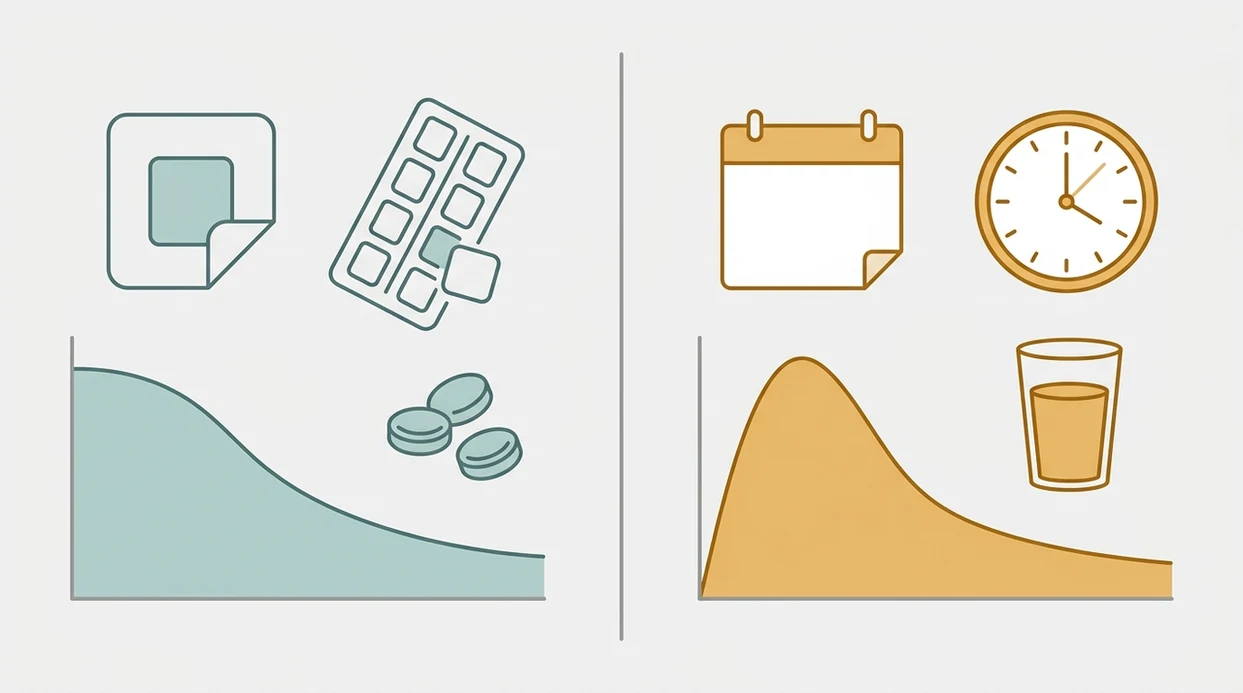
NRT and cold turkey differ most in withdrawal intensity, evidence strength, and how much structure they give the first week. NRT has stronger clinical evidence, while cold turkey has lower cost and a clean break that some people prefer.
| Factor | NRT | Cold Turkey |
|---|---|---|
| How it works | Supplies controlled nicotine through patch, gum, lozenge, spray, or inhaler | Stops nicotine all at once |
| Withdrawal severity | Usually milder, especially in days 1 to 7 | Often sharper and more sudden |
| Typical cost | Ongoing product cost, sometimes covered by insurance | No product cost |
| Best for whom | Moderate to heavy smokers, frequent vapers, strong morning cravings | Light or social smokers with fewer daily triggers |
| Evidence strength | Strong; NRT helps about 50 to 60% more people quit than placebo or no NRT in a Cochrane review | Valid, but less supported than medication-assisted quitting |
| App compatibility | Useful for dosing reminders and craving logs | Useful for urge tracking and milestone reinforcement |
Combination NRT, such as a patch plus gum, generally outperforms a single NRT product. That matters when the phone call pacing near the back door hits at 4 p.m., not just on quit day.
Nicotine Replacement Therapy Advantages Over Cold Turkey

NRT has one major advantage over cold turkey: it lowers the nicotine shock while removing cigarette smoke exposure. According to a Cochrane review, NRT helps about 50 to 60% more people quit than placebo or no NRT.
Stat callout: The most evidence-backed approach for many daily smokers is FDA-approved quit medication, often NRT, combined with behavioral support.
Clinicians typically suggest FDA-approved quit-smoking medications, including NRT, for most adults who smoke, with medical exceptions handled case by case. NRT gives nicotine without tar, carbon monoxide, and the thousands of combustion chemicals in cigarette smoke. That can make the first 3 to 7 days less brutal.
The tight jaw still shows up.
For people using MeQuit, the practical advantage is pairing a patch schedule with a craving log. The dose handles the body side, while the log captures what happened before the urge. If you need a fuller phone-based plan, a personalized quit smoking plan app can help turn the method into daily steps.
Why Combination NRT Outperforms a Single Product
Combination NRT works because the patch gives steady nicotine, while gum or lozenge handles breakthrough cravings. A Cochrane review found that using a nicotine patch with a fast-acting NRT product, such as gum or lozenge, is more effective than using one NRT product alone.
Cold Turkey Advantages for Light and Social Smokers
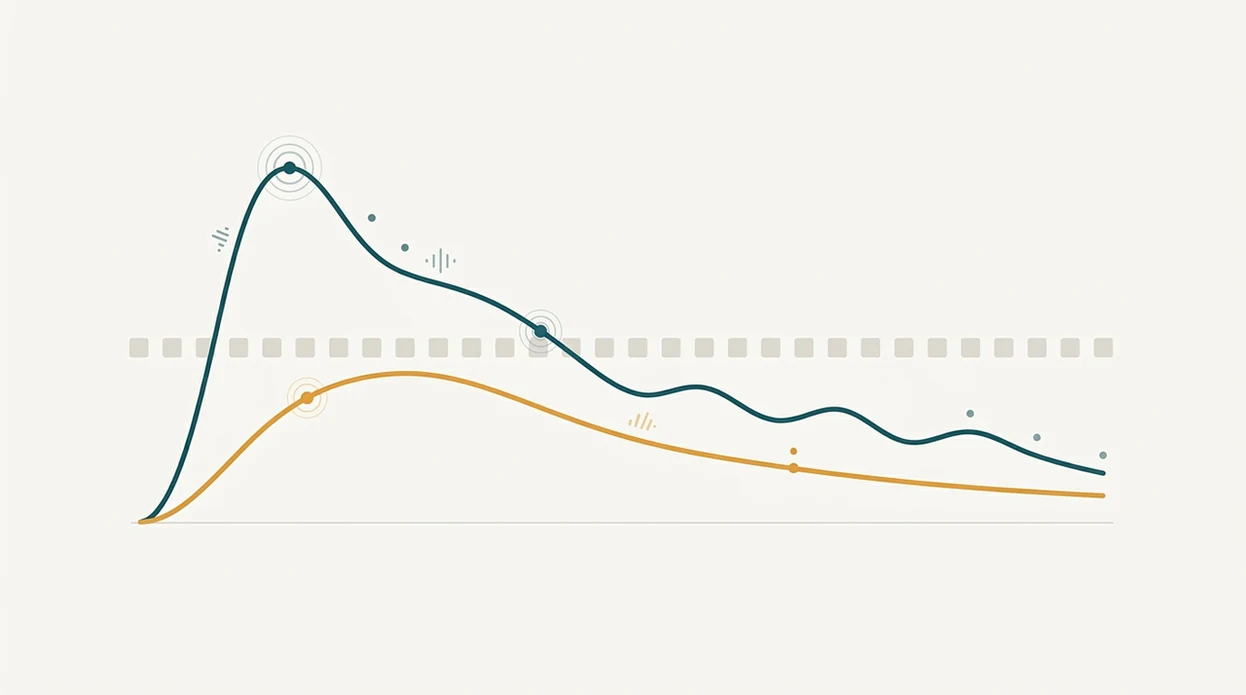
Cold turkey can make sense for lighter smokers who have low nicotine dependence and want a clear stop point. It costs nothing, needs no pharmacy visit, and avoids NRT side effects like skin irritation, jaw soreness, hiccups, or sleep disruption.
Some people also like the clean psychological break. No taper. No dosing schedule. No bargaining with the patch box on the bathroom counter.
For light or social smokers, cold turkey is often easier than NRT because there may be fewer daily nicotine cycles to manage. But it still needs a behavior plan. The lighter bought with gas station snacks can restart the old loop fast.
For quitters who want a no-medication attempt but still need structure, MeQuit fits cold turkey quitting because the smoke-free streak tracker and craving log make the next cigarette harder to reach. The full cold-turkey workflow is covered in our cold turkey quit smoking app guide.
5 Must-Know Facts About Quit Smoking Methods
These five facts explain why nicotine replacement vs cold turkey is not really a willpower contest. The method matters, but the daily support around it matters too.
- Cold turkey causes more intense withdrawal for many people because nicotine stops abruptly instead of tapering down.
- NRT reduces cravings without exposing users to tar, carbon monoxide, or the toxic byproducts of burned tobacco.
- Dual NRT, such as patch plus gum or lozenge, is more effective than single NRT in a large Cochrane review.
- Per the CDC, counseling or app-based support plus medication can double or triple quit rates compared with quitting without support.
- The best method depends on nicotine dependence, trigger patterns, health history, and clinician guidance.
A quit-smoking app is useful for people comparing quit smoking methods because it records both the physical urge and the trigger context. The restroom stall urge between classes feels different once it has a name, a time, and a pattern.
Common Myths About Nicotine Replacement vs Cold Turkey
The biggest myths about nicotine replacement vs cold turkey push people toward all-or-nothing decisions. A better question is what helps you stay smoke-free through the first week.
Myth: Cold turkey is more natural, so it is healthier. Reality: Cold turkey removes nicotine right away, but higher discomfort can raise early relapse risk, especially for heavy users.
Myth: NRT just substitutes one addiction for another. Reality: Regulated nicotine delivery is not the same as smoking. It avoids tar and carbon monoxide exposure.
Myth: If NRT failed once, it will always fail. Reality: Dose, product combination, timing, and support plan all matter. A patch used inconsistently is not the same as a clinician-guided plan.
Myth: A nicotine patch alone is always enough. Reality: Fast-acting NRT can help with sudden cravings, like the quick heartbeat before the urge passes.
Good stop smoking apps deliver cues, tracking, and recovery routines, not a magic substitute for medication or counseling. That middle ground works best when craving intensity ratings and trigger notes stay easy to record.
Cold Turkey or NRT: Quit Method Decision Checklist
Use this checklist to start the conversation, not to make a final medical decision. Heavy nicotine use and frequent triggers usually point toward NRT, while lighter use with fewer cues may fit cold turkey plus behavioral support.
Decision Checklist: NRT or Cold Turkey
Choose NRT discussion with a clinician if:
- You smoke 10 or more cigarettes a day.
- You smoke soon after waking.
- You have strong withdrawal during past quit attempts.
- You vape frequently through the day.
- You face many triggers, such as driving, lunch breaks, or after-dinner routines.
Consider cold turkey with support if:
- You smoke only occasionally.
- Your first cigarette is not automatic.
- You have a short list of predictable triggers.
- You want no medication and accept a rougher first week.
Pregnant people, people with cardiovascular disease, and anyone taking multiple medications should speak with a clinician before choosing NRT or cold turkey. If the choice feels tangled, our guide on quitting vs tapering breaks down sudden stopping versus gradual reduction.
If you have many triggers, a craving tracker covers the behavior side by showing which places, people, and times keep repeating.
Stop Smoking App Support for NRT and Cold Turkey Routines
A stop smoking app helps both NRT and cold turkey because neither method automatically rewires routines. MeQuit supports quit-day routines with craving tracking, daily reminders, smoke-free days, money saved, and health recovery milestones.
Stat callout: The CDC says combining counseling with medication can double or triple quit rates compared with quitting without support.
Craving Tracking and Trigger Logging
MeQuit lets users log craving intensity, timing, and triggers, whether they use patches or stop all nicotine at once. After a craving log opened in the elevator, when the urge is still loud, the next step is not a speech. It is a 2-minute coping action and a note about what set it off.
Milestone Reminders for the First 7 Days
Daily reminders can reinforce NRT dosing times or cold-turkey milestones. MeQuit complements clinical care; it does not replace counseling, prescriptions, or medical advice. If you are building the routine from scratch, start with how to make quit plan with phone.
Withdrawal Timeline: NRT vs Cold Turkey in the First Month
Withdrawal usually hits hardest in the first 3 to 7 days, but the pattern differs by method. NRT tapers nicotine exposure, so the spike is often milder than cold turkey.
| Time period | NRT experience | Cold turkey experience |
|---|---|---|
| Days 1 to 3 | Cravings still occur, but nicotine levels are steadier | Peak irritability, insomnia, restlessness, and intense cravings |
| Days 4 to 7 | Symptoms may start to settle if dosing is consistent | Symptoms often plateau, but urges can still feel sharp |
| Weeks 2 to 4 | Psychological cravings and routines remain | Psychological cravings can linger after physical symptoms ease |
The first week is where many people think, “I already messed up, so I might as well smoke the rest of the day.” Reset the plan.
Quitters who need proof that urges change over time can use craving history to see duration, intensity, and trigger patterns instead of relying on memory. For daily prompts during that first-month slog, an app that gives daily quit smoking tips can add structure.
Limitations
NRT, cold turkey, and app support all have limits. Honest planning works better than pretending any one method removes the hard parts.
- NRT is not a guarantee. Success still depends on correct dosing, adherence, and trigger management.
- Cold turkey often has higher early relapse risk, especially for heavy smokers or frequent nicotine users.
- NRT does not address the behavioral or social side of smoking by itself.
- Cold turkey can feel simple on paper, but the first week can be physically rough.
- Quit rates vary by follow-up length, study design, measurement period, and whether counseling was included.
- Pregnant people, people with cardiovascular disease, and people taking multiple medications need clinician guidance.
- App-based tools support quitting, but they do not replace professional cessation counseling.
- Public tools like Smokefree.gov and BecomeAnEX may offer broader education or community resources than a single phone workflow.
For relapse recovery, the practical need is a nonjudgmental restart after a slip-up. A reset workflow can keep the smoke-free plan moving, but people who need live coaching, peer groups, or broader education may be better served by resources such as Smokefree.gov, BecomeAnEX, or clinician-led counseling.
FAQ
Is NRT more effective than quitting cold turkey?
Yes. A Cochrane review found that NRT helps about 50 to 60% more people quit than placebo or no NRT, although cold turkey can still work for some lighter smokers.
Does NRT just replace one addiction with another?
No. NRT delivers controlled nicotine without tar, carbon monoxide, and the toxic combustion chemicals found in cigarette smoke.
Can you combine nicotine patches and gum?
Yes. Combination NRT, such as a patch plus gum or lozenge, is evidence-based and often more effective than using one NRT product alone.
How long do cold turkey withdrawals last?
Cold turkey withdrawal symptoms often peak during days 1 to 3 and may plateau by day 7. Psychological cravings can last for several weeks.
Is quitting cold turkey safe while pregnant?
Pregnant individuals should consult a clinician before choosing any quit method, including cold turkey or NRT. Medical guidance matters because pregnancy changes the risk-benefit decision.
Can an app help me follow an NRT schedule?
Yes. App reminders can support NRT dosing times, taper plans, and daily adherence checks.
Which quit method has higher relapse rates?
Cold turkey generally has higher early relapse risk than NRT, especially for heavy nicotine users. Adherence and behavioral support affect success with both methods.
Should I quit nicotine gradually or suddenly?
Gradual tapering through NRT can reduce withdrawal intensity, while abrupt cessation works for some people with lower dependence. A clinician can help match the method to your health history and nicotine use.
Build a Quit Routine for NRT or Cold Turkey
Stop Smoking App helps you track smoke-free days, cravings, triggers, money saved, and relapse recovery whether you use NRT, quit cold turkey, or combine your plan with counseling, a quitline, or clinician guidance when needed.
Get Stop Smoking App