
Are Stop Smoking Apps FDA Approved or Cleared?
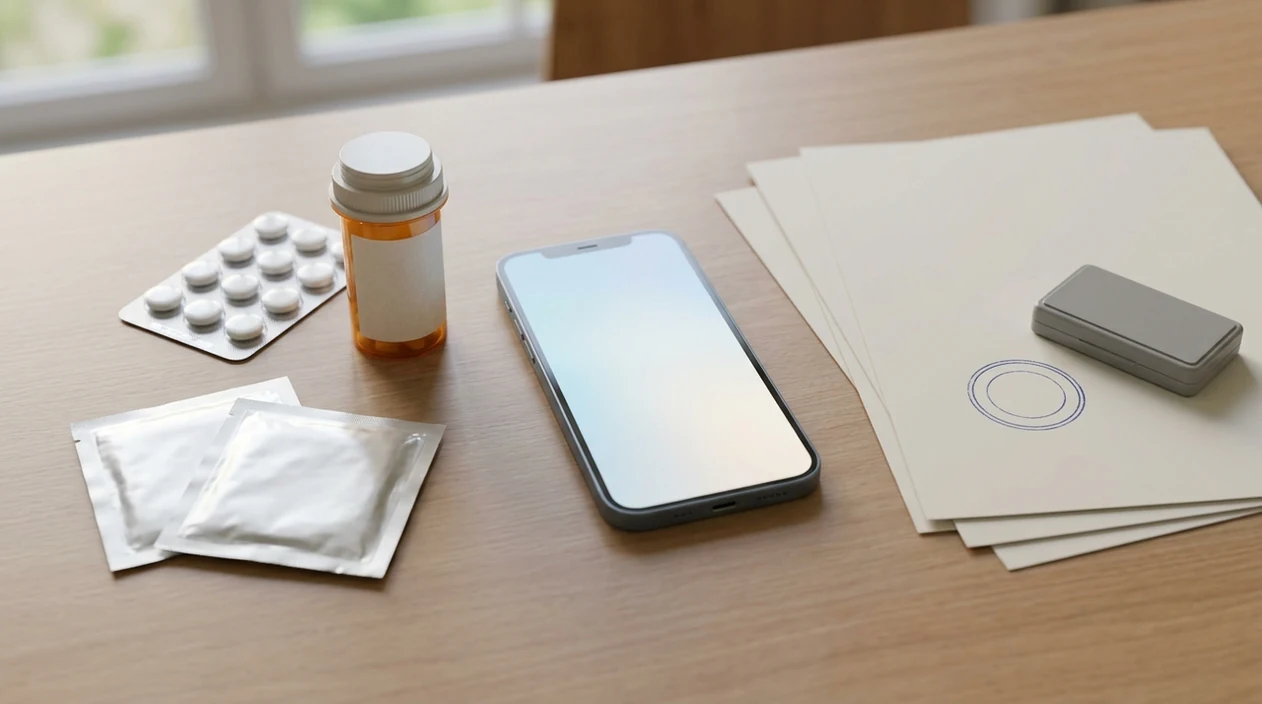
If you're asking "are stop smoking apps FDA approved," the answer is usually no for mainstream consumer quit-smoking apps. The FDA regulates medications like nicotine patches and varenicline and certain medical devices for smoking cessation, but typical quit-smoking apps are usually low-risk wellness tools outside formal FDA oversight. An app would need to cross a specific regulatory line, such as claiming to diagnose or treat tobacco use disorder, before it requires FDA clearance or approval.
Definition: FDA approval for smoking cessation means a product has undergone rigorous clinical trials and regulatory review proving it is safe and effective for helping people quit; most consumer stop smoking apps have not completed this process and are not classified as medical devices.
This guide is general education about FDA status, not medical advice. If you use nicotine, are pregnant, have heart or mental-health conditions, or take prescription medication, ask a clinician or pharmacist before choosing a quit plan.
TL;DR
- Seven FDA-approved cessation medications exist; zero mainstream consumer quit-smoking apps hold FDA approval or clearance.
- Apps are generally classified as wellness tools, not medical devices, unless they make explicit disease-treatment claims.
- Combining app-based tracking with FDA-approved therapies and counseling is usually more evidence-aligned than relying on an app alone.
At a Glance: FDA Approval Status of Stop Smoking Apps
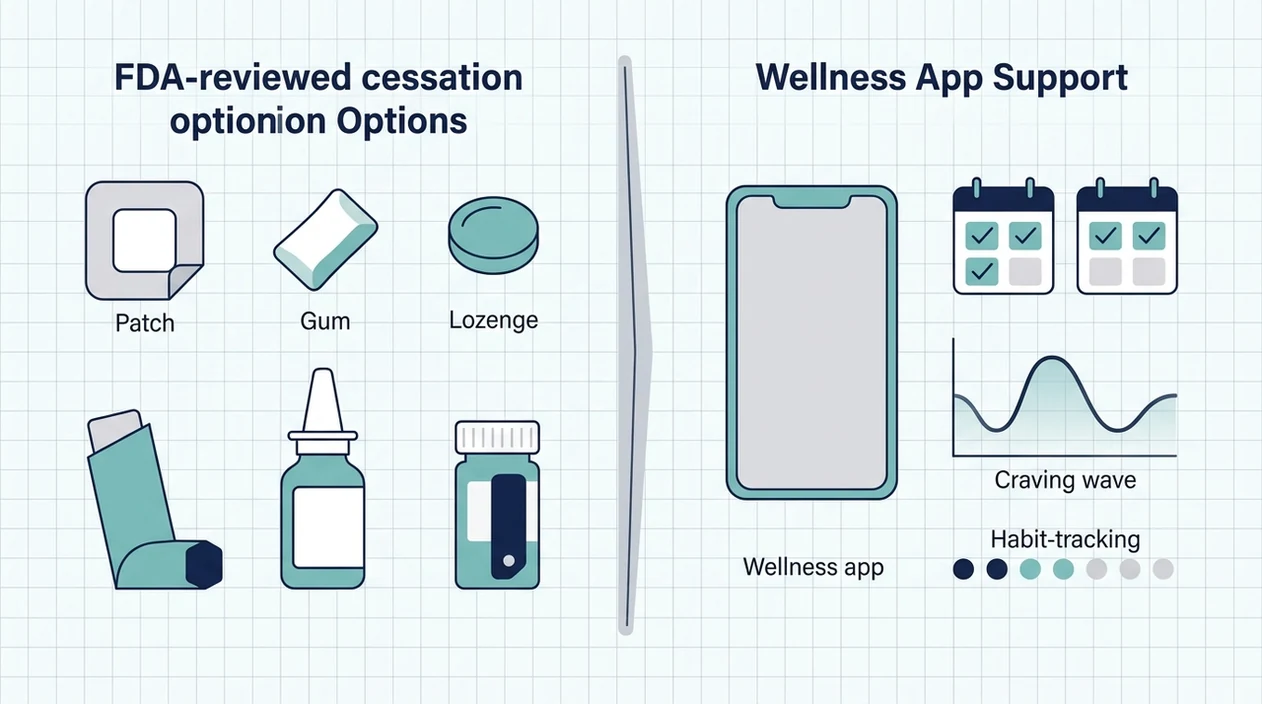
Consumer quit-smoking apps are generally not FDA approved or FDA cleared. They usually help with behavior change, such as logging cravings, tracking a smoke-free streak, and noticing triggers before the next craving wave hits.
The FDA has approved seven smoking cessation medications and has cleared at least one device, transcranial magnetic stimulation, for smoking cessation. FDA-approved and FDA-cleared cessation products can double a person’s chances of quitting successfully compared with no medication, according to the FDA source.
Apps sit in a different lane. They can remind you why you quit when the car cup holder is still filled with old pods, but they are not regulated treatments by default.
Good stop smoking apps deliver tracking, prompts, and accountability, not FDA-reviewed medication effects.
5 Facts About FDA Regulation and Smoking Cessation Apps
- Seven FDA-approved medicines exist. The CDC lists five nicotine replacement products and two non-nicotine pill medicines for adults who want to quit smoking source.
- Most apps are wellness tools. A smoking app medical device classification usually does not apply to simple craving logs, streak counters, or savings calculators.
- Apps are add-ons, not replacements. CDC and FDA guidance focuses on approved medication plus counseling, with apps used as extra support.
- Evidence-informed is not FDA cleared. An app can use research-based coping tools and still have no FDA status.
- Apps alone usually do less. The most common medically supported way to quit smoking is FDA-approved medication combined with counseling or structured behavioral support.
That matters on a rough first week. Heavy eyelids after broken sleep can make any “just stay strong” plan feel thin.
FDA-Approved Medications vs. Quit Smoking Apps: Key Differences
FDA-approved medications and quit-smoking apps are different types of support. One changes nicotine withdrawal biology; the other helps you notice and manage habit loops.
| Category | Examples | FDA pathway | Evidence expectation | Main job |
|---|---|---|---|---|
| FDA-approved NRT | Patch, gum, lozenge, nasal spray, inhaler | Drug approval pathway | Clinical safety and efficacy data required | Reduce withdrawal and cravings |
| Prescription medications | Varenicline, bupropion | New Drug Application review | Clinical trials required | Lower nicotine reward or withdrawal symptoms |
| Consumer quit-smoking apps | Craving trackers, streak counters, coaching apps | Usually no FDA review | Optional, varies by app | Support behavior change and motivation |
Combining long-acting and short-acting nicotine replacement therapy can more than triple long-term quit rates compared with placebo, according to evidence cited by New York State Medicaid. That is a different level of proof than most app-store claims.
For a deeper evidence discussion, compare this page with are quit smoking apps evidence-based.
FDA Approval, FDA Clearance, and Smoking Cessation Software Rules
FDA approval usually applies to drugs, while FDA clearance usually applies to devices that show they are substantially equivalent to a legally marketed device. A quit-smoking app becomes more likely to need oversight when it claims to diagnose, treat, cure, or mitigate a disease.
FDA Approval vs. FDA Clearance vs. Wellness Exemption
Software can meet the legal definition of a medical device if its intended use is medical treatment or diagnosis. Most stop-smoking apps avoid that line by offering general wellness support: habit-loop notes, progress charts, breathing prompts, and reminders to make the next cigarette harder to reach.
Small distinction. Big consequences.
Transcranial magnetic stimulation, or TMS, is an example of an FDA-cleared device used for smoking cessation. A phone app that asks, “What triggered this urge?” after winter breath outside the office door is usually not in the same regulatory category.
If you are weighing app support against clinical care, the boundary is covered further in can quit smoking app replace doctor.
5 Steps to Use a Stop Smoking App With FDA-Approved Therapies
Use a stop smoking app as the behavior layer beside approved treatment, not instead of it. A review of eight studies found smartphone applications can increase quit rates among smokers source.
- Set a quit date inside the app, then remove cigarettes, pods, lighters, and backup packs the night before.
- Ask a doctor or pharmacist about FDA-approved NRT or medication, especially if you smoke soon after waking.
- Log cravings and triggers every day, including time, place, mood, and what you did next.
- Review progress weekly to spot patterns, such as lunch-break smoking or late-night scrolling urges.
- Contact 1-800-QUIT-NOW or a counselor when cravings feel bigger than your current plan.
For people using nicotine replacement, pairing medication with app-based tracking is often easier than guessing because the log shows when breakthrough cravings actually happen.
4 Myths About FDA-Approved Quit Smoking Apps
Myth 1: Most app-store quit-smoking apps are FDA approved. Reality: almost none of the mainstream consumer options hold FDA approval or clearance.
Myth 2: A hospital or public-health logo means FDA approval. Reality: endorsement, sponsorship, or research use does not equal FDA regulatory status.
Myth 3: Craving trackers are regulated like prescriptions. Reality: behavior tools are usually low-risk wellness products unless they make treatment claims that cross the medical device line.
Myth 4: If an app helps me quit, it must be as proven as medication. Reality: many apps lack randomized controlled trial data, even when users find them useful.
That does not make apps pointless. It means the claim needs the right weight. If a trigger note typed in a parked car stops one automatic cigarette, that is useful support, but it is not drug-level evidence.
For feature-level expectations, read do stop smoking apps work.
Best Quit Smoking Support Options: Apps, Medications, and Devices
The strongest quit plan usually combines more than one support type. Clinicians typically recommend FDA-approved cessation medication plus counseling or structured behavioral support for adults who want help quitting.
- Consumer apps like MeQuit. These are wellness tools for craving logs, smoke-free streaks, motivation, savings, and trigger tracking. They do not claim FDA approval.
- FDA-approved NRT products. Patches, gum, lozenges, inhalers, and nasal sprays reduce withdrawal in different ways.
- Prescription medications. Varenicline and bupropion may help people who need non-nicotine medication support.
- FDA-cleared devices. TMS is a device-based option with FDA clearance for smoking cessation.
- Quitlines and counseling. Coaching adds planning, accountability, and reset help after a slip-up.
Where Stop Smoking App Fits in Your Quit Plan
Tools like MeQuit fit beside medication and counseling by helping you track what actually happened. The best quit smoking app with NRT support is usually one that makes medication timing, cravings, and slip-ups visible without shame.
When to Ask a Clinician About Quitting Support
Ask a clinician or pharmacist when your quit plan involves medication, complicated health history, or symptoms that feel bigger than self-management. Apps can organize the story, but they should not be treated as a diagnosis or a substitute for care.
- Check first before using nicotine replacement or prescription cessation medicine if you are pregnant, breastfeeding, or managing heart disease.
- Call for help if withdrawal, anxiety, low mood, anger, sleep disruption, or relapse risk starts to feel unmanageable.
- Ask a pharmacist to compare patches, gum, lozenges, nasal spray, inhalers, and prescription options, including how they fit your smoking pattern.
- Contact 1-800-QUIT-NOW for free quit coaching and local cessation resources, especially if you need support between appointments.
- Bring your app data as a discussion aid: craving times, slip-ups, triggers, and medication notes can make the conversation clearer, but they do not prove a medical condition.
This is especially important when a product sounds “clinical” or “FDA-related.” A professional can help separate regulated treatment, useful wellness support, and claims that deserve caution.
Limitations
Stop-smoking apps can help, but they have real limits. Treat the app as a support tool, especially if your nicotine dependence is high or your health history is complicated.
- Most apps lack FDA approval and have not gone through formal safety and efficacy review.
- Clinical evidence for apps is promising but uneven; many apps have no randomized controlled trials.
- An app alone generally cannot match medication plus counseling for quit success.
- Labels such as “clinically tested” or “doctor-recommended” do not prove FDA clearance or approval.
- People with heavy dependence may delay effective treatment if they rely only on an app.
- Regulatory status can change, so today’s wellness exemption is not a permanent guarantee.
- The USPSTF says evidence is insufficient to recommend e-cigarettes for cessation, which supports caution with non-approved alternatives.
- Privacy also matters, since craving logs may include health details, locations, and routines.
If data use is a concern, read the quit smoking app privacy guide before choosing any app.
FAQ
Are any quit smoking apps FDA approved?
No mainstream consumer quit-smoking app currently holds FDA approval or clearance. Most are wellness tools, not regulated medical devices.
What smoking cessation products are FDA approved?
The FDA has approved five nicotine replacement therapies: patch, gum, lozenge, nasal spray, and inhaler. It has also approved varenicline and bupropion, and cleared TMS as a device option.
Do quit smoking apps count as medical devices?
Usually no. A smoking app medical device issue arises when software claims to diagnose, treat, cure, or mitigate a disease.
Can an app replace nicotine patches?
No. Apps support behavior change, while nicotine patches deliver medication that reduces withdrawal.
How accurate are quit smoking apps?
Quit-smoking apps are only as accurate as the information you enter. They can track patterns well, but they do not clinically verify nicotine exposure.
Does 'clinically tested' mean FDA cleared?
No. “Clinically tested” can describe a study or marketing claim, but FDA clearance is a specific regulatory status.
Can I combine an app with nicotine replacement therapy?
Yes. Pairing an app such as MeQuit with FDA-approved therapy can support planning, and FDA-cleared or approved products can double quit chances compared with no medication.
What is the best stop smoking app for tracking cravings?
Look for quick craving logging, trigger notes, streak tracking, savings, and slip-up reset tools. MeQuit stop smoking app can be a practical tracking companion, but it is not FDA approved.
Use MeQuit Alongside Evidence-Based Quit Support
Stop Smoking App helps you track smoke-free progress, manage cravings, and stay motivated while quitting. It is not a medical device or a substitute for clinician advice, but it can fit well with NRT, counseling, quitlines, or a clinician-guided plan.
Get Stop Smoking App