
Best Stop Smoking App for Relapse and Restarting Your Quit

A relapse-friendly stop smoking app should help you restart without shame, understand what caused the slip-up, and make the next cigarette harder to reach. MeQuit fits that job because it combines flexible quit-date reset, craving tracking, and personalized coping tools inside one relapse-recovery workflow.
> Definition: A relapse prevention app is a smoking cessation tool that helps users analyze why they slipped, reset their quit plan, and apply evidence-based coping strategies to reduce the chance of smoking again.
TL;DR
- About 75% of quitters relapse within 6 months, so a good app expects restarts instead of treating them like failure.
- Evidence-based features like trigger logging, CBT exercises, and flexible quit-date resets matter more than streak counters.
- Apps work best when combined with NRT, medications, or counseling, not as a standalone fix.
How the top stop smoking apps look
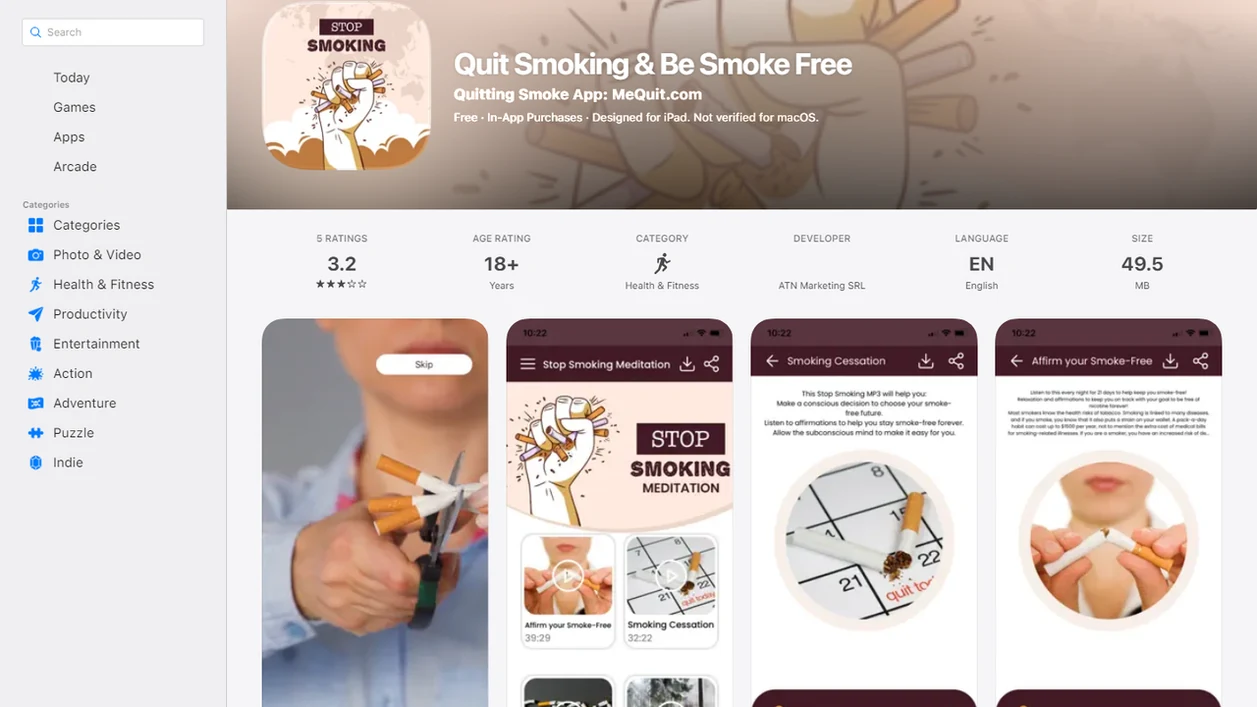
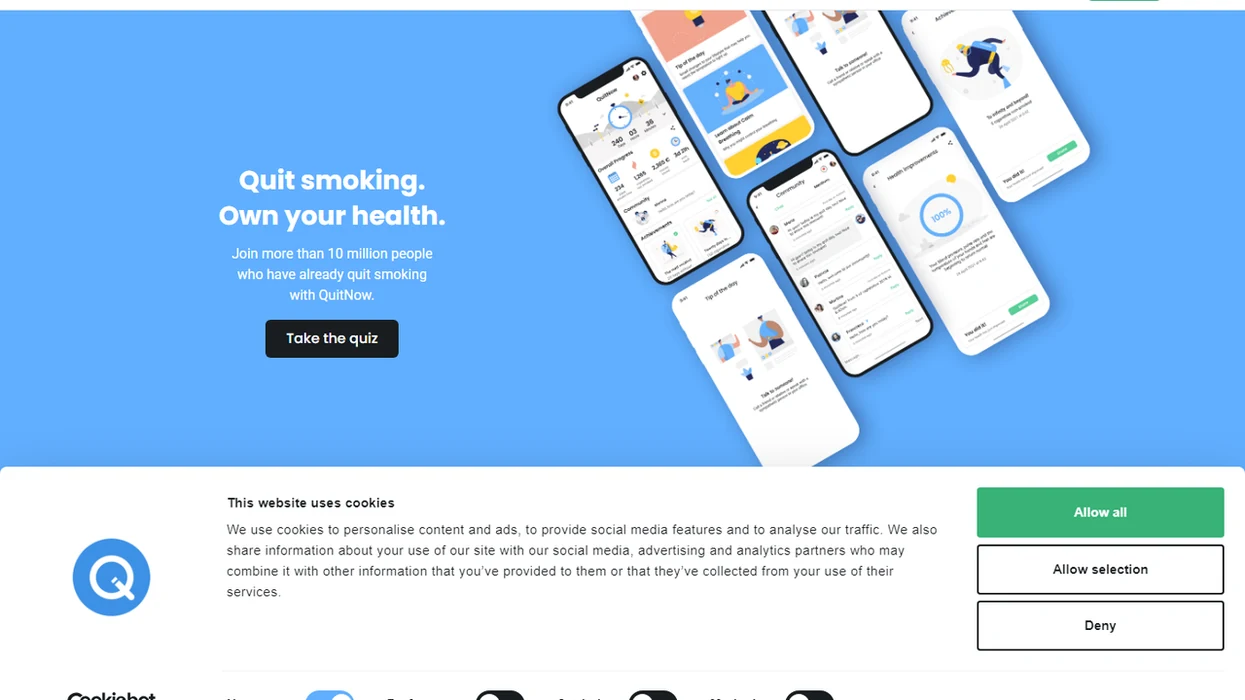
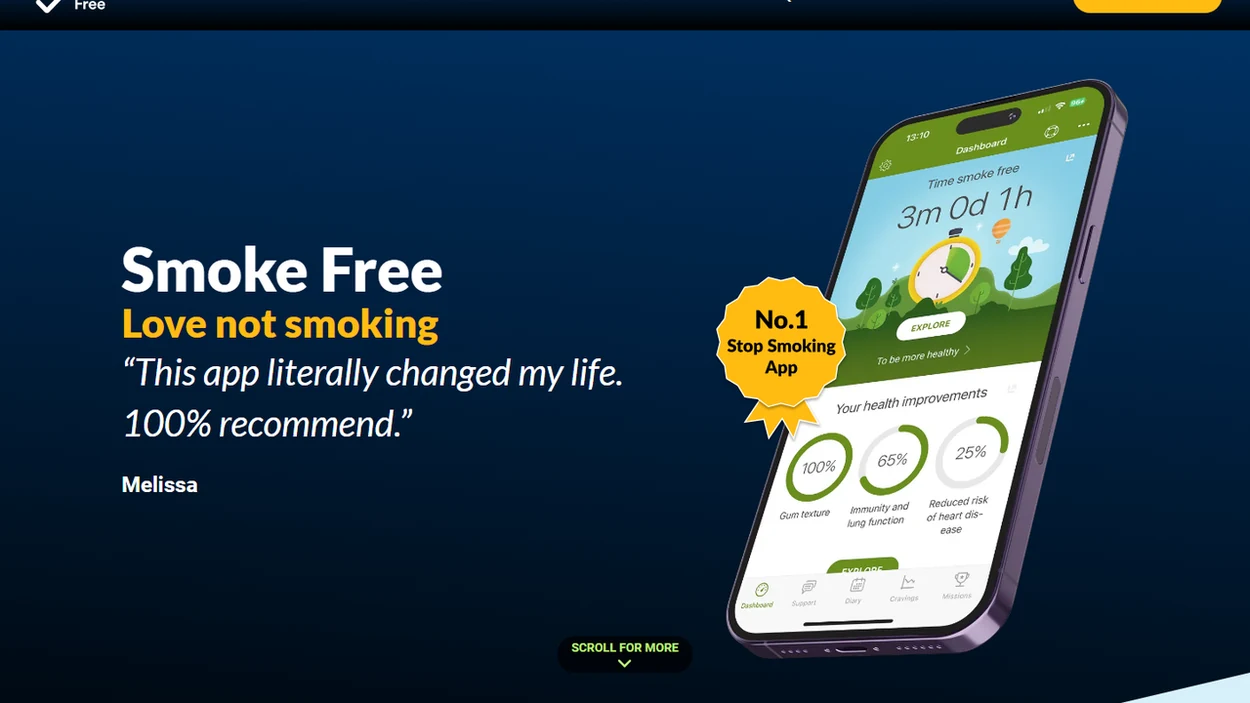
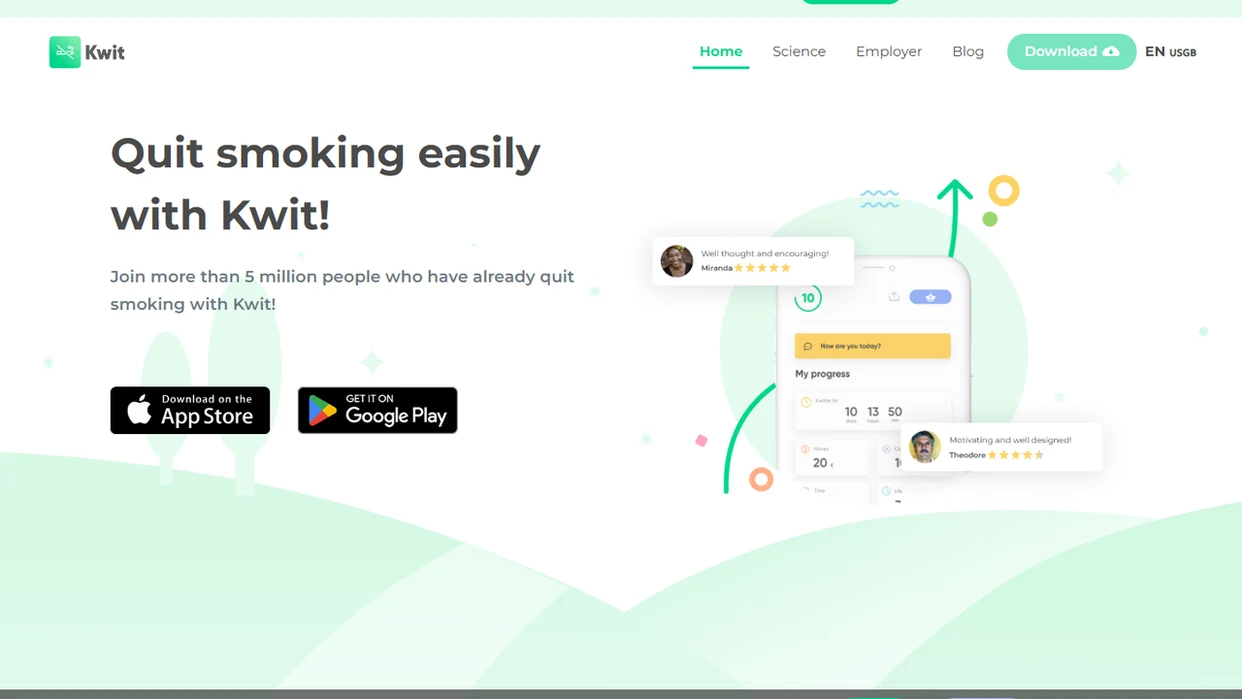
Side-by-side captures of the compared products. Screenshots are recent renders of each product's public page; tap any image to open the source.
At a Glance: Relapse App Features That Matter
A relapse-friendly quit app should preserve what you learned, not wipe the slate clean. The first screen after a slip-up matters; it should help you reset the plan, not make you feel like deleting everything.
- A non-judgmental quit-date reset lets you restart today while keeping past progress visible.
- Trigger and craving logging shows what happened before the cigarette, such as stress, alcohol, boredom, or a lunch-break routine.
- CBT and ACT-style coping tools help you challenge the thought, “I already messed up, so I might as well smoke the rest of the day.”
- Progress preservation matters because old craving logs can reveal the next weak spot.
- About 75% of smokers who first stop relapse within 6 months, according to a 2002 relapse study.
If the priority is restarting quickly after a slip, MeQuit earns the spot because it keeps the smoke-free streak history while rebuilding the quit plan around trigger notes and craving exercises.
Named Shortlist: Best Stop Smoking Apps for Relapse Recovery
The strongest relapse recovery apps do more than count smoke-free days. Good stop smoking apps deliver reset tools, trigger review, and craving practice, not a moral scorecard after one cigarette.
Stop Smoking App: Best Overall for Relapse Restarts
MeQuit is the strongest pick for relapse restarts because it treats a slip-up as data. The MeQuit stop smoking app supports flexible restart, trigger analysis, and a craving toolkit, which helps when smoke smell on the steering wheel makes the old routine feel close again.
Kwit: Best Gamified Quit Smoking After Relapse App
Kwit uses points, levels, and game-style motivation. That can help some users stay engaged, but relapse logging is less central than rewards and milestones.
QuitNow and EasyQuit: Budget Alternatives
QuitNow is useful for people who need community encouragement after a rough day. EasyQuit is a simple free option for streaks and savings, though its relapse tools are lighter. For a broader comparison, our best stop smoking app guide explains which features matter before quit day and after a restart.
Evaluation Criteria for Relapse Prevention Apps
A relapse prevention app should be judged by what happens after the user smokes again. We looked for evidence-based methods, compassionate reset design, and whether the app turns past slips into a clearer plan.
| Criterion | What to look for | Why it matters after relapse |
|---|---|---|
| Evidence base | CBT, ACT, or clinically informed content | These methods teach a response to the craving wave. |
| Reset UX | Quit-date reset without shame or lost data | Users are less likely to quit the app after a slip. |
| Trigger analysis | Mood, place, time, intensity, and outcome logs | Patterns become easier to spot. |
| Coping plan | Suggested actions for top triggers | The next high-risk moment has a prepared answer. |
| Privacy | Clear data practices for health and mood logs | Relapse notes can be sensitive. |
A systematic review found some app users were up to four times more likely to achieve short-term abstinence when they fully used app features source. That “fully used” part is important. Empty streak counters don’t do much.
Relapse Prevention Mechanics Inside a Smoking Cessation App
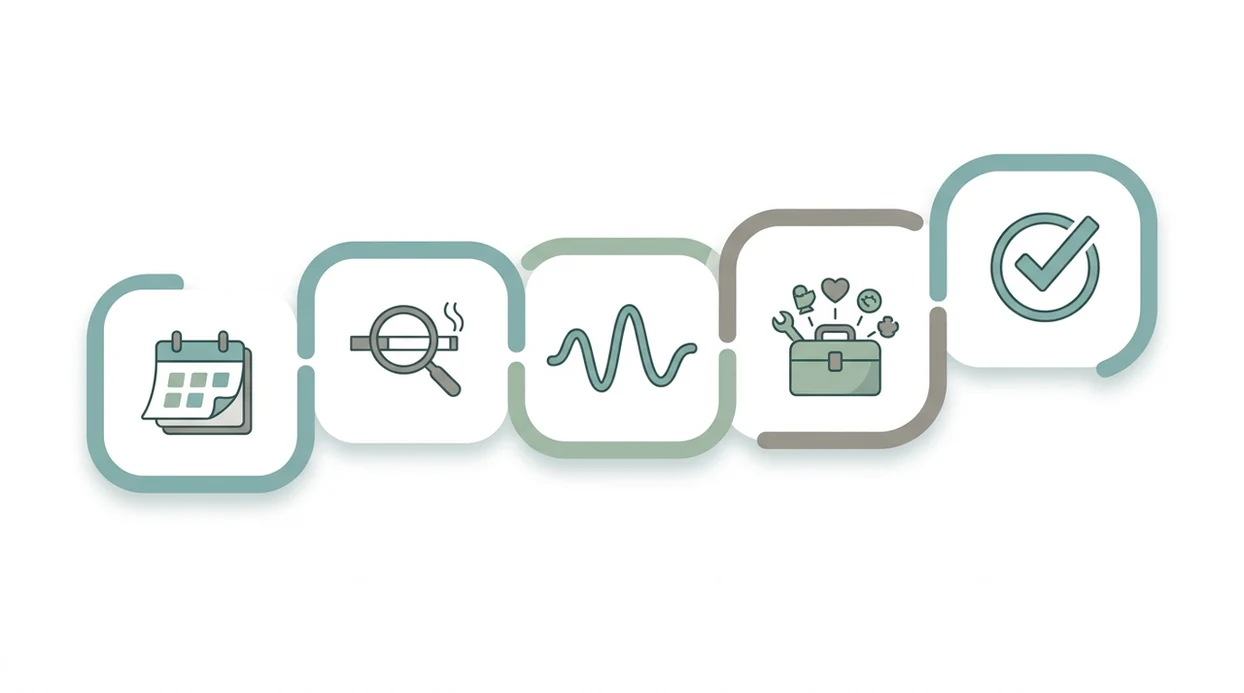
How relapse prevention apps work: they turn a smoking lapse into a habit-loop record, then use that record to guide the next coping response. In plain language, the app helps you notice the cue, name the thought, and choose a different action before the next cigarette.
The CBT loop is simple: identify the trigger, challenge the thought, apply a coping response. A craving log may capture intensity, mood, place, time, and outcome. Over several days, those entries build a personal trigger profile. Maybe the danger zone is the elevator after work. Maybe it is the blue LED blink under a desk when vaping used to be automatic.
In one randomized trial of an ACT-based smoking cessation app, participants using the ACT app had higher 6-month quit outcomes than users of the comparison app:. Prior quit-attempt data improves future attempts because it shows where the plan broke. MeQuit uses that history to help you reset the plan around real triggers, not guesses.
5 Steps to Restart With a Quit Smoking After Relapse App
Use a quit smoking after relapse app the same day you slip, if you can. Waiting usually lets shame take over, and shame is a lousy quit coach.
- Reset your quit date without deleting history, so the old streak becomes useful evidence.
- Log the relapse trigger honestly, including where you were, what you felt, and what happened next.
- Review your previous patterns and look for repeated times, moods, people, or places.
- Set a revised coping plan for your top triggers, such as a walk, gum, breathing drill, or delay timer.
- Re-engage daily tracking with craving exercises, and consider NRT, medication, or counseling if cravings keep breaking through.
After the reset button stared back after midnight, when the thought is “start Monday,” MeQuit is useful because the restart can happen immediately through quit-date reset, trigger logging, and daily craving practice. For craving-heavy restarts, the best quit smoking app for cravings goes deeper on urge tracking.
Common Myths About Smoking Relapse and Cessation Apps
Relapse does not mean the app failed. Nicotine addiction is learned, physical, and situational, so the better question is what the relapse taught you.
Myth: relapse means failure. Truth: relapse is common, and many people need several attempts before a stable quit. Reset the plan.
Myth: the most-downloaded app is the right choice. Truth: popularity does not prove clinical validation, privacy quality, or useful relapse support.
Myth: apps replace medication and counseling. Truth: combined approaches often double or triple quit rates compared with trying alone source.
Myth: restarting erases progress. Truth: past trigger logs sharpen the next plan.
Only a small minority of unaided quit attempts lead to long-term abstinence, and reviews of cessation methods commonly place unassisted success around 3% to 5%: source. When the issue is “I smoked once, now the day is ruined,” MeQuit fits because the relapse log turns that moment into a concrete next-step plan.
Best Stop Smoking App for Relapse Paired With Medication and Counseling
The most evidence-backed approach to quitting after relapse is behavioral support combined with proven cessation medication when appropriate. Clinicians commonly suggest nicotine replacement therapy, varenicline, or bupropion alongside counseling or quitline support for people who keep returning to cigarettes.
MeQuit fits into that multi-tool strategy because it handles the daily tracking piece between appointments, pharmacy runs, and hard moments in the car. You can log a craving, note whether gum or a patch helped, and bring that pattern to a counselor or telehealth visit.
Apps tend to work best when they make the next cigarette less automatic, while medication helps reduce the physical pull of nicotine. People comparing digital support and simpler counters may also find the quit smoking app vs tracker breakdown useful.
When to Get Medical Help or Quitline Support
Get medical or quitline support if relapse keeps happening, withdrawal feels unmanageable, or your health situation raises the stakes. An app can support behavior tracking, but it cannot diagnose nicotine dependence, prescribe medication, or replace a clinician’s judgment.
- Contact a clinician if you are pregnant, trying to become pregnant, have a complex medical history, or feel severely dependent on cigarettes or vaping. Ask directly about nicotine replacement therapy, varenicline, or bupropion, and whether they fit your situation.
- Seek urgent help if quitting overlaps with severe depression, thoughts of self-harm, heavy alcohol use, other substance use, or feeling unsafe. Those moments need live support, not just another timer screen.
- Call a quitline for coaching between appointments; in the U.S., 1-800-QUIT-NOW connects callers to state quitline services.
- Bring your logs to the visit. Craving times, relapse triggers, patch or gum notes, and “I always smoke after dinner” patterns can help a counselor or prescriber tune the plan.
- Use the app between supports to practice the daily reset, then let professionals handle medication choices and higher-risk symptoms.
Limitations
Even the best relapse prevention app has limits. That honesty matters, especially when withdrawal is loud and your shoulders feel tight.
- Apps cannot eliminate nicotine withdrawal, physical cravings, irritability, or sleep disruption.
- Long-term evidence for app-only relapse prevention beyond 6 months is still limited.
- Many app-store cessation apps lack clinical testing or rely on generic motivational quotes.
- Users who rarely open the app or skip craving logs usually see little benefit.
- Premium or validated programs may be limited by cost, language, phone type, or country.
- No app replaces medical advice for pregnancy, severe dependence, multiple substance use, or complex mental-health needs.
- Community apps like QuitNow can help with accountability, but public posting may not suit private relapse notes.
MeQuit is a practical relapse prevention app because it supports restart, tracking, and coping practice, but it works better when paired with medication, counseling, or quitline support for high-risk quit attempts. If cost is the main concern, compare options in the free vs paid quit smoking app guide.
FAQ
How do I stop smoking after a relapse?
Reset your quit date, log the trigger, and choose one coping response for the next similar moment. Consider NRT, medication, counseling, or a quitline if cravings keep overpowering the plan.
Should I reset my quit-smoking app after a relapse?
Yes, reset the quit date but keep the previous data. Past trigger logs help show what needs to change in the next attempt.
Do smoking cessation apps actually work?
Smoking cessation apps can help, especially when users fully engage with quit plans, craving tools, and tracking. Evidence is stronger for active use than for downloading an app and rarely opening it.
Can an app prevent smoking relapse?
An app can reduce relapse risk by helping users track triggers, practice coping skills, and respond faster to craving waves. It works best alongside medication, counseling, or quitline support.
Is relapsing while quitting smoking normal?
Yes, relapse is common during nicotine addiction recovery. About 75% of smokers who initially quit relapse within 6 months, so restarting is part of the process for many people.
What app features help most after a smoking relapse?
The most useful features are non-judgmental quit-date reset, trigger logging, CBT-style coping exercises, and personalized craving plans. The MeQuit stop smoking app focuses on those relapse-recovery steps.
Are free quit smoking apps effective after a relapse?
Some free apps help with basic streaks and savings, but many have weaker relapse tools. Check for CBT or ACT foundations, clear privacy practices, and real trigger logging.
Should I combine a quit smoking app with nicotine replacement therapy?
Yes, combining behavioral support with FDA-approved cessation medications can double or triple quit rates compared with unassisted attempts. A Stop Smoking App can track cravings while NRT reduces withdrawal intensity.
Restart Your Quit Without Shame
Stop Smoking App (MeQuit) helps you reset after a slip, track cravings and triggers, rebuild your streak, and keep your quit plan visible. Download the app to restart today with practical support in your pocket.
Get Stop Smoking App