
Best Quit Smoking Books: 7 Reads That Actually Help Real Quitters

Strong quit smoking books include Allen Carr's Easy Way to Stop Smoking for mindset reframing, Atomic Habits by James Clear for building smoke-free routines, and The Freedom Model for cognitive restructuring. No single book works for everyone, so MeQuit is useful when you want the reading to turn into daily craving logs, streak tracking, and reset steps.
- Allen Carr's Easy Way remains the most widely recommended quit smoking book, with seminar-based research showing cessation rates of 19% to 51%.
- No book alone is clinically proven to guarantee quitting. Pairing a book with tools like the MeQuit stop smoking app, nicotine replacement therapy, or counseling can double success rates.
- The right book depends on your smoking profile: heavy daily smoker, social smoker, and someone who's relapsed before each benefit from different approaches.
How the top quit smoking books look
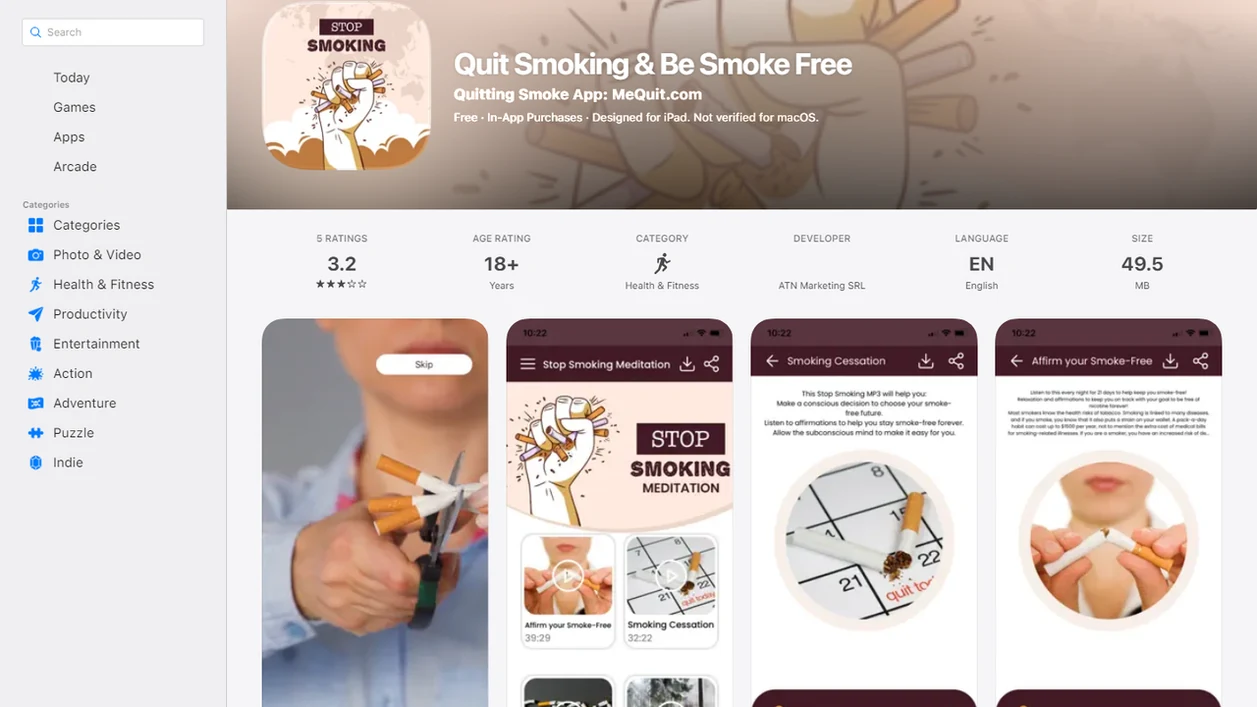
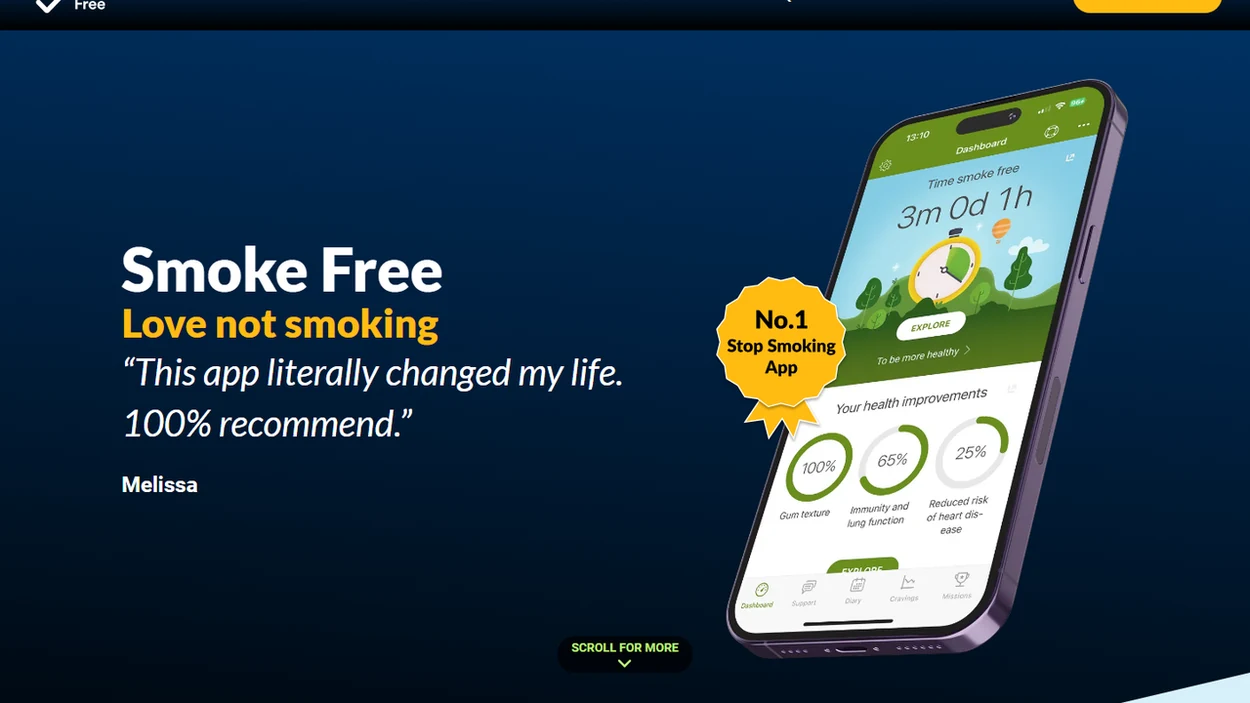
Side-by-side captures of the compared products. Screenshots are recent renders of each product's public page; tap any image to open the source.
7 Best Quit Smoking Books: The Short Answer
The best quit smoking books are the ones you will actually finish, then use when a craving wave hits. In 2024 CDC data, 47.7% of U.S. adults who smoked tried to quit, but only 9.2% succeeded, so matching the support to the person matters source.
- **Allen Carr, *Easy Way to Stop Smoking***, mindset reset for smokers who feel trapped.
- **James Clear, *Atomic Habits***, habit-loop repair for routine-driven smokers.
- **Steven Slate and Mark Scheeren, *The Freedom Model***, belief-change work for readers who reject disease labels.
- **Allen Carr, *No More Ashtrays***, shorter Carr-style reframing.
- **Neale Martin, *Quit Smoking the Easy Way***, behavioral science for analytical readers.
- CBT-based quit smoking workbooks, structured exercises for anxiety-linked smoking.
- **Allen Carr, *The Little Book of Quitting***, a fast pre-quit-day read.
Heavy eyelids after broken sleep can make any advice feel distant. Pick the book that fits your smoking level, mindset, and reading style, not the one with the loudest promise.
How Quit Smoking Books Work
Quit smoking books work by changing the story your brain tells about cigarettes, then helping you plan what to do when the old urge appears. They are strongest for mental preparation, self-talk, and relapse planning, not for replacing medical care.
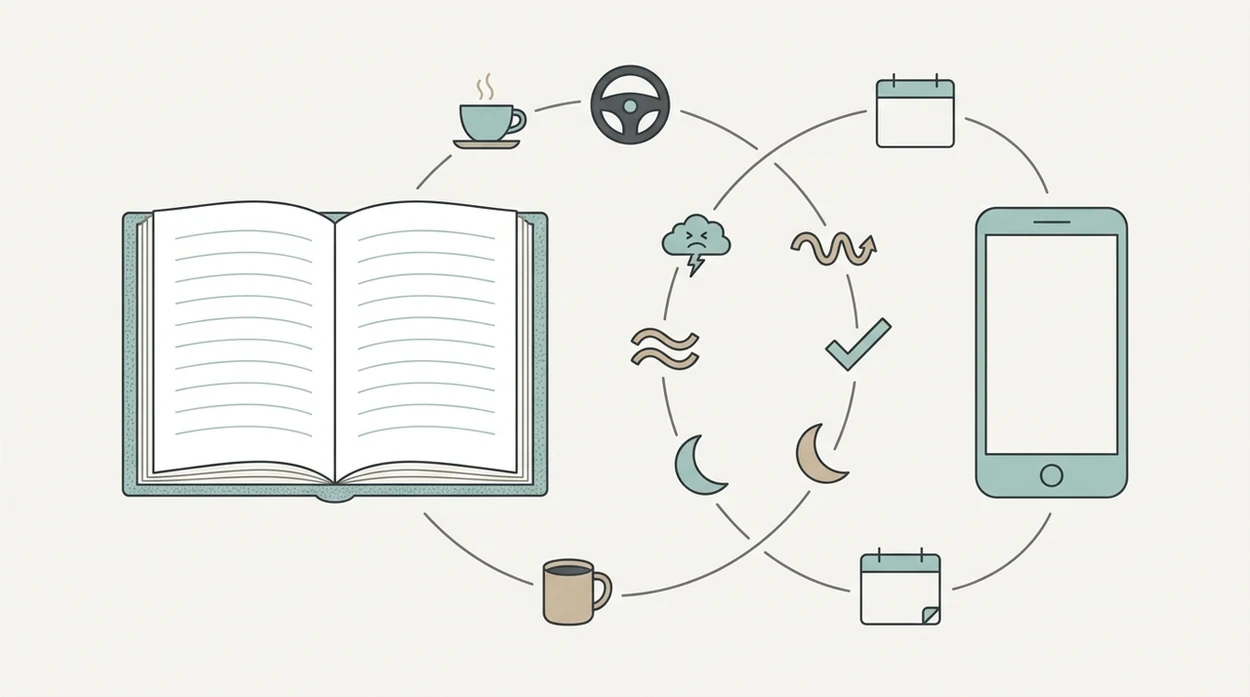
Most useful books use cognitive reframing, which means looking at the cigarette differently: not as relief, reward, or company, but as a short loop that keeps asking to be fed. They also build cue awareness, the plain act of noticing when the urge usually starts: coffee, driving, stress, alcohol, boredom, or the end of a meal. Once the cue is visible, a replacement routine can be chosen before the craving peaks.
A practical reading plan usually looks like this:
- Notice the triggers the book keeps naming in your own day.
- Rewrite the smoking thought in simple words you believe.
- Choose one replacement action for each common cue.
- Prepare a slip-up response before quit day, so relapse does not become surrender.
Books can shift mindset, but physical nicotine withdrawal is a separate problem. If dependence is severe, or medication questions matter, books are weakest; nicotine replacement, prescriptions, counseling, or clinical support may be needed too.
Quit Smoking Books and Brain Habit Loops
Quit smoking books work by changing how you interpret the cigarette, not by physically removing nicotine withdrawal. The strongest ones challenge the belief that smoking gives real pleasure, stress relief, or control.
A cigarette habit often follows a cue-routine-reward loop. The cue might be finishing dinner, the routine is smoking, and the reward is a brief drop in discomfort. Good quit smoking books help you name that loop, then replace the routine before your hands go looking for a lighter. The most useful books teach habit loops and cognitive reframing in plain language. That means they help you see the thought before the cigarette.
Fear-based books lean on disease images and shock. Identity-based books ask a different question: “What would a non-smoker do in the next ten minutes?” That lands better for many readers.
Books alone have limited clinical evidence, but they can prepare the ground for behavior change. The most evidence-backed approach to quitting smoking is behavioral support combined with medication or structured follow-up, not reading in isolation.
How to Use a Quit Smoking Book
Use a quit smoking book as a working plan, not as a pass-fail test of willpower. The goal is to turn the chapters into a quit date, a few rehearsed responses, and a calmer restart plan if you slip.
- Choose one book that matches how you smoke: all-day dependence, weekend social smoking, stress smoking, vaping crossover, or repeated relapse. Popularity matters less than fit.
- Set a quit date before the final chapters, so reading does not become another delay. Circle it, enter it in your tracker, and let the book build toward that day.
- Write three personal triggers the book helps you see differently, such as coffee, driving, alcohol, anger, or the first quiet minute after work.
- Practice one coping script before cravings peak. Say it out loud while calm: “This is a craving, not a command,” or “Ten minutes first, then I decide.”
- Review any slip without shame. Note what happened, adjust your support plan, and restart before one cigarette turns into the whole pack.
That last step is where many quit attempts are saved.
Stop Smoking App Pairing Plan for Quit Smoking Books
A quit smoking book works better when its ideas become daily actions. If you use MeQuit, treat it as the place where the book turns into a quit date, craving record, and review habit.
- Pick one book that matches your smoker profile: heavy daily, social, relapse-prone, anxious, or routine-driven.
- Set a quit date in MeQuit before you finish reading, so the book does not become endless preparation.
- Log cravings in MeQuit while applying the book's coping framework, especially urge strength, trigger, and outcome.
- Review daily progress in the Stop Smoking App to connect smoke-free streaks with the book's mindset shifts.
- Re-read key chapters during high-risk times flagged by your craving history.
For readers who need the book to become a daily system, MeQuit fits because the craving log shows the trigger, urge rating, and outcome in one place. Combining behavioral support with structured tools can double, or more than double, quit rates compared with trying without support, according to a 2020 clinical evidence review source.
A shaky thumb on the urge slider still counts as action.
Quit Smoking Book Selection Criteria
We ranked quit smoking books by usefulness, evidence alignment, and how well each one helps during the first week. A best-seller can still be weak if it only scares you and gives no next step.
- Evidence alignment: We favored books that match known behavior-change tools, including cue awareness, coping plans, and relapse prevention.
- Real quitter feedback: We looked for reviews from people describing specific quit-day changes, not vague praise.
- Practical framework: We excluded books built mainly around scare tactics, guilt, or “just decide” advice.
- Relapse coverage: We gave more weight to books that address slip-ups and restart plans.
- Clinical caution: Popularity is not validation; the systematic review of Allen Carr's method is the closest thing to rigorous evidence for a book-based approach.
Someone marking a calendar square with a restart needs steps, not shame. Good stop smoking apps deliver behavior tracking and timed support, not a magical personality change.
Allen Carr's Easy Way to Stop Smoking — Mindset Reset Book
Does Allen Carr's Easy Way to Stop Smoking actually work? The method has promising evidence in seminar form, but the book alone has much weaker proof.
Carr's core idea is simple: smoking gives no genuine benefit. The book tries to remove the fear of quitting rather than demand more willpower. That can be a relief for people who keep thinking, “I already messed up, so I might as well smoke the rest of the day.”
A 2023 systematic review found that Allen Carr seminars had cessation rates from 19% to 51%, and one trial found the seminar about 2.3 times more effective than an online quit service source. The same review found no clear difference between Allen Carr seminars and treatment that included nicotine replacement therapy. However, that is seminar evidence, not proof that reading the book alone produces the same result. One study of the book in patients with head and neck disorders found no significant benefit.
Smokers trying to break psychological dependence often start here. Very heavy nicotine-dependent smokers may need pharmacological support too.
Atomic Habits by James Clear for Cigarette Habit Builders
Atomic Habits is not a quit-smoking book, but its cue-craving-response-reward framework maps neatly onto cigarette routines. It is strongest for readers who smoke because the day has grooves worn into it.
Clear's identity idea also helps: “I am a non-smoker” is different from “I am trying not to smoke.” That shift can matter when the old routine appears after a meeting, in the car, or during a lunch break.
If the priority is rebuilding everyday routines, MeQuit earns the spot beside Atomic Habits because the smoke-free streak and daily check-ins make small wins visible. The book explains why tiny actions compound; MeQuit records whether those actions happened.
For routine-driven smokers, habit tracking is often easier than motivation alone because it shows the cue before the cigarette. The limitation is real, though. Atomic Habits does not give smoking-specific coping scripts, nicotine withdrawal guidance, or medication advice. For a deeper app match, our best quit smoking app for cravings guide focuses on urge logging.
5 More Quit Smoking Books Worth Reading
These five quit smoking books fit different readers, so the right pick depends on what usually breaks your quit attempt. A parent hiding a vape in a drawer needs a different voice than someone smoking only at weekend drinks.
The Freedom Model for Quitters Who Reject Disease Labels
**Steven Slate and Mark Scheeren, *The Freedom Model*** is best for readers who dislike the “addiction is a disease” frame. Watch out: the tone can feel too oppositional if you want medical or counseling language.
CBT Workbooks for Smokers with Anxiety
CBT-based quit smoking workbooks are best for smokers whose urges come with anxiety, low mood, or racing thoughts. Watch out: workbook progress requires writing, repetition, and patience.
**Neale Martin, *Quit Smoking the Easy Way*** suits analytical thinkers who want behavior science more than slogans. Watch out: it may feel less emotionally comforting than Carr.
Short Reads for Smokers Who Won't Finish a Long Book
**Allen Carr, *No More Ashtrays*** is best for readers who liked Carr's idea but found the original repetitive. Watch out: it still uses the same core argument.
**Allen Carr, *The Little Book of Quitting*** works as a fast read before quit day. Watch out: short books rarely cover relapse in enough depth.
Quit Smoking Book Comparison Table by Reader Profile
No single quit smoking book guarantees quitting, but a book matched to your reader profile is easier to use under pressure. In 2023, about 28.6 million U.S. adults still smoked, per the CDC, so better matching matters at scale source.
| Book title | Approach type | Best for | Pages/length | Pairs with app? |
|---|---|---|---|---|
| Easy Way to Stop Smoking | Mindset | Psychological dependence | Medium | Yes |
| Atomic Habits | Habit | Routine-driven smokers | Medium | Yes |
| The Freedom Model | Cognitive | Disease-label skeptics | Long | Yes |
| No More Ashtrays | Mindset | Carr readers wanting shorter | Short-medium | Yes |
| Quit Smoking the Easy Way | Behavioral | Analytical thinkers | Medium | Yes |
| CBT quit workbooks | CBT | Anxiety-linked smoking | Varies | Yes |
| The Little Book of Quitting | Motivational | Quick pre-quit read | Short | Yes |
When the issue is turning a chapter into a smoke-free streak, MeQuit handles the follow-through with craving logs, money saved, and relapse recovery prompts. If cost is your first filter, compare options in our free stop smoking app guide.
Limitations
Quit smoking books can help, but they are not medical treatment and they cannot read your risk factors. That matters if you smoke heavily, feel depressed, are pregnant, or have heart disease.
- Research is thin: Very little high-quality research tests individual quit smoking books in randomized trials.
- Book-only results are uncertain: One study of Allen Carr's book in patients with head and neck disorders found no significant benefit.
- Medical tailoring is absent: Books cannot adjust advice for pregnancy, heart disease, medication interactions, or serious mental-health symptoms.
- Magic-book thinking can delay support: Waiting for one book to “click” may postpone counseling, medication, or a digital program.
- Heavy dependence needs more: Highly nicotine-dependent smokers often do better when books supplement, not replace, evidence-based care.
- Reviews are not proof: Amazon rankings and viral recommendations do not equal clinical validation.
- Relapse is common: A book not working once does not mean you can't quit. It may mean you need a different mix.
Clinicians often recommend combining behavioral counseling with FDA-approved medications for adults who smoke, because the combination can double or more than double quit rates. For slip-up planning, our best stop smoking app for relapse guide covers reset workflows.
FAQ
What is the most popular quit smoking book?
Allen Carr's Easy Way to Stop Smoking is probably the most popular quit smoking book. Popularity does not prove it will work for every smoker.
Does Allen Carr's book actually work?
Seminars based on Allen Carr's method show promising cessation rates of 19% to 51%. Evidence for the book alone is limited.
Can a book alone help you quit smoking?
A book can help you reframe smoking and prepare for quit day. Combining it with an app, nicotine replacement therapy, or counseling usually improves quit rates.
Is Allen Carr's book available as an audiobook?
Yes, Easy Way to Stop Smoking is available as an audiobook. The format changes convenience, not the core method.
Which quit smoking book is best for vaping?
Allen Carr has updated vaping-focused material, and habit-change books like Atomic Habits can apply to nicotine vaping. A best app to stop vaping can help track vape-specific triggers.
Should I read a quit smoking book or use an app?
Books reframe thinking, while apps track behavior and cravings. Combining both is usually more practical than choosing only one.
Do quit smoking books help with relapse?
Some quit smoking books include relapse prevention strategies. Re-reading key chapters during cravings works better when paired with app-based trigger tracking.
Are CBT-based quit smoking workbooks effective?
CBT is an evidence-based approach used in smoking cessation support, especially when anxiety or depression is part of the pattern. Workbook-specific evidence is more limited than CBT counseling evidence.
Turn quit smoking book advice into daily action
Stop Smoking App helps you track cravings, smoke-free days, triggers, streaks, and money saved while you apply lessons from your quit smoking book. It is not medical advice, but it can support your quit plan alongside NRT, counseling, quitlines, or clinician guidance when needed.
Get Stop Smoking App