
Identity-Based Quitting: The Mindset Shift That Outlasts Willpower When You Stop Smoking

Identity based quit smoking works by shifting your self-concept from “I am a smoker trying to quit” to “I am a non-smoker,” which makes each choice line up with who you believe you are. MeQuit helps turn that shift into daily action by pairing smoke-free streaks, craving check-ins, and trigger notes with the question, “What would my non-smoker self do now?”
> Definition: Identity-based quit smoking is a cessation approach where you adopt a non-smoker identity as your core self-concept, making the decision not to smoke a reflection of who you are rather than an act of willpower you must sustain.
TL;DR
- Identity-based quitting reframes “I’m trying to quit” into “I don’t smoke,” making choices more automatic and less effortful.
- Research supports identity transition as a key factor in successful cessation, but it works best combined with behavioral support, nicotine replacement therapy, or apps.
- MeQuit can support this shift by turning non-smoker identity statements into craving prompts, trigger notes, and smoke-free streak review.
Why Identity-Based Quit Smoking Outperforms Willpower Alone
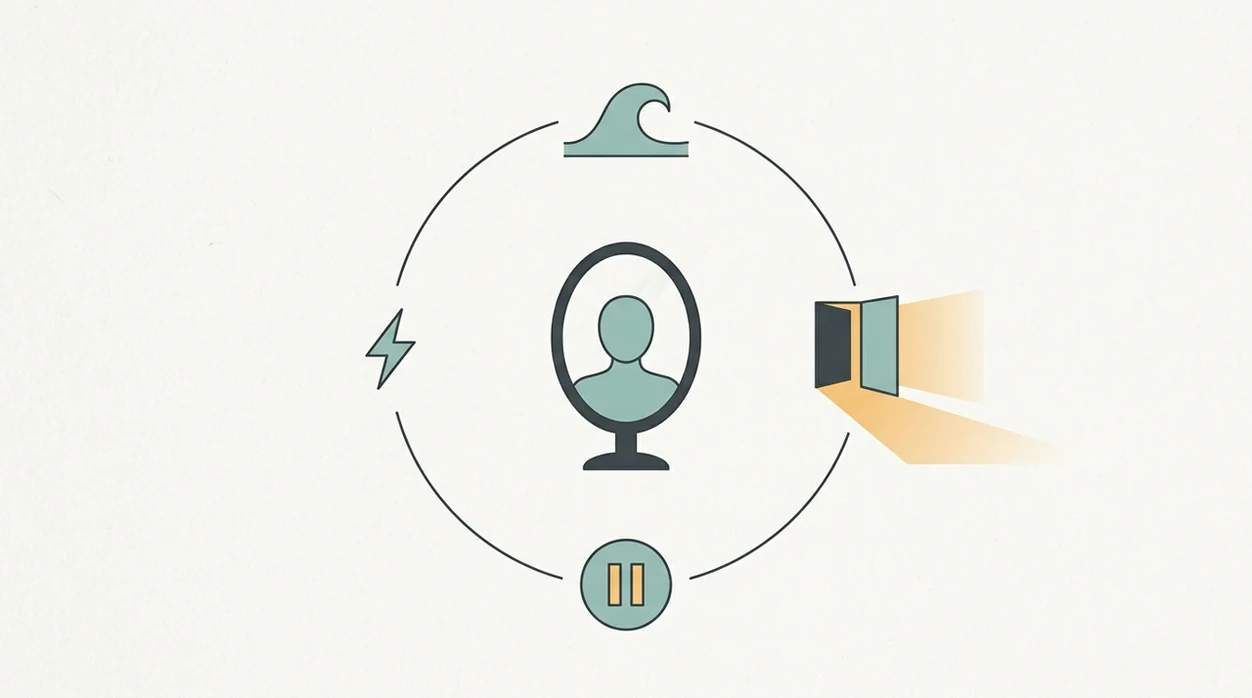
Identity-based quit smoking tends to last longer than willpower alone because identity becomes a decision filter. Willpower asks, “Can I resist this cigarette?” Identity asks, “Does smoking fit who I am now?”
That difference matters during ordinary trigger moments. The blue LED blink under a desk can start the old reach before you’ve even named the craving. A non-smoker identity gives you a faster script.
Per the CDC, 55.1% of U.S. adults who smoked made a quit attempt in 2022 source, yet many return to smoking. Globally, tobacco kills more than 8 million people each year, according to the WHO source.
A 2019 qualitative study found that successful cessation was tied to moving toward a non-smoker identity, with flexible identity boundaries and a growing sense of mastery source. For many quitters, the real work is learning to believe, then repeat, “I don’t smoke.”
Anyone dealing with automatic smoking moments can use MeQuit because the craving log turns a vague urge into a named trigger, response, and smoke-free decision.
5 Facts About Non-Smoker Identity and Quitting Success
A non-smoker identity is not a slogan. It is a behavior pattern that becomes more believable each time you choose the next smoke-free action.
- Successful quitters often change identity, not just behavior. They stop treating smoking as “what I do” and start seeing it as “what I used to do.”
- A strong smoker identity makes quitting harder. When smoking feels like part of your personality, a craving can feel like self-protection, not just nicotine withdrawal.
- Identity conflict is normal. Many people feel split for a while: one part wants the cigarette, another part wants the smoke-free streak.
- Social smoker identity can raise motivation without proving success. In one England sample, people who identified as social smokers reported higher motivation to stop, but that identity was not tied to greater quit success. Add the inline study citation here, or keep the claim qualitative.
- Identity work needs support. Early identity-focused interventions have not shown strong quit-rate gains when used alone, so pair them with counseling, NRT, medication, or app-based behavioral tools.
The pocket check is real.
If your priority is becoming someone who does not smoke after meals, MeQuit fits because daily identity prompts connect the smoke-free streak to the trigger you just survived.
How Identity-Based Smoking Cessation Works
Identity-based smoking cessation works through behavioral identity theory: beliefs about who you are filter decisions before willpower fully engages. In plain language, the brain likes actions that match the story you tell about yourself.
The Identity-Decision Feedback Loop
Each smoke-free choice gives the non-smoker identity more evidence. You skip one cigarette, log the craving, and see the streak hold. The next craving is still uncomfortable, but the choice has a track record now.
Good stop smoking apps deliver timely decision support, not a magic personality change. MeQuit is useful here because a craving prompt can appear when the intention is weak and the old habit loop is loud. That gap matters outside the office, in traffic, or after a hard phone call.
Navigating Identity Conflict Without Relapse
Identity conflict often moves through three stages: ambivalence, partial adoption, and fuller non-smoker identity. You may think, “I don’t smoke,” then still feel your shoulders tighten when someone lights up nearby.
Roles can speed or slow the shift. A parent may picture a toddler coughing near the porch door. A runner may notice easier breathing. A coworker may want clothes that don’t carry stale smoke into a meeting. These roles make the new identity specific.
For people who need visible proof, smoke-free days, health changes, and money saved can reinforce identity; the same feedback idea appears in an app that tracks money saved not smoking.
How to Build a Non-Smoker Identity Using Stop Smoking App
Use identity-based quitting by turning “I want to quit” into small actions your non-smoker self repeats. The MeQuit stop smoking app supports this by making identity checks part of the craving moment, not something you only think about at night.
- Declare your identity shift. Set a quit statement that starts with “I am,” such as “I am a non-smoker who takes a walk after dinner.”
- Map your triggers. List the cigarette times you know are coming, then pair each with a non-smoker response.
- Use craving prompts. When an urge hits, ask, “What would my non-smoker self do right now?”
- Stack existing identities. Link non-smoking to being a parent, runner, partner, worker, or friend who keeps promises.
- Review progress daily. Check streaks, craving notes, and identity affirmations so the feedback loop compounds.
Reset the plan.
On days when the thought is “I already messed up, so I might as well smoke the rest of the day,” MeQuit earns the spot because the slip-up workflow helps you record what happened and restart without turning one cigarette into a full relapse.
If motivation fades after the first week, a quit smoking daily motivation app can help you keep the identity statement visible when cravings feel boring, not dramatic.
Best Identity Quit Smoking Strategies Ranked by Evidence
The strongest identity quit smoking strategies are the ones that combine self-concept change with real-world behavior support. Use these as a ranked shortlist, not a personality test.
- Identity Self-Talk at Trigger Moments. Replace “I can’t smoke” with “I don’t smoke.” This is practical, fast, and fits the moment when dry mouth hits at the checkout line.
- Role-Stacking. Connect non-smoking to a role you already value, such as parent, runner, nurse, teacher, or reliable friend.
- Social Identity Reconstruction. Change how you present yourself and where you spend high-risk time. BecomeAnEX and Smokefree.gov also lean on community and planning, which can support this shift.
- Future-Self Visualization. Picture a normal non-smoker day in detail: clean hoodie, steady breathing, no glove-box pack.
- App-Prompted Identity Check-Ins. Real-time nudges are emerging evidence, but they are practical because cravings happen on a phone-friendly timeline.
Identity self-talk and role-stacking have stronger support from behavior-change theory and qualitative cessation research. App-prompted identity check-ins are newer, but useful when paired with tracking and counseling.
If the priority is catching the craving before it becomes a cigarette, MeQuit handles the identity check through craving logging, trigger tagging, and smoke-free streak review.
Common Myths About Identity-Based Quit Smoking Methods
“Just decide you’re a non-smoker” is the most common myth about identity-based quitting. The decision matters, but nicotine withdrawal, routines, stress, and social cues still need a plan.
Another myth is that relapse becomes impossible once you adopt a non-smoker identity. It doesn’t. A slip-up can still happen after a bad day, a party, or a charger cable beside the nightstand vape. The identity work helps you reset the plan faster.
A third myth says identity methods are only positive affirmations. That misses the real psychology. Behavioral identity theory explains why people repeat actions that feel consistent with who they are.
The social smoker myth is also sticky. Social smokers may report higher motivation to stop, but research from England found no higher quit success. Wanting to quit is not the same as having a repeatable quit system.
The most evidence-backed approach to quitting usually combines behavioral support with approved cessation aids, such as nicotine replacement therapy or prescription medication when appropriate. Identity work can sit inside that plan, not replace it.
If your pattern is “I smoke when other people smoke,” write down the person, place, and replacement response before the next invite arrives.
How We Picked These Identity Quit Smoking Approaches
We ranked these identity quit smoking approaches by evidence quality first. Peer-reviewed cessation research carried more weight than theory, personal stories, or app-store claims.
Practicality came next. A strategy had to work inside a stop smoking app, a counseling plan, or a normal Tuesday. If a method sounded good but failed during lunch break or school pickup, we marked it lower.
We also looked at study type. Randomized trials counted more than qualitative studies, and qualitative studies counted more than unsupported mindset advice. However, identity research is still developing, so we treated emerging ideas carefully.
Combination compatibility mattered too. A useful strategy should work alongside nicotine replacement therapy, counseling, or pharmacotherapy. Readers comparing app support can also review whether do stop smoking apps work for broader evidence context.
When to Get Medical Support for Quitting Smoking
Get medical support if quitting feels unsafe, unusually hard, or tied to a health condition. Identity work is behavioral support; it does not diagnose nicotine dependence, prescribe medication, or replace care from a licensed clinician.
This matters most during pregnancy, heavy daily dependence, or repeated quit attempts that end in relapse. A clinician can help you choose evidence-based options such as nicotine replacement therapy, varenicline, bupropion, counseling, or a quitline plan; the CDC lists these as common quit-smoking supports source. Use identity prompts as the daily practice layer on top of that plan.
- Ask a clinician or pharmacist which quit aids fit your health history, medications, pregnancy status, and nicotine use.
- Set a quit plan that includes medication, counseling, quitline support, or NRT if approved.
- Pair each treatment step with an identity prompt, such as “I am someone who uses the patch instead of buying a pack.”
- Track cravings, slips, side effects, and mood changes so your plan can be adjusted.
- Seek urgent help for chest pain, serious breathing trouble, or severe mood changes, especially thoughts of self-harm.
Limitations
Identity-based quitting is useful, but it is not enough for everyone. It should be treated as one layer in a quit plan, not the whole plan.
- At least one randomized trial in pregnant women found no significant change in smoker or non-smoker identity scores over time, and no significant link between identity measures and abstinence source.
- Identity change is gradual and uneven. Apps that promise an instant non-smoker identity can make normal conflict feel like failure.
- Without nicotine replacement therapy, counseling, or prescription medication when appropriate, identity work may not improve quit rates meaningfully.
- Friends who smoke, unpaid bills, housing stress, night shifts, and poverty can overpower a good identity statement.
- Measuring smoker versus non-smoker identity is difficult. Self-report scales may miss quiet changes, like avoiding the porch without announcing it.
- Most identity-cessation research is observational or qualitative, not large-scale randomized trial evidence.
- MeQuit does not diagnose nicotine dependence, prescribe medication, or replace a clinician.
The most common medically supported way to quit smoking is behavioral support combined with evidence-based medication or nicotine replacement when suitable.
FAQ
What is identity-based quitting?
Identity-based quitting means shifting from “I am trying not to smoke” to “I am a non-smoker.” The goal is to make not smoking feel consistent with who you are.
Does changing your self-identity actually help you quit smoking?
Research suggests successful quitting is often linked with moving from a smoker identity to a non-smoker identity. The evidence is stronger when identity work is combined with behavioral support, NRT, or medication.
How long does it take to feel like a non-smoker?
There is no fixed timeline. Many people feel identity conflict for weeks or months before the non-smoker identity feels natural.
Can a stop smoking app help build a non-smoker identity?
Yes, the MeQuit stop smoking app can help by turning identity statements into craving prompts, trigger logs, and smoke-free streak review. This makes the identity shift easier to practice during real craving moments.
Is identity-based quitting enough on its own?
Usually, no. Identity-based quitting works best when paired with evidence-based support such as counseling, nicotine replacement therapy, or prescription cessation medicine.
What is the 3-3-3 rule for quitting smoking?
The 3-3-3 rule usually refers to the first 3 days, 3 weeks, and 3 months after quitting. It is a milestone framework, not a medical rule.
How do you train your brain to stop smoking?
You train your brain by repeating new responses to old triggers until the habit loop weakens. Identity self-talk, craving logging, replacement routines, and medication support can all help.
Does having a social smoker identity make quitting easier?
Not necessarily. Research found social smoker identity was linked with higher motivation to stop, but not with greater quit success.
Build Your Non-Smoker Identity One Day at a Time
Stop Smoking App helps you track cravings, smoke-free streaks, savings, and relapse recovery so each healthy choice becomes evidence of who you are becoming. It is not medical advice, but it can support your quit plan alongside NRT, counseling, quitlines, or clinician guidance.
Get Stop Smoking App