Quit smoking plan: how to build one in an afternoon
By the Stop Smoking App team · Updated
A quit smoking plan is a one-page set of decisions made before your quit date: when you stop, what medication you will use, which triggers you will face, what you will do instead and who you will call. Writing it down takes about an hour and makes the first week much easier.
1. Pick a quit date
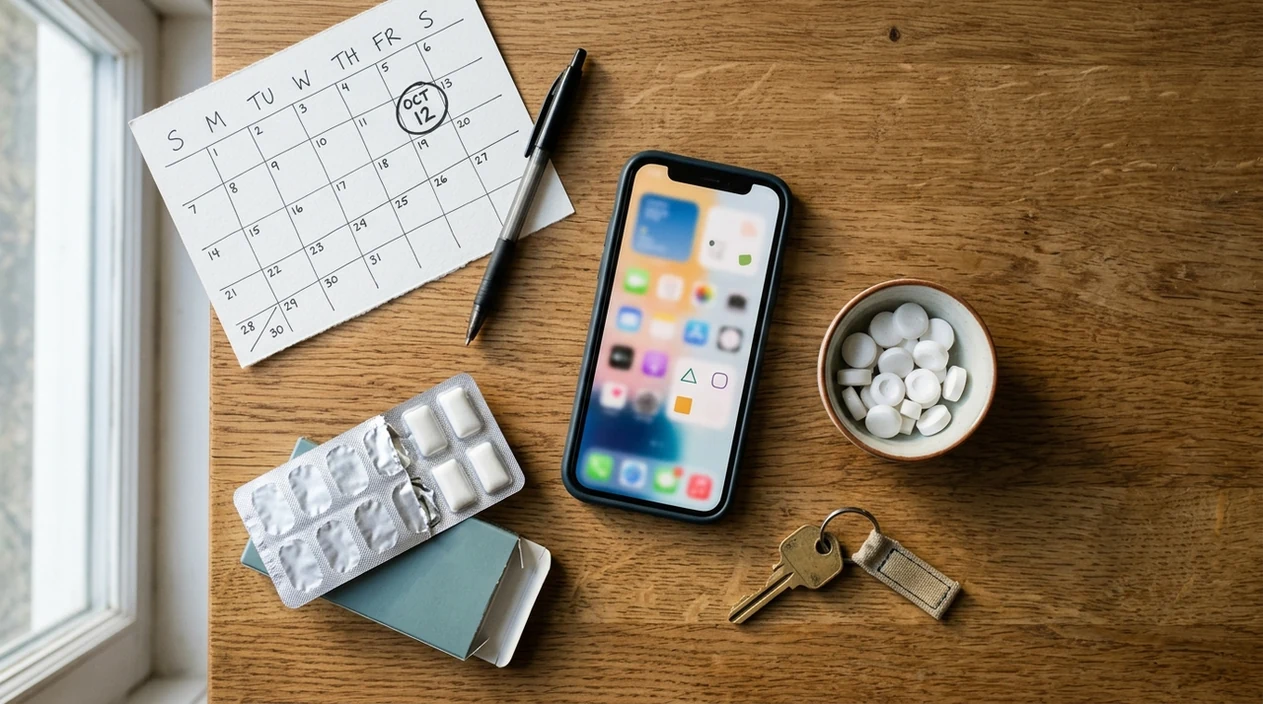
Choose a date within the next two weeks and put it on a calendar. Avoid a date that sits on top of a deadline, a trip or a party. A Monday can work well because the weekend gives you time to prepare, but any day you will keep is the right day.
2. Decide on medication
Talk to a doctor or pharmacist before the date, because some medicines work best when started early. Varenicline is usually started a week before, bupropion a week or two before, and nicotine patches the day you quit. Quit smoking medication compares the options. Write down the product, the dose and who prescribed it.
3. List your triggers
Spend ten minutes listing when you reach for a cigarette: first coffee, driving, after meals, stress at work, drinks with friends, breaks. For each one, write a replacement. Smoking triggers shows how to find the ones you do not notice, and habit stacking shows how to attach a new habit to each of them.
4. Plan for cravings
Write your top three craving responses where you can see them. A craving usually lasts three to five minutes, so a plan that fills five minutes works. How to stop nicotine cravings lists methods with evidence behind them.
5. Line up support
- Tell one or two people your date and what you want from them.
- Save 1-800-QUIT-NOW in your phone. It connects you with free counseling in your state.
- Look at quit smoking support groups for a group or text program.
6. Prepare your space
Remove cigarettes, lighters and ashtrays the night before, and wash clothes and bedding that smell of smoke. Stock sugar-free gum, water and a few snacks, since appetite rises early on. If you expect weight to be a worry, weight gain after quitting smoking is worth reading in advance.
7. Decide what happens after a slip
Write down in advance what you will do if you smoke: throw away the rest of the pack, note what happened, and restart the next morning. That removes the all-or-nothing thinking that turns a slip into a relapse. Restarting after a smoking relapse has the full approach.
The first 30 days on a calendar
A plan is easier to follow when each stage has a job. Use this as a skeleton and fill in your own details.
| When | The job |
|---|---|
| Day -7 to -1 | Start medication if your plan needs it, clear out cigarettes, tell your supporters |
| Day 1 | Medication on, simple food, a busy afternoon and evening |
| Days 2 to 3 | Expect the roughest stretch, drink water, avoid alcohol and use your craving responses |
| Day 7 | Reward yourself and check which triggers surprised you |
| Day 14 | Review the plan and tighten the weak spots |
| Day 30 | Look at how much money you saved and write down what has gotten easier |
Plans for particular situations
If your partner or housemate smokes, ask them to smoke outside and keep their things out of your space, or quit together on the same date. If your work has smoking breaks, decide where you will go instead and who you will go with. If you vape as well as smoke, include both in the plan and set the same quit date for each. The best plan is the one you can picture yourself doing on a bad Tuesday, not a perfect Saturday.
A one-page template to copy
Write these lines on a single page: Quit date. My main reason. Medication and dose. My three biggest triggers and what I will do in each. Three craving responses. Two people I will tell and the quitline number. What I will remove from home and the car. What I will do if I slip. A reward for day seven and day thirty. Review it on the evening before your quit date and again after the first week, and change anything that is not working.
Plan for alcohol and parties
Drinking and smoking go together for many people, and alcohol lowers your guard. For the first month, think about avoiding long nights out, or go with a plan: arrive late, leave early, hold a drink you do not need to refill and go outside with a friend who does not smoke. If you cannot manage an event without cigarettes, it is fine to skip it. The goal is a quit that lasts, not a perfect social calendar in week one.
Where a phone helps
A calendar reminder, a note of your reasons and a saved quitline number are all you need from a phone. If you want guided daily sessions on top, the app to stop smoking we cover is one choice, and the best app to quit smoking compares others. A plan comes first. The tools come second.
For the whole picture of what to do first, see how to quit smoking.
Frequently asked questions
How do I make a quit smoking plan?
Set a quit date within two weeks, choose medication with a doctor or pharmacist, list your triggers and what you will do in place of smoking, line up support, and write what you will do after a slip. Keep it to one page and put it somewhere you can see it.
What should be in a quit plan?
Include the quit date, your main reason, medication and doses, your top triggers with replacements, three craving responses, people to call and the quitline number. A short note on what to do after a slip is also worth adding.
How long before my quit date should I start preparing?
One to two weeks works for most people. That is enough time to get medication, clear your home and tell others, without letting motivation fade. Some medicines, such as varenicline, are started a week before the quit date.
Should I quit on a particular day of the week?
No day is proven best. Pick one when you can protect the first few days from big stressors. Many people prefer a Monday, others like a day off work. What matters is that you set a date and stick to it.
Do I need to tell anyone about my quit plan?
It helps. People who know your date can cheer you on, avoid smoking around you and notice when you are struggling. You only need one or two people, plus the quitline if you want someone with no emotional stake.