
How To Quit Vaping With Phone Support: A Step-by-Step Workflow
You can quit vaping with phone support by choosing an evidence-based cessation app, logging your triggers and nicotine strength, setting a quit date with reminders, and checking in daily to track urges and progress. Combining phone tools with a quitline, counseling, or nicotine replacement therapy can improve your chances of quitting successfully.
> Definition: Quit vaping with phone means using your smartphone, including cessation apps, text programs, built-in reminders, and quitline access, as the central tool in a structured plan to stop vaping.
- Pick a quit-vaping app that uses behavior-change science, not just a day counter.
- Pair the app with text-message support, phone alarms, and a quitline for a complete system.
- Log cravings daily, review weekly, and adjust your plan after any slip—consistency matters more than perfection.
What Quit Vaping With Phone Actually Means
Quit vaping with phone means your smartphone becomes the main place you plan, track, and adjust your quit attempt. It does not mean staring at an app and hoping the urge goes away.
A practical phone setup can include a cessation app, text-message support, craving logs, nicotine-strength tracking, reminder alarms, and quick access to a quitline. The point is to catch the habit loop before it runs on autopilot. That matters when your hand reaches for the vape before you’ve even opened your laptop.
Digital support has evidence behind it. A 2022 review found that 15 of 19 randomized controlled trials reported higher quit rates with smartphone apps or digital interventions compared with minimal or no support source. The need is real too. Per the CDC, 10.0% of U.S. high school students reported current e-cigarette use in 2023.
5 Facts About Using Your Phone to Quit Vaping
- A phone plan works better with a quit date. Choose a date 1 to 2 weeks ahead, then use reminders and check-ins to make the next vape harder to reach.
- Many apps are smoking apps first. Some tools miss vape-specific details like puff count, device location, flavor triggers, or e-liquid strength, so choose a stop vaping app carefully.
- Installation is not treatment. Most users need daily engagement, goal-setting, and quick logging when the craving wave hits. The pocket check is real.
- Behavior-change features matter. The most useful apps offer coping tools, reduction plans, trigger tracking, and motivational prompts, not only a smoke-free streak.
- Phone support can sit beside medical support. Clinicians typically recommend combining behavioral support with nicotine replacement therapy or other treatment when dependence is strong. Good stop smoking apps deliver structure and feedback, not a guaranteed quit or a replacement for medical care.
How Phone-Based Vaping Cessation Works
Phone-based vaping cessation works by interrupting habit loops with timely prompts, craving logging, motivational messaging, and cue disruption. In plain language, your phone helps you notice the urge before the vape is already in your hand.
The useful part is the feedback loop. When you log each urge, puff, place, and mood, patterns show up fast. Maybe the hardest stretch is the bus ride past the vape shop sign. Maybe it’s boredom after dinner. Seeing that pattern weakens the automatic behavior because you can plan a different move.
Multi-channel support adds another layer: app check-ins, text reminders, and a quitline can all point you back to the same plan. In a randomized clinical trial, the EX text-messaging program significantly increased verified 6-month abstinence compared with control support source. Counseling combined with nicotine replacement can also double quit chances compared with quitting without support, according to the U.S. quitline portal.
What You Need Before You Start Quitting Vaping on Your Phone
Before quit day, gather the details your phone plan will track. Write down your current nicotine strength, device type, and approximate daily puff count. A rough count is fine at first. You’re building awareness, not proving a point.
Pick a quit date 1 to 2 weeks ahead. Then list your top three triggers, usually stress, boredom, social vaping, driving, or the first break after work. Tell at least one person what you’re doing so the plan exists outside your screen.
Choose a cessation app that supports vaping tracking, such as tools like MeQuit or another app to help me stop vaping. Add a quitline number to your contacts. If your face gets warm during a stress surge and you want nicotine fast, you don’t want to search for help from scratch.
How To Quit Vaping on Phone: 5 Daily Steps
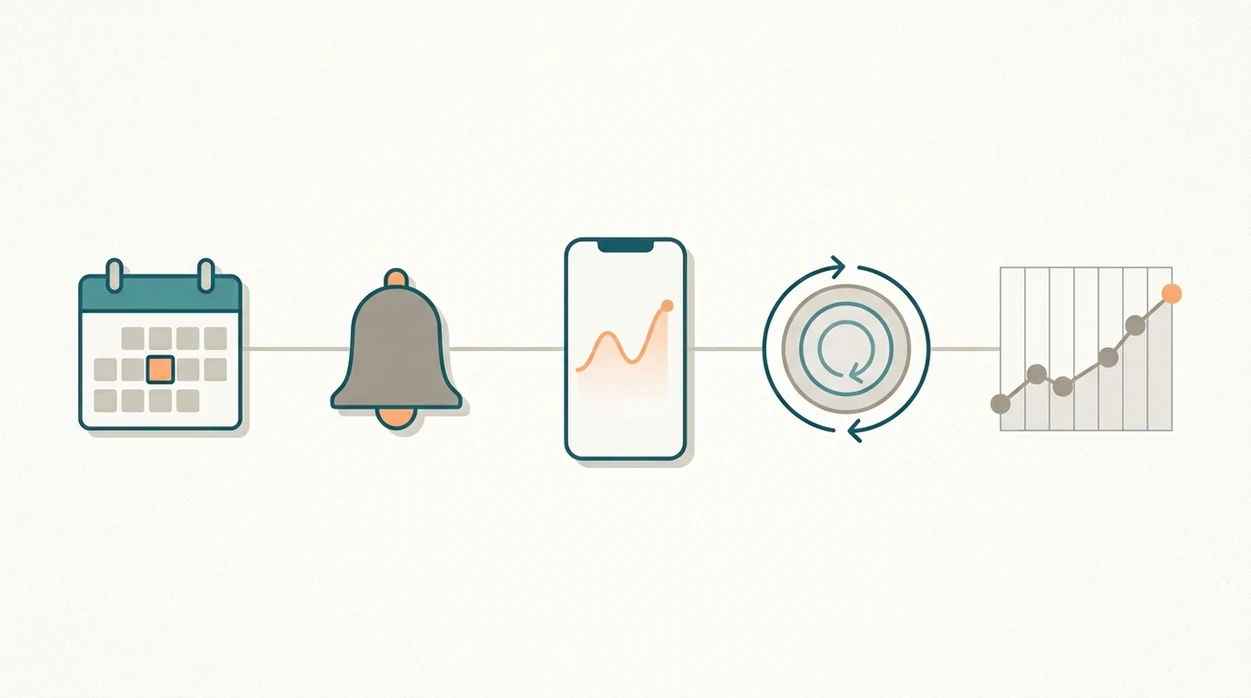
Use this daily workflow so each craving has a next action.
- Set a morning reminder. Log overnight cravings and your first urge before the day gets noisy.
- Log the craving or puff. Record time, place, mood, and nicotine strength as soon as it happens.
- Use a coping tool. Start a breathing timer, open a short distraction, or read a saved reason.
- Review the evening pattern. Check which triggers showed up and what helped.
- Reset weekly goals. Adjust puff limits, nicotine reduction, or support if progress stalls.
Step 1: Set a Morning Reminder and Log Cravings
Set a daily alarm within 10 minutes of waking, then log sleep, mood, and any overnight craving.
Step 2: Track Every Urge or Puff in Your App
Record each craving wave or puff in the moment, including time, place, mood, and nicotine strength.
Step 3: Activate a Phone Coping Tool at Craving Peaks
When the urge peaks, start a 3-minute timer, breathing prompt, game, or saved reason.
Step 4: Review Daily Triggers Each Evening
Check your craving count at night and name the trigger that drove most urges.
Step 5: Reset Weekly Goals and Adjust Your Plan
Once a week, lower nicotine, reduce puff windows, or add quitline support if progress stalls.
Evidence Behind Each Phone-Based Quit Step
The evidence supports using your phone as a structured quitting system, not as a magic abstinence button. Each step borrows from behavior-change research that makes cravings more visible and support easier to reach.
- Set a quit date and reminders so the plan becomes specific. This matches “implementation intention” research: deciding when and where you will act makes follow-through more likely than a vague promise to quit someday.
- Log cravings in real time because memory edits the hard parts. Time, place, mood, and nicotine strength reveal patterns you can actually change, like the after-lunch puff or the late-night scroll trigger.
- Use text support, quitlines, or counseling when urges feel bigger than the app. Text-message programs have improved quit outcomes in trials source, and quitline counseling is a standard evidence-based tobacco treatment.
- Treat vaping-specific app evidence with some caution. The smoking-cessation evidence base is stronger, while vape apps are still catching up on features like puff bursts, flavors, and device access.
- Expect structure, not certainty. A good phone plan raises the odds and gives you a reset path after a slip.
Common Myths About Phone Apps for Vaping Cessation
A phone app for vaping can help, but not every app is built for vaping behavior. A review of vaping-cessation apps found a mean quality score of 3.66 out of 5, and most lacked evidence-based behavior-change techniques and quitline referrals source.
| Myth | What is more accurate |
|---|---|
| Any stop smoking app will automatically help me quit vaping. | Many smoking apps do not track vape-specific patterns, such as e-liquid strength, device access, or puff bursts. |
| If I use an app, I don’t need other help. | Digital tools usually work better with social support, quitlines, counseling, or NRT. |
| Vaping is easier to quit than cigarettes. | Nicotine in many vapes can be highly addictive, so a simple counter may not be enough. |
| A slip means the app failed. | A good program treats a slip-up as data, then helps you reset the plan. |
One crumpled vape receipt in a coat pocket can feel like proof you failed. It isn’t. It’s a clue.
Common Mistakes When Trying To Quit Vaping With Phone Tools
The biggest mistake is downloading an app on quit day and never opening it again. Phone support only works when it shows up during real trigger moments, not just during setup.
Common errors include using one tool instead of pairing an app with text reminders and quitline access, skipping trigger logs, and refusing to adjust after a slip or plateau. That “I already messed up, so I might as well vape the rest of the day” thought is common. Build the reset before it happens.
Privacy is another missed step. Check what the app collects, whether it shares data, and how account deletion works. If you want one place for cigarette and vape patterns, choose an app that tracks vaping and smoking rather than forcing two separate logs.
How To Verify Your Quit-Vaping Progress on Phone
Verify progress by checking trends, not by judging one hard day. Your weekly craving count should usually slope downward over 4 to 6 weeks, though stress weeks can bump it up.
Compare puff counts, nicotine levels, and trigger frequency week over week. If cravings plateau or increase after 3 weeks, consider adding nicotine replacement therapy, calling a quitline, or asking a clinician about medication options. The most common medically supported way to improve quit chances is behavioral support combined with nicotine replacement therapy when nicotine dependence is significant.
Celebrate 24 hours, 1 week, and 1 month with the app’s progress tracker. Tools like the MeQuit stop smoking app can show health recovery milestones and money saved, which helps when motivation feels thin. For symptom timing, a quit smoking timeline can also make the first month feel less mysterious.
When To Get Medical or Quitline Support
Get extra support when quitting feels unsafe, stuck, or bigger than your phone plan. A quitline or clinician is not a last resort; it is the next layer when cravings, withdrawal, or health history need more structure.
- Call a quitline if cravings are still intense after several weeks, especially if your logs show the same trigger repeating with no real drop. In the U.S., quitline counseling is available through 1-800-QUIT-NOW and is evidence-based tobacco support.
- Ask a clinician about nicotine replacement therapy or prescription options if you vape soon after waking, use high-nicotine products, or feel unable to cut down without feeling sick or panicky.
- Seek urgent help right away for severe mood swings, thoughts of self-harm, feeling unsafe, or a sudden mental health crash during withdrawal.
- Involve a caregiver, school nurse, counselor, or healthcare professional if you are a teen. You should not have to manage dependence and withdrawal alone.
- Check with a clinician before changing nicotine use if you are pregnant, have heart disease, or have a psychiatric history.
Limitations
Phone-based quitting is useful, but it has limits. Treat the app as a support tool, not a diagnosis or a personal medical plan.
- Evidence for vaping-specific phone apps is still limited compared with smoking-cessation tools.
- Many apps are commercial products, and some may prioritize engagement, ads, or in-app purchases over evidence-based methods.
- People with heavy nicotine dependence may need NRT, prescription medication, counseling, or telehealth care.
- Mental health conditions, alcohol use, or other substance use can make quitting harder and may need extra support.
- Simply installing an app without daily check-ins usually offers little benefit.
- Privacy and data-sharing policies vary. Review what personal information, location data, or health details are collected.
- Not all phone tools include quitline referrals, NRT guidance, or teen-specific support.
- If vaping replaced cigarettes, the vaping vs smoking risks comparison can help you discuss next steps with a clinician.
FAQ
What is the 3 3 3 rule for quitting vaping?
The 3 3 3 rule means breathe for 3 minutes, name 3 things you can see, and do 3 small actions with your hands. Use a phone timer to ride out the craving wave.
Do quit-vaping apps actually work?
Digital quit tools can help, and a 2022 review found that 15 of 19 randomized trials improved quit rates versus minimal or no support. Results depend on app quality and daily use.
Can I quit vaping cold turkey with an app?
Yes, an app can support cold turkey by logging cravings and prompting coping tools. Some people do better with a taper plan instead.
Is there a free phone app for vaping cessation?
Yes, free options include text programs such as This Is Quitting and some app-based tools. MeQuit offers phone-based quitting support for smoking and vaping.
How long do vaping withdrawal symptoms last?
Vaping withdrawal often peaks around days 2 to 3 and eases over 2 to 4 weeks. Phone tracking helps you see whether symptoms are improving.
Can I combine NRT with a quit-vaping app?
Yes, NRT can be combined with a quit-vaping app. Counseling plus nicotine replacement can double quit chances compared with unassisted quitting, per the CDC quitline portal.
How many puffs a day is considered heavy vaping?
There is no single medical cutoff, but hundreds of puffs per day or frequent use soon after waking suggests stronger dependence. Logging puff counts in MeQuit can make the pattern clearer.
Should teens use a phone app to quit vaping?
Teens can use phone-based support, especially teen-specific text programs and apps. Parent or caregiver involvement and healthcare guidance are important for safety.
Use Your Phone To Build a Vaping Quit Plan
Stop Smoking App (MeQuit) helps you track cravings, triggers, streaks, and savings so you can review progress and respond to urges with a clearer plan. It is not medical advice or a medical device, and extra support from NRT, counseling, a quitline, or a clinician may help.
Get Stop Smoking App