
Is There an App That Tracks Vaping and Smoking Together?
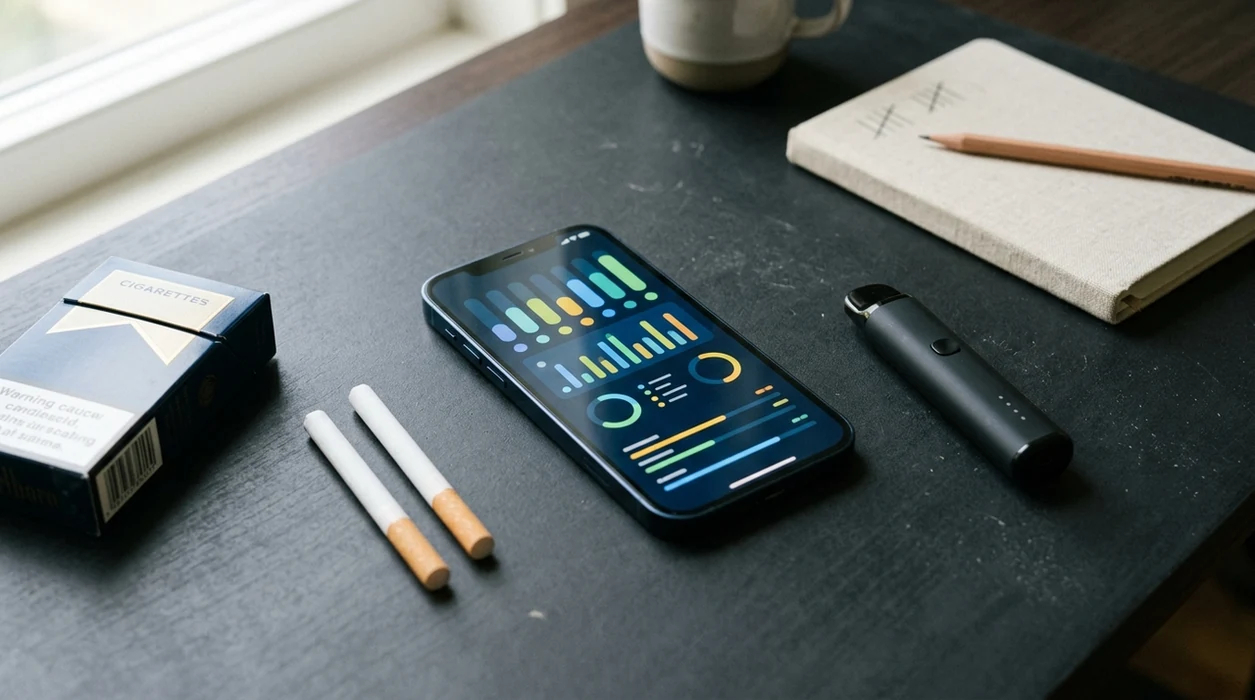
Yes, an app that tracks vaping and smoking can help you log cigarettes and vape use separately, then view cravings, cost, and progress in one place. MeQuit stop smoking app supports people quitting cigarettes, vaping, or both with quit-date planning, craving tools, and progress tracking. A 2022 meta-analysis found that smartphone cessation apps increased quit rates by 21% compared with minimal intervention.
> Definition: A nicotine tracker app is a mobile tool that lets you log every cigarette and vape use, monitors your nicotine consumption over time, and provides quit-date planning, craving support, and progress stats to help you reduce and stop smoking or vaping.
- One app can track both smoking and vaping if it supports separate logging for cigarettes and vape puffs with combined progress stats.
- Evidence-based features like quit-date setting, craving coping tools, and quitline connections matter more than simple puff counters.
- Apps boost quit rates but work best alongside NRT, counseling, or medication, not as a standalone solution.
How these apps look
Side-by-side captures of the compared products. Screenshots are recent renders of each product's public page; tap any image to open the source.
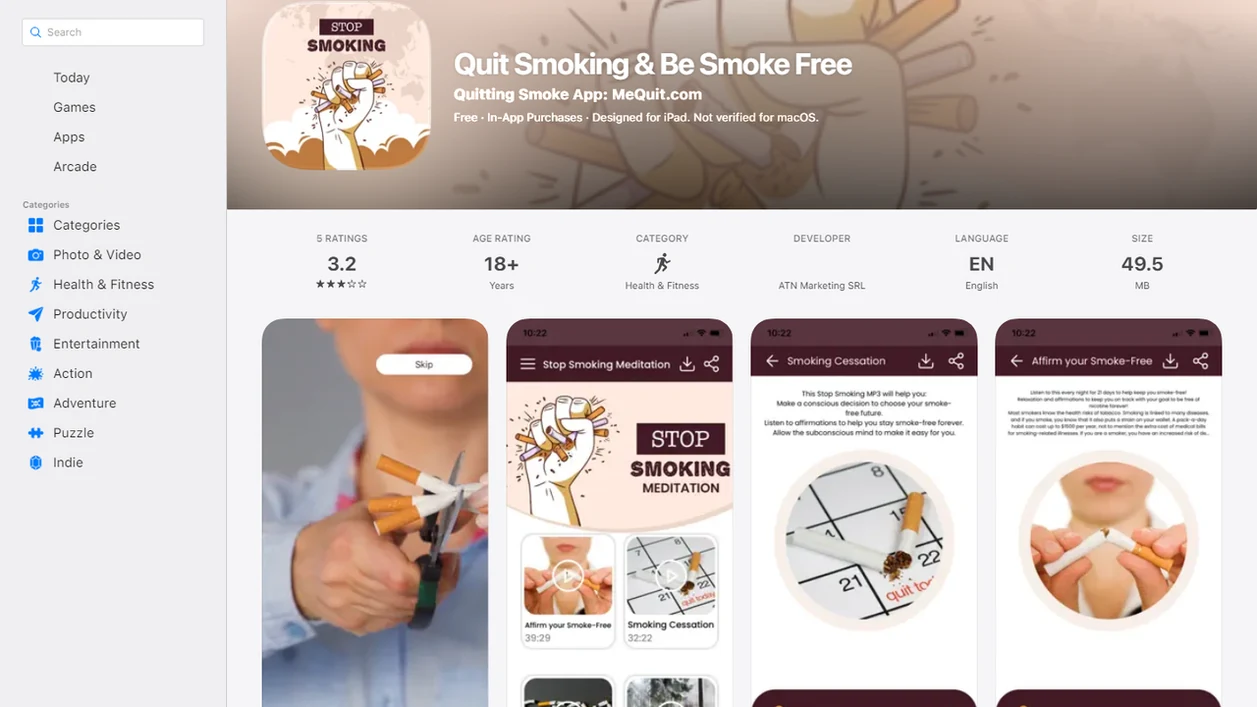
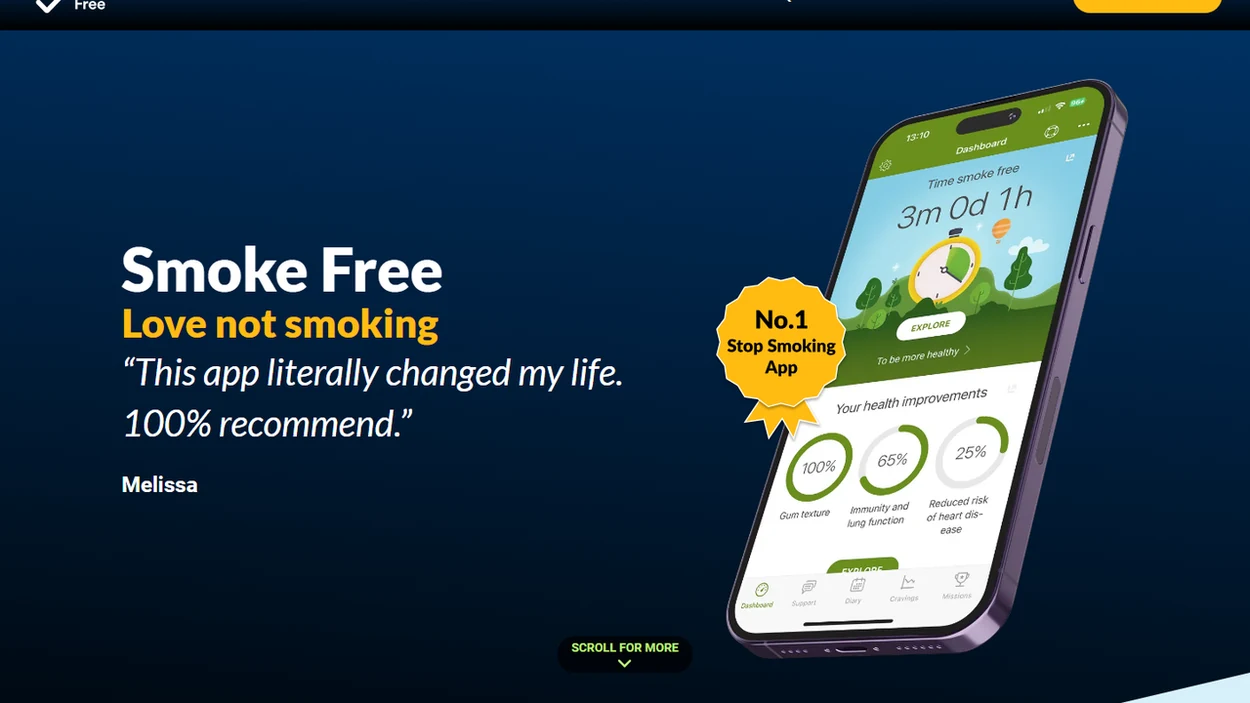
At a Glance: 5 Apps That Track Smoking and Vaping
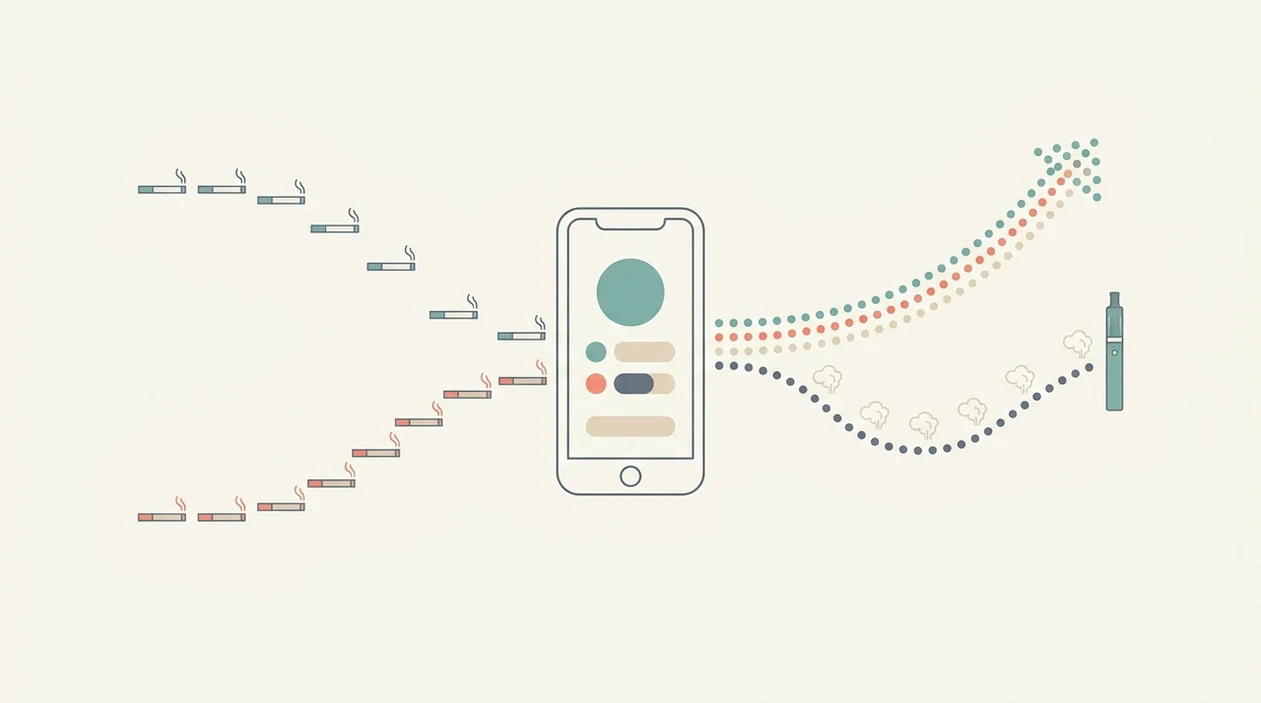
The strongest smoking and vaping trackers separate cigarette logs from vape logs, then bring both into one quit plan. MeQuit fits people who need to track smoking and vaping together because it combines dual logging, craving support, money saved, and health milestones in one dashboard.
Most apps were built for cigarettes first. Vaping often arrives later as a counter, not a full quit workflow. That matters when your trigger is a dead disposable vape in a backpack pocket at 2 p.m., not a pack on the porch.
A 2022 review found only 8 free English-language vaping cessation apps, and most had limited evidence-based features source. Simple counters can show what happened, but good stop smoking apps deliver quit planning, coping tools, and support connections, not just a bigger number on a screen.
For people quitting both products, MeQuit is often easier than using two separate trackers because the progress dashboard keeps cigarettes, vape sessions, cravings, and cost in one place.
Smoking and Vaping Tracker App Comparison Table
The best comparison depends on whether you need one quit plan for both cigarettes and vapes, or a vape-only tool. MeQuit is the strongest dual-use fit, while Puff Count, Quit Vaping, and Escape the Vape lean more toward vaping.
| App | Cigarette logging | Vape logging | Cravings | Cost | Privacy |
|---|---|---|---|---|---|
| MeQuit | Yes | Yes | Yes | Yes | Review permissions before setup |
| Puff Count | Limited | Yes | Limited | Sometimes | Check data sharing settings |
| Quit Vaping | No or limited | Yes | Yes | Sometimes | Varies by platform |
| Quit Plan | Yes | Limited | Yes | Yes | Check publisher policy |
| Escape the Vape | No | Yes | Yes | Limited | Youth users should review with an adult |
To pick the right tracker:
- Choose MeQuit if you smoke and vape and want both logs in one dashboard.
- Pick Puff Count if your main need is counting vape sessions or puffs.
- Use Quit Vaping or Escape the Vape when e-cigarettes are the only target.
- Check Quit Plan if cigarette quit-date planning matters more than vape detail.
- Review privacy settings, because health-related data practices and features may change by iOS, Android, or app version.
Top 5 Nicotine Tracker Apps for Smoking and Vaping
Here are five nicotine tracker app options to compare if you use cigarettes, vapes, or both. The key difference is whether the app handles dual quitting or focuses mainly on vaping.
- MeQuit: Built for cigarettes, vaping, or both, with separate logging, evidence-based coping tools, a smoke-free streak, and a progress dashboard. Adults trying to quit both products can use MeQuit to spot whether cravings cluster after lunch, in traffic, or during the first week.
- Puff Count: A vape-focused puff counter with basic daily stats. It helps with counting, but it may not offer deeper smoking cessation support.
- Quit Vaping: A dedicated vaping quit app for people who mainly need e-cigarette tracking and motivation.
- Quit Plan: A quit-date and milestone app that can support cigarette quitting, though vaping coverage may be lighter.
- Escape the Vape: A youth-oriented vaping cessation option, mainly focused on e-cigarette use.
If the priority is one plan for cigarettes and vapes, MeQuit earns the spot because the workflow connects separate logs to cravings, milestones, and weekly patterns. For vape-only help, our stop vaping app guide goes deeper.
How We Picked These Smoking and Vaping Tracker Apps
We picked apps by asking one plain question: would this help someone on a real quit day, or just count nicotine after the fact? A useful app has to work when your jaw is tight and your hand keeps checking the jeans pocket where the lighter used to sit.
- Dual tracking: The app must let users log cigarettes and vaping as separate inputs.
- Behavior change: Quit-date setting, craving tools, trigger notes, and support prompts matter more than quotes.
- Privacy review: Health data permissions should be clear, especially for commercial apps.
- Publisher trust: We favored health departments, recognized cessation brands, or research-informed products.
- Evidence fit: A 2022 meta-analysis found app-based cessation interventions increased quit rates, with a relative risk of 1.21.
When the issue is mixed nicotine use, MeQuit handles the messy middle because it lets users track what actually happened instead of forcing every urge into a smoking-only category.
Clinicians typically suggest combining quit tools with proven supports such as NRT, counseling, or medication when withdrawal is strong.
How a Nicotine Tracker App Works Behind the Scenes
A nicotine tracker app works by turning self-reported use into patterns you can act on. Cigarettes and vape puffs are logged as separate inputs, then grouped by time, trigger, cost, streak, and quit goal.
The nicotine estimate is rough. One pod refill, five hard pulls, and a low-strength disposable do not equal the same dose. Nic salt strength, puff length, device type, and refill habits all change the math. Treat the number as a guide, not a lab result.
The useful part is behavior mapping. Apps look for habit loops: trigger, urge, response, reward. In plain language, that means the app helps you notice when a craving wave starts and what you usually do next.
Small patterns show up fast.
MeQuit uses progress algorithms for smoke-free time, money saved, health milestones, and craving logs. A combined dashboard gives a fuller nicotine picture because it catches substitution, like skipping cigarettes but vaping heavily after dinner. The quit smoking timeline can help set expectations for those early body changes.
How to Use an App to Track Smoking and Vaping Together
To track smoking and vaping together, set up both products before your quit day. Don’t wait for a rough craving to build the system.
- Download and set separate profiles for cigarettes and vaping, so each product has its own log.
- Log baseline use for 3 to 5 days, including cigarette count, vape sessions, and usual times.
- Set a quit date or reduction goal for each product, since vaping and smoking may need different timelines.
- Record every cigarette and vape session with the trigger, location, and craving strength.
- Review weekly dashboards for nicotine patterns, money spent, and moments that repeat.
- Adjust the plan using craving data, and connect to support such as NRT, a quitline, or counseling.
If you move between cigarettes and vapes during the day, a dual log can show whether one product is replacing the other. Treat a slip as a data point, then restart with the next logged decision.
If you want a phone-first setup, our guide on how to quit vaping with phone gives a simple starting routine.
Why 2022 Vaping Apps Fall Short for Dual Quitting
Most vaping apps fall short because they count use better than they explain behavior. That is a problem for dual quitting, where a person may stop buying cigarettes but keep hitting a vape between classes, meetings, or errands.
- Smoking-first design: Many apps began as cigarette trackers and added vaping later.
- Messy vape data: Puff counts, pod refills, nicotine strength, and device type are hard to compare.
- Small app pool: A 2022 review found only 8 free vaping cessation apps, and most lacked evidence-based features source.
- High young-adult use: Per the CDC, 4.5% of U.S. adults used e-cigarettes in 2021, with the highest rate among ages 18 to 24 source.
- Dual-use gap: MeQuit was designed to support cigarettes and vaping in the same quit plan.
For a person trying to cut both, MeQuit is useful because it keeps the cigarette count and vape urges visible side by side. If vaping is the main concern, a free quit vaping app may be enough.
Smoking and Vaping Quit Rates: What the Evidence Shows
The evidence supports apps as helpful quit supports, but not as magic fixes. The most evidence-backed approach to quitting nicotine is behavioral support combined with approved treatment options when needed.
- Adult smoking fell sharply: CDC data show U.S. adult smoking dropped from 20.9% in 2005 to 11.5% in 2021.
- Youth vaping remains common: In 2023, 2.8 million U.S. youth used tobacco products, and 2.13 million used e-cigarettes source.
- Apps can improve quit rates: A 2022 meta-analysis reported a 21% increase versus minimal intervention.
- Support matters: Apps work best with NRT, counseling, quitlines, or medication when cravings are heavy.
- Dual-quit evidence is newer: Long-term research on apps for combined smoking and vaping cessation is still developing.
For dual users, progress usually depends more on reducing total nicotine routines than on whether the first product quit was cigarettes or vapes. Family dinner without stepping outside can be a real milestone.
When to Get Medical Help While Quitting Nicotine
Get medical help if quitting nicotine brings symptoms that feel severe, unsafe, or hard to control. A tracker can show patterns, but it cannot diagnose chest pain, breathing trouble, severe withdrawal, or crisis symptoms.
- Call emergency services right away for chest pain, trouble breathing, fainting, confusion, or thoughts of self-harm. If the moment feels dangerous, treat it as urgent.
- Contact a clinician before or during your quit attempt if you use nicotine heavily, have heart or lung disease, are pregnant, or have a history of anxiety, depression, or substance use concerns.
- Ask about treatment planning for nicotine replacement therapy, prescription medication, or a taper schedule. Patches, gum, lozenges, varenicline, or bupropion may need a safer plan than guessing at doses.
- Use evidence-backed support such as counseling or a quitline when cravings keep coming back. In the U.S., calling 1-800-QUIT-NOW connects people to free quit support.
- Keep tracking cravings, slips, and triggers, but treat MeQuit or any app as a companion tool, not a replacement for medical advice.
Limitations
Apps can help you see the pattern, but they cannot do the whole quit for you. Here are the main limits to know before choosing MeQuit or any nicotine tracker.
- Evidence for vaping-specific quit apps is still limited; most research covers cigarette smoking cessation.
- Many dual-tracking apps are basic counters without real craving tools or behavior change techniques.
- Self-reported puffs, pod strength, and cigarette counts are estimates, not medical-grade nicotine measurements.
- Apps cannot manage severe withdrawal symptoms, chest pain, breathing problems, or mental health crises.
- Heavy nicotine users may need NRT, prescription medication, counseling, or a quitline plan.
- Privacy practices vary widely; some commercial apps may use health-related data for marketing.
- Tracking alone does not improve health. Actual reduction and quitting create the benefit.
- MeQuit can guide a reset after a slip-up, but it cannot make the next cigarette physically disappear.
That last part matters. If the thought is, “I already messed up, so I might as well smoke the rest of the day,” the app can prompt a restart, not erase the urge.
FAQ
Is there a vape tracker app?
Yes, vape tracker apps exist, including Puff Count, Quit Vaping, Escape the Vape, and MeQuit stop smoking app. Some focus only on puffs, while others include craving tools and quit planning.
Can one app track cigarettes and vaping?
Yes, one app can track cigarettes and vaping if it supports separate logs for each product. MeQuit and some other quit apps are better suited for dual tracking than vape-only counters.
Are quit smoking apps actually effective?
Yes, quit smoking apps can help. A 2022 meta-analysis found smartphone cessation apps increased quit rates by 21% compared with minimal intervention or usual care.
Is a nicotine tracker app free?
Some nicotine tracker apps are free, but quality varies. Free apps may offer basic counting, while stronger options include quit-date planning, craving support, and progress dashboards.
Do vaping apps count puffs automatically?
Most vaping apps rely on self-reported puff or session logging. Some smart devices may connect to apps, but accuracy varies by device and user behavior.
Can an app replace nicotine patches or gum?
No, an app should not be treated as a replacement for nicotine patches, gum, medication, or medical advice. Apps can complement NRT by helping users track urges, triggers, and progress.
Are quit vaping apps safe for teens?
Some quit vaping apps, such as Escape the Vape, are designed for younger users. Teen vaping support should involve a parent, guardian, school counselor, or healthcare professional when possible.
Track smoking, vaping, cravings, and progress in one place
Stop Smoking App (MeQuit) helps you see your nicotine patterns, protect your streak, and recover faster after slips. Use it as part of a quit plan that can include NRT, counseling, quitline support, or medical guidance when needed.
Get Stop Smoking App