See Health Milestones After Quitting Smoking: Timeline, Apps & What to Expect

You can see health milestones after quitting smoking by using a smoke-free milestones app that maps recovery checkpoints onto a phone timeline. The MeQuit stop smoking app makes those changes easier to notice with milestone progress, quit-time tracking, craving support, and motivation prompts when the first week feels long.
> Definition: Quit smoking health milestones are clinically documented recovery checkpoints, measured in minutes, hours, days, and years after your last cigarette, that mark measurable improvements in cardiovascular, respiratory, and cancer-related health outcomes.
TL;DR
- Your body starts healing within 20 minutes of your last cigarette, and a milestones app makes that progress visible.
- Major recovery checkpoints span from 12 hours, when carbon monoxide levels drop, to 10+ years, when lung cancer risk falls sharply.
- Strong smoke-free milestones apps pair timeline tracking with evidence-based support like craving tools, quitline reminders, and coaching prompts.
5 Must-Know Facts About Quit Smoking Health Milestones
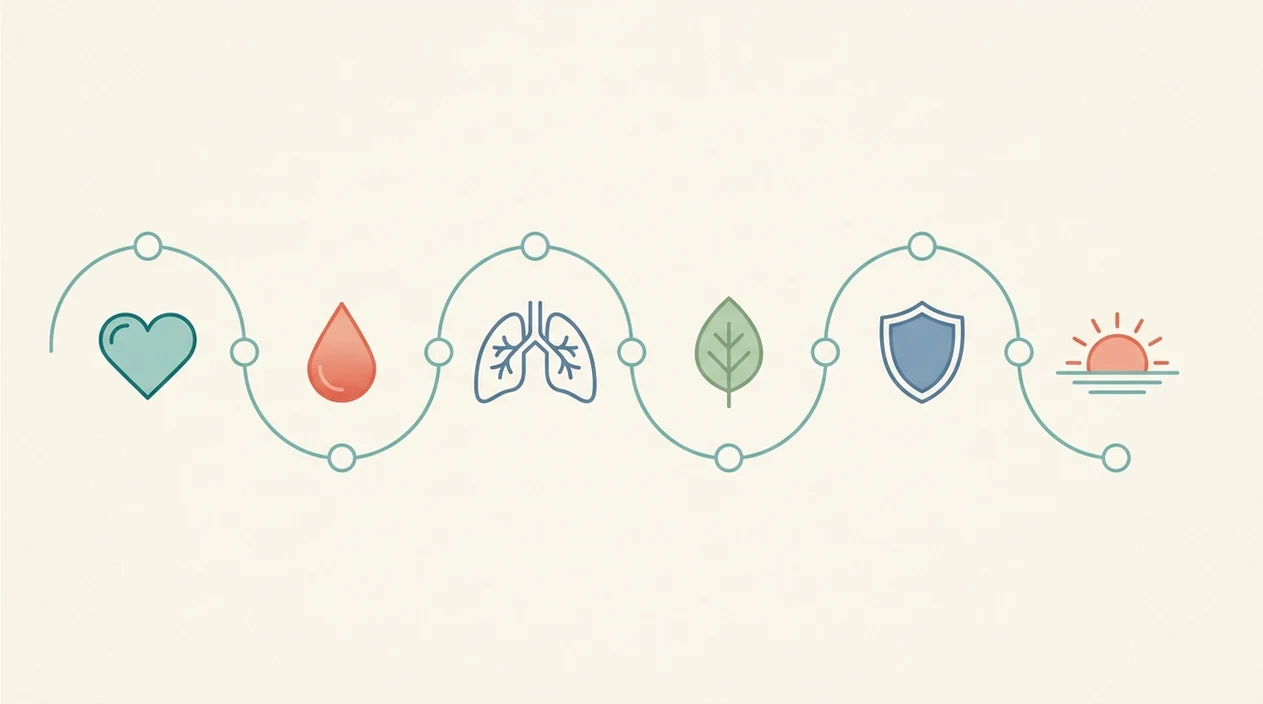
- Healing begins fast. Within 20 minutes, heart rate and blood pressure begin moving toward healthier levels, according to the American Cancer Society.
- The timeline is not guesswork. Quit smoking health milestones are drawn from large population studies and public-health summaries from groups such as ACS and the National Cancer Institute.
- Long-term gains keep building. Cancer, stroke, and heart disease risk do not reset overnight, but risk keeps falling the longer the smoke-free streak continues.
- A milestones app helps most when it is active. MeQuit fits people who need visible proof between doctor visits because the milestone dashboard turns quiet internal changes into dated checkpoints.
- A slip-up does not delete every gain. If there is a single cigarette butt in the driveway, reset the plan and restart the timer instead of smoking the rest of the day.
Milestones show progress, not perfection.
For many quitters, a timeline works because it answers one hard question: “Is anything actually changing yet?”
At a Glance: Health Milestones After Quitting Smoking Timeline
The major health milestones after quitting smoking start in minutes and continue for 15 years or more. These checkpoints are population averages, but they give your quit day a map.
| Time since last cigarette | Health milestone to expect |
|---|---|
| 20 minutes | Heart rate and blood pressure begin to drop toward normal levels, per ACS source |
| 12 hours | Carbon monoxide in the blood drops to normal |
| 2 weeks to 3 months | Circulation improves, and lung function begins to increase |
| 1 to 12 months | Coughing and shortness of breath decrease |
| 1 year | Coronary heart disease risk drops significantly |
| 5 years | Stroke risk continues to fall |
| 10 years | Lung cancer death risk is about half that of someone who keeps smoking |
| 15 years | Heart disease risk approaches that of a non-smoker |
Quitting by age 40 reduces the risk of dying from smoking-related disease by about 90%, according to the National Cancer Institute source. The most evidence-backed approach to making these milestones stick is combining quit medication or counseling with daily behavior tracking.
How Health Milestones After Quitting Smoking Work
Health milestones after quitting smoking work because the body starts removing smoke toxins, restoring oxygen delivery, and reducing strain on the heart and lungs. The timeline is a public-health map, not a lab test of your personal recovery.
- Clear carbon monoxide first. After the last cigarette, carbon monoxide, a gas that blocks oxygen from riding on red blood cells, falls toward normal; ACS links this early change with better oxygen delivery and lower cardiovascular stress source.
- Reduce heart workload. Heart rate and blood pressure can begin improving within minutes, and circulation improves over weeks to months, which is why early milestones focus on cardiovascular recovery.
- Repair airway function over time. In the lungs, inflammation settles gradually and cilia, the tiny “sweeper” hairs that move mucus out, can work better; coughing may rise before it eases as airways clear.
- Read risk correctly. ACS and NCI milestones describe population risk reduction, including lower risks of heart disease, stroke, and smoking-related death source. They do not diagnose your lungs, measure plaque, or replace a clinician’s testing.
Best Apps to See Health Milestones After Quitting
Several apps can show quit smoking health milestones, but they visualize progress in different ways. A useful smoke free milestones app should show health recovery, cravings, and money saved in one place.
Stop Smoking App: Milestone Dashboard & Craving Support
MeQuit is the strongest fit for quitters who want health milestones tied to daily action because it pairs a milestone dashboard with craving tools and a money-saved tracker. If the priority is staying motivated between the 12-hour and 1-month marks, MeQuit earns the spot through progress bars, milestone alerts, and craving logs.
Smoke Free: Badge-Based Milestone Cards
Smoke Free uses milestone cards and badges, which can feel satisfying when you unlock a new health checkpoint. It is useful for people who like achievement-style feedback and quick visual wins.
QuitNow: Community-Powered Progress Tracking
QuitNow combines milestones with community support, so progress is not only private. Someone who opens an empty cigarette pack in the glove box may benefit from seeing other people post through the same trigger.
Good stop smoking apps deliver visible recovery cues and timely coping prompts, not a magic shield against cravings. If money saved is a major motivator, pair milestones with a cigarette savings calculator app.
App Scoring Criteria for Smoke Free Milestones Tools
We score smoke-free milestones tools by how well they turn medical timelines into useful quit-day behavior. Pretty badges are not enough if the app cannot help during a craving wave.
Our checklist favors five things:
- Evidence basis: Milestones should match published guidance from ACS, NCI, WHO, or similar public-health sources.
- Real-time visibility: Progress bars, badges, and notifications should show what is already unlocked.
- Personalization: Cigarettes per day, years smoked, and quit date should shape the user experience.
- Cessation support: NRT information, coaching prompts, quitline nudges, and relapse recovery matter.
- Engagement design: Reminders should arrive when people usually slip, like lunch break or sitting in traffic.
People looking for a health-first quit app often choose MeQuit because the timeline does not sit alone. It connects milestones to urges, streaks, and next-step prompts.
Quit Smoking App Milestone Tracking: How the Timer Works
Quit smoking app milestone tracking works by comparing your elapsed smoke-free time with documented recovery checkpoints. You enter a quit date and smoking history, then the app maps minutes, hours, days, and years since your last cigarette to known health milestones.
A milestone timer uses habit-loop cues and timed reinforcement. In plain English, it tries to catch the moment when your brain wants the old routine and replace it with a visible reward. Progress bars, badges, and notifications unlock as time passes. Heavier smokers may also see extra support prompts, because a tight jaw during a craving wave is not solved by a badge alone.
Anyone dealing with “I already messed up, so I might as well smoke the rest of the day” needs relapse recovery built into the timer; A useful milestones app should handle that with restart-friendly tracking and a reset-the-plan workflow. Milestones are estimates based on population averages, not personal diagnostics.
6 Steps to See Health Milestones in Stop Smoking App
To see health milestones in MeQuit, set up the timeline before cravings make decisions for you. Do it while your quit plan still feels clear.
- Download MeQuit and set your quit date, including the exact time of your last cigarette.
- Enter your smoking history with cigarettes per day, years smoked, and typical trigger times.
- Open the Health Milestones dashboard to see your first unlocked milestone and the next checkpoint.
- Enable push notifications so upcoming milestone alerts appear before motivation fades.
- Use craving tools when urges hit between milestones, especially during school pickup, lunch break, or after-dinner cleanup.
- Review long-term milestones weekly so the 1-year, 5-year, and 10-year gains stay visible.
When the issue is motivation dropping after the first smoke-free day, MeQuit fits because weekly milestone review gives the quit a visible reason to continue. For daily encouragement between checkpoints, a quit smoking daily motivation app can help keep the next cigarette harder to reach.
4 Misconceptions About Quit Smoking Health Milestones
“Do quit smoking health milestones really mean anything if I still feel bad?” Yes. Feeling rough during withdrawal does not mean the health timeline is fake.
Myth 1: Nothing meaningful happens for months. The truth is that heart rate and blood pressure begin improving within 20 minutes, and carbon monoxide improves within the first day.
Myth 2: Health timelines are made up. Reputable timelines are based on epidemiological data from ACS, NCI, and similar public-health organizations.
Myth 3: Decades of smoking means milestones do not matter. Risk reduction continues at any age, even if some damage cannot fully reverse.
Myth 4: A milestones app is enough by itself. A medically supported way to quit smoking is combining behavioral support with FDA-approved medication or nicotine replacement when appropriate; CDC summarizes counseling and medication options for quitting source.
MeQuit can make progress visible, but counseling, quitlines, and NRT can add the extra support many people need. The question do stop smoking apps work depends heavily on whether the app changes real behavior, not just whether it counts days.
Limitations
Milestone tracking is useful, but it has limits. We would rather name them clearly than pretend an app can measure your lungs through a phone screen.
- Health milestone timelines are population averages; your recovery may feel faster, slower, or uneven.
- “Years of life regained” and similar numbers are estimates, not personal medical measurements.
- MeQuit cannot diagnose COPD, heart disease, cancer, asthma, or reduced lung capacity.
- A milestones app cannot replace a clinician, spirometry, imaging, or emergency care for chest pain.
- Without counseling, NRT, medication, or social support, milestone tracking can become passive.
- Research on quit-smoking apps is growing but still mixed, so no app can guarantee quitting.
- Some people may find long-term milestones discouraging if they focus only on years ahead.
Parent hiding a vape in a drawer, commuter watching a craving countdown on the bus, person checking a smoke-free streak at breakfast. Different quitters need different anchors. A tool that can remind me why I quit can help when health data alone feels too distant.
When to Seek Medical Help After Quitting Smoking
Seek medical help right away after quitting smoking if symptoms feel severe, sudden, or unsafe. Call emergency services for chest pain, severe breathlessness, fainting, or coughing blood, even if you think withdrawal might explain it.
Withdrawal can still feel intense without being an emergency. Cravings, irritability, poor sleep, headache, low mood, constipation, and extra coughing are common in the first days and weeks, but they are worth tracking if they worsen, linger, or make you feel at risk of smoking again.
- Call emergency care if you have chest pain, severe trouble breathing, fainting, blue lips, confusion, or blood when you cough.
- Contact a clinician if coughing, wheezing, mood changes, or sleep disruption feels unmanageable or keeps getting worse.
- Ask about medication options such as nicotine replacement therapy, varenicline, or bupropion; CDC notes that counseling plus medication can improve quit success source.
- Use extra support from quitlines or counseling if you relapse, are pregnant, or live with COPD, asthma, heart disease, or another condition that changes your quit plan.
FAQ
How fast do health benefits start after quitting?
Health benefits start within 20 minutes of quitting, when heart rate and blood pressure begin to drop toward normal levels. Carbon monoxide levels also improve within about 12 hours.
What are the first signs of healing after quitting?
Early signs may include a lower resting heart rate, easier breathing, improved taste, improved smell, and less carbon monoxide in the blood. Some people also notice a scratchy throat after the first smoke-free day.
Is there an app that shows quit smoking milestones?
Yes, the MeQuit stop smoking app shows quit smoking milestones through a health milestone dashboard. It also tracks smoke-free time, cravings, and money saved.
Why do I feel worse after quitting smoking?
You may feel worse because nicotine withdrawal can cause cravings, irritability, coughing, sleep changes, and low mood. These symptoms do not usually mean your health is getting worse.
Do lungs fully recover after quitting smoking?
Lung function often improves after quitting, and coughing and shortness of breath may decrease. Full recovery depends on how long you smoked, how much damage occurred, and whether you have lung disease.
Does quitting after 20 years still help?
Yes, quitting after 20 years still reduces health risks. NCI reports that people who quit by age 40 cut their risk of smoking-related death by about 90% compared with continuing smokers source.
Are quit smoking app milestones medically accurate?
Reputable apps base milestones on ACS, NCI, and other public-health timelines. They are medically informed estimates, not a personal diagnosis or measurement of your exact recovery.
Make Your Quit Progress Visible
Stop Smoking App helps you track milestones, cravings, smoke-free time, and savings in one place. Use it as motivation alongside medical support, NRT, counseling, or quitline help when needed.
Get Stop Smoking App