
Quit Smoking App Privacy: What Really Happens to Your Data?

Quit smoking app privacy is a serious concern because most cessation apps collect sensitive health data, including craving logs, mood entries, relapse notes, and sometimes location. A 2023 systematic review found only 2 out of 389 smoking-related apps were HIPAA compliant according to a 2023 systematic review (source), so check permissions, data-sharing practices, and deletion options before trusting any nicotine tracker with your quit plan.
> Definition: Quit smoking app privacy refers to how well a cessation or nicotine tracker app protects your sensitive health data, including smoking history, cravings, mood, and quit dates, from being identified, shared, or sold without your informed consent.
TL;DR
- Most quit smoking apps collect sensitive health data but fewer than half clearly explain how they use or secure it.
- Only 2 of 389 smoking-related apps reviewed in 2023 met HIPAA compliance standards.
- Always check permissions, third-party trackers, data deletion options, and who operates the app before installing.
The pocket check is real.
Medical and Privacy Scope
This guide is privacy education, not medical advice or legal advice. It can help you ask better questions before using a quit smoking app, but it should not decide your treatment plan or your legal rights for you.
App privacy policies can also change after publication. A company may update its analytics tools, sell an app, add cloud sync, or rewrite its data-sharing terms after a review goes live. Treat every privacy summary as a starting point, then check the current policy inside the app store or app before entering sensitive details.
Before you act on anything here:
- Separate privacy from effectiveness. A careful data policy does not prove the app helps people quit, and a helpful craving tool may still collect more data than you want.
- Review the latest privacy policy, permissions, and deletion route before adding cravings, relapse notes, medication details, or mood logs.
- Ask a clinician, pharmacist, or qualified stop-smoking service about treatment decisions, especially if you use nicotine replacement, varenicline, bupropion, or have mental health concerns.
- Use app tracking as support, not as a replacement for professional care when symptoms, medication questions, or repeated relapses need attention.
How Quit Smoking App Data Collection Works
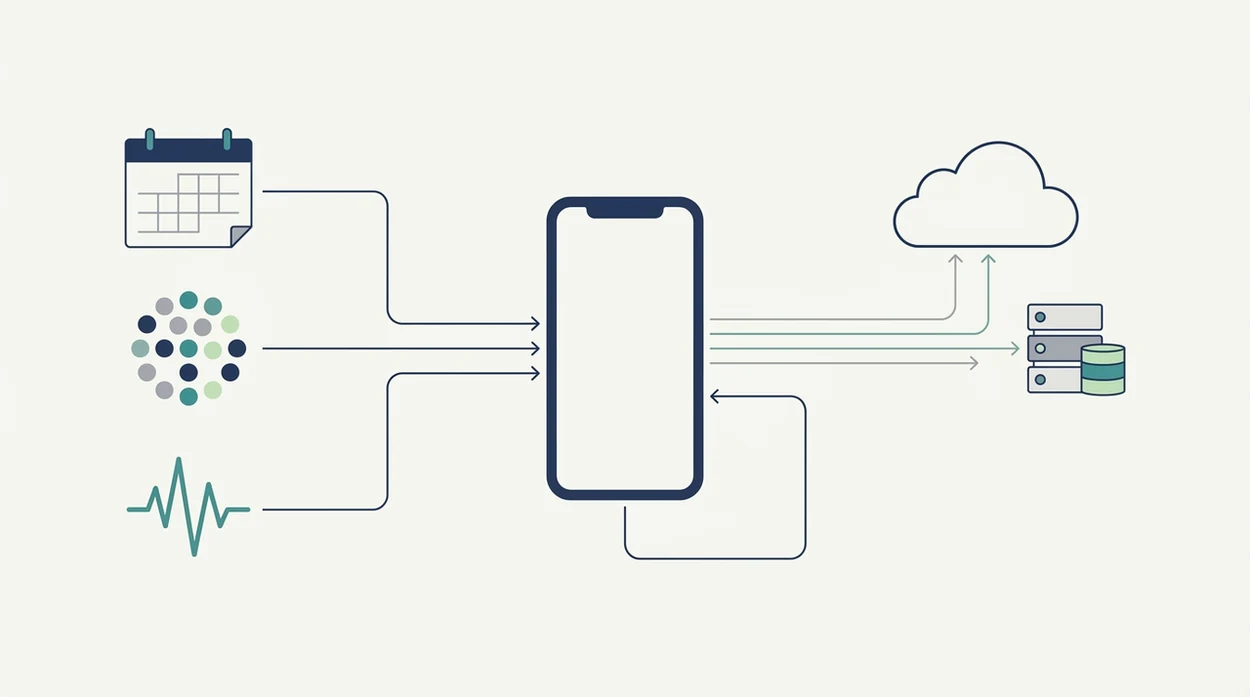
Quit smoking app data collection works by turning your daily quit actions into stored records. That can help you spot habit loops, but it also creates a private map of cravings, routines, and relapse risk.
What Data Nicotine Trackers Typically Collect
Most nicotine trackers ask for quit dates, cigarette counts, craving ratings, mood entries, triggers, money saved, and relapse notes. A shaky thumb sliding an urge rating at 9:17 p.m. may feel small, but the entry can show stress timing, location context, and smoking patterns. Good quit apps deliver timely support and clearer patterns, not medical diagnosis or a guarantee that you will never smoke again.
On-Device Storage vs. Cloud Sync
Some apps keep data on your phone only. Others sync to cloud servers so your smoke-free streak follows you to a new device. Device-level data may include device ID, IP address, OS version, and ad identifiers. Third-party SDKs can also send analytics or advertising events. “Anonymized” means identity fields are removed, “pseudonymized” means replaced with a code, and “identifiable” means the app can connect data to you. The NHS app is a useful local-only example, because it says progress data stays on the user’s device.
4 Common Myths About Nicotine Tracker Privacy
Myth 1: No account means no tracking. Device IDs, IP addresses, and analytics events can still build a profile. You may never type your name, but your phone can still act like a name tag.
Myth 2: Health apps are automatically covered by HIPAA. Most commercial cessation apps are not HIPAA-covered unless they are run by, or on behalf of, a regulated healthcare entity. Our related guide asks whether are stop smoking apps FDA approved, which is a separate question from privacy law.
Myth 3: Anonymized data can never point back to you. Combined datasets can raise reidentification risk, especially when device-level details are retained.
Myth 4: Deleting the app erases everything. Backups and analytics providers may keep records unless you request deletion. Reset the plan, then reset the data too.
5-Step Quit Smoking App Privacy Check Before Installing
Use this check before you enter your quit date, cigarette count, or first relapse note.
- Read the app store privacy label. Look for “data linked to you” and “data used to track you.”
- Open the full privacy policy. Search for “third party,” “advertising,” “SDK,” “analytics,” “sale,” and “share.”
- Check requested permissions. Notifications can make sense; location, contacts, Bluetooth, and ad tracking deserve extra scrutiny.
- Verify who operates the app. Public health authorities and nonprofits often have different incentives than commercial ad-driven companies.
- Confirm deletion and export options. Do this before entering personal details, not after a half-empty pack has been tossed in a bin.
For people comparing support quality as well as privacy, the broader question of do stop smoking apps work is worth separating from data safety. A private app can still be unhelpful, and a useful app can still ask for too much.
Best Privacy Practices Among Quit Smoking Apps
Strong quit smoking app privacy usually means minimal data collection, clear consent, encryption, regional storage, anonymization where possible, and a real support contact. For most users, an app that stores less data is easier to trust because there is less to expose later.
NHS Quit Smoking App Privacy Model
The NHS Quit Smoking app says progress data is stored locally on the user’s device, no data is stored in identifiable format, anonymised monitoring data is processed in the UK, and data is not passed to third parties source. Government and nonprofit apps often have fewer ad-driven data incentives.
What Stop Smoking App Does Differently
Tools like MeQuit should be judged by the same checklist as any nicotine tracker: encryption, transparent policy wording, limited sharing, deletion options, and a reachable privacy contact. The MeQuit stop smoking app is designed around craving logs, streak tracking, and motivation tools, but privacy still starts with reading the current policy before you add sensitive notes.
GDPR and HIPAA Rights Over Smoking App Data
GDPR may give you rights to access, correct, delete, restrict, or object to processing of smoking app data. HIPAA is narrower; it usually applies only to regulated health entities and their business associates, not most commercial wellness apps.
Clinicians typically recommend combining evidence-based cessation support, such as counseling and approved nicotine medicines, with daily behavior tracking when the tracker helps rather than adds stress. If you are asking whether an app can replace medical care, read our guide on whether a can quit smoking app replace doctor.
To make a request, use the in-app privacy form or email support with the phrase “subject access request” or “data deletion request.” Include the account email and device ID if needed. One catch: if data is truly anonymized, the provider may say it cannot identify your records to delete them. In the UK, ask for the Data Protection Officer first, then escalate to the Information Commissioner’s Office if needed.
When to Seek Professional Help
Seek professional help when quitting feels bigger than an app can safely hold. A tracker can show patterns, but a clinician, pharmacist, counselor, or stop-smoking service can help with symptoms, medicines, and relapse risk in a way a notification cannot.
Use this as a simple escalation plan:
- Contact a clinician or qualified stop-smoking service if cravings are becoming stronger, more frequent, or hard to interrupt, especially after several quit attempts.
- Ask a doctor or pharmacist before using nicotine replacement therapy, varenicline, bupropion, or other stop-smoking medication if you are pregnant, have heart disease, take regular medicines, or live with a significant health condition.
- Seek urgent mental health support if quitting triggers severe anxiety, depression, panic, thoughts of self-harm, or a feeling that you cannot stay safe.
- Combine app tracking with counseling, group support, or a quitline when slips are repeating, your home environment is full of triggers, or relapse would carry high personal or medical consequences.
The privacy point is simple too: share only what is needed, but do not let data worries stop you from getting real care when the quit is getting dangerous.
Quit Smoking App Privacy Comparison Table
Privacy varies more by operator and business model than by star rating. Commercial ad-driven apps are most likely to share data with analytics partners, so read the policy before logging a craving wave.
| App Type | Data Storage | Third-Party Sharing | HIPAA/GDPR Status | Deletion Option |
|---|---|---|---|---|
| Government/NHS apps | Often local or public-health systems | Usually limited | Often GDPR-based, rarely HIPAA issue | Usually documented |
| Nonprofit apps | Cloud or hybrid | Often limited analytics | Depends on operator | Usually request-based |
| Commercial ad-supported apps | Cloud and device analytics | More likely | Often not HIPAA-covered | Varies widely |
| Stop Smoking App | App-based tracking model | Check current policy | Depends on region and use | Check in-app or support route |
For feature comparisons beyond privacy, our best stop smoking app guide covers streaks, craving tools, and relapse recovery.
Limitations
Privacy checks reduce risk, but they do not make any phone-based quit tool completely private.
- iOS and Android collect some OS-level data outside any smoking app’s control.
- There is limited public evidence of smoking app data breaches, so much risk discussion comes from general digital health practices.
- Strong on-device privacy can limit cloud backup, cross-device sync, and clinician integration.
- Most users accept default permissions without reading policies, especially during the first week.
- App store listings change often; a private app today may be sold or updated later.
- An app can protect data well but still offer weak quit support.
- Family sharing, lock-screen notifications, and shared tablets can expose progress at home.
One small moment matters: a notification during family dinner can reveal more than you meant to share.
FAQ
Are quit smoking apps HIPAA compliant?
Most commercial quit smoking apps are not HIPAA-covered. A 2023 review found only 2 of 389 smoking-related apps were HIPAA compliant.
Can smoking apps sell my data?
Some commercial apps share data with analytics or advertising partners. Search the privacy policy for “sell,” “share,” “advertising,” and “third-party partners.”
Does deleting the app erase my data?
No, uninstalling usually removes the app from your phone only. Server-side data, backups, and partner analytics may require a separate deletion request.
What permissions should smoking apps need?
Reasonable permissions may include notifications and limited storage. Location, contacts, Bluetooth, and ad tracking are red flags unless clearly justified.
Is my craving log data identifiable?
Yes, it can be. Device IDs, IP addresses, and timestamps may make craving data identifiable even without your name.
Do free smoking apps have worse privacy?
Free ad-supported apps are more likely to monetize data. Free government apps can still be very private.
How do I request my smoking app data?
Use the app’s export tool or email support with a GDPR subject access request. Include the account email used in the app.
How can I check whether a specific smoking app shares user data?
Open the app’s current privacy policy and search for “share,” “sell,” “advertising,” “analytics,” “SDK,” and “third party.” Review this before entering craving notes, relapse details, or mood logs.
Can anonymized smoking data be re-identified?
Yes, sometimes. Combining datasets or retaining device-level identifiers can create reidentification risk.
Choose a Quit Smoking App That Respects Your Progress
Stop Smoking App (MeQuit) helps you track cravings, streaks, savings, and relapse recovery while keeping privacy expectations clear. It is not medical advice or a guaranteed cure, but it can support your quit plan alongside professional help when needed.
Get Stop Smoking App