
Quitting Smoking Benefits After 30 Days: What Actually Changes

Quitting smoking benefits after 30 days include improved circulation, easier breathing, fewer cravings, and the start of real lung repair, often noticeable during stairs, walks, or a busy errand day. MeQuit helps people make that first month visible with milestone tracking, craving logs, and money-saved totals inside the MeQuit stop smoking app.
Medical note: this article is educational and cannot tell whether your symptoms are normal for you. If you have chest pain, severe shortness of breath, fainting, coughing blood, or a history of heart or lung disease, contact a clinician promptly.
- Lung function and circulation already begin improving within 2 weeks to 3 months of quitting, and many people notice easier breathing by day 30.
- Heart attack risk starts dropping within hours and continues declining past the one-month mark as blood pressure, heart rate, and carbon monoxide normalize.
- Tracking 30-day progress in Stop Smoking App, cravings logged, money saved, health milestones unlocked, reinforces the behavioral changes that prevent relapse.
At a Glance: 30 Days Smoke Free Benefits
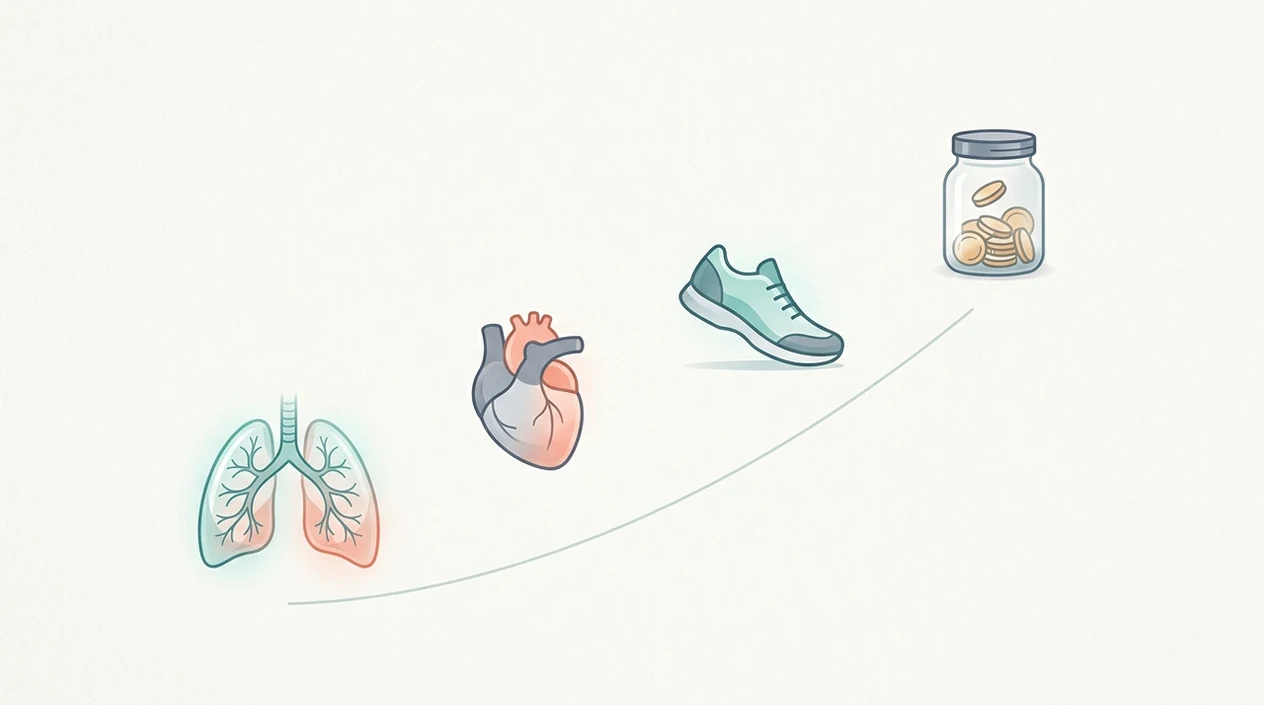
- Within 20 minutes of quitting, heart rate and blood pressure begin returning toward normal; within 12 hours, carbon monoxide levels drop back to normal, according to the American Cancer Society source.
- Within 2 weeks to 3 months, circulation improves and lung function increases, according to MedlinePlus source.
- Coughing and shortness of breath often begin easing during the first month, then continue improving across the 1-to-9-month window.
- Cravings usually peak in the early days and weeks, so reaching 30 days smoke free is a meaningful sign that new routines are starting to stick.
- Every smoke-free day moves you closer to lower long-term risks from smoking-related heart, lung, and cancer disease.
A month is not magic. It is evidence.
If the priority is seeing proof when motivation dips, MeQuit fits because it turns 30 days into visible metrics: smoke-free streak, health milestones, cravings logged, and money saved.
Top Quitting Smoking Benefits You Can Feel After 30 Days
After one month quit smoking, many people feel changes in breathing, stamina, taste, smell, sleep, and daily energy. The changes are not identical for everyone, but they are real enough that a short walk or a flight of stairs may feel different.
Lung and Breathing Improvements at Day 30
Airways start clearing better as cilia recover, which can mean less wheezing and fewer moments of breathlessness. Some people cough more at first because mucus is moving again. Annoying, yes. Often a repair sign.
Cardiovascular Gains in the First Month
Better circulation can show up as warmer hands, easier walking, or less chest tightness on a morning walk. Taste and smell often sharpen too, including the stale smoke smell on a hoodie you used to ignore. If you smoked one pack a day at $10 per pack, 30 days smoke free can mean about $300 not spent.
People looking for a daily benefits record should consider MeQuit because the health timeline connects body changes with the exact day they appear.
How Your Body Recovers During 30 Days Without Smoking
Your body recovers after 30 days without smoking through oxygen normalization, airway repair, blood vessel healing, and nicotine withdrawal decline. The biology starts fast, even when your mood takes longer to catch up.
Carbon monoxide clears from the blood within about 12 hours, so oxygen can travel more normally. Blood vessel lining, called the endothelium, starts repairing. In plain terms, your circulation gets less strained. In the lungs, cilia begin doing their cleanup job again, moving mucus and particles out of the airways.
Withdrawal follows its own timeline. Nicotine symptoms often peak around days 3 to 5, then slowly ease through the first month. That does not mean every urge disappears. A tight jaw during a craving wave can still show up on day 27.
Good stop smoking apps deliver timing, feedback, and relapse planning, not a promise that quitting will feel easy every hour.
How to Track Your One Month Quit Smoking Progress
Use a stop smoking app to track your one month quit smoking progress by logging the last cigarette, recording cravings, checking health milestones, reviewing money saved, and marking the 30-day badge. MeQuit works best when you record what actually happened, not what you wish happened.
- Set your quit date and log your last cigarette in MeQuit so day 1 starts clearly.
- Log cravings daily to watch frequency, intensity, and triggers change over 30 days.
- Check the health timeline for milestones like normalized carbon monoxide and improved circulation.
- Review the money-saved tracker so the financial gain feels concrete, not abstract.
- Unlock the 30-day badge and share the milestone with one trusted person for accountability.
Push notifications at 7, 14, and 30 days can interrupt the “I already messed up” spiral before it becomes a full smoking day. For people who need a visual streak, MeQuit covers the habit loop with reminders, craving ratings, and a smoke-free streak tracker.
Best Ways to Reach 30 Days Smoke Free
The best ways to reach 30 days smoke free combine daily accountability, withdrawal support, trigger planning, replacement routines, and social support. Most people need more than one tactic, especially during the first week.
- Use a stop smoking app. MeQuit keeps the quit day visible with craving logs, streaks, savings, and health milestones.
- Consider nicotine replacement therapy. Patches, gum, or lozenges can reduce withdrawal while you practice new routines.
- Name your triggers. The after-dinner craving at the kitchen sink needs a specific plan, not a vague promise.
- Build replacement routines. Walk for five minutes, sip water, breathe slowly, or move your hands before the urge peaks.
- Bring in support. Friends, quit groups, counseling, and app communities make the next cigarette harder to reach.
The most evidence-backed approach for many smokers is behavioral support combined with stop-smoking medication or nicotine replacement therapy when appropriate. The CDC also recommends combining counseling or behavioral support with FDA-approved quit-smoking medicines for many adults who smoke source. If you want the day-by-day pattern, the quit smoking timeline explains what tends to happen before and after the first month.
When to Get Medical Help While Quitting Smoking
Get medical help right away if quitting is paired with chest pain, fainting, severe breathlessness, coughing blood, or symptoms that feel sudden and unusual for you. For non-urgent problems, a clinician or pharmacist can help you sort out withdrawal, medication choices, and safer next steps.
- Call emergency services if you have crushing or spreading chest pain, fainting, severe shortness of breath, confusion, or blue lips.
- Ask a clinician or pharmacist if withdrawal feels unmanageable, sleep loss is severe, mood changes are intense, or cravings keep pushing you back to smoking.
- Check before using NRT or quit-smoking medicine if you are pregnant, breastfeeding, recently had a heart attack or stroke, have heart rhythm problems, or take regular prescriptions.
- Get tailored advice if you live with heart disease, asthma, COPD, another lung disease, or a history of depression, anxiety, bipolar disorder, or substance use.
- Use app tracking as support by recording cravings, symptoms, and triggers, then sharing the pattern if you seek care. MeQuit can organize the details, but it cannot diagnose symptoms or replace treatment.
Common Misconceptions About 30 Days Smoke Free
“Does anything meaningful happen after 30 days smoke free?” Yes, circulation and lung function can already be improving, even if you do not feel completely different.
Myth one says nothing matters until years later. Reality is more encouraging: heart rate, blood pressure, carbon monoxide, circulation, and lung function begin changing far earlier. Myth two says quitting is not working if you do not feel dramatic relief by day 30. Some people still cough, sleep badly, or feel edgy because recovery is gradual.
Myth three says 30 days makes you safe from heart disease and cancer. Not yet. Risk keeps falling over years, which is why the next month matters too. Myth four says a stop smoking app is only a counter. MeQuit does count days, but it also links triggers, urges, milestones, and savings so you can adjust the plan.
For former smokers who need relapse prevention, MeQuit earns the spot because the craving log shows which situations still need a backup move.
What Comes After 30 Days: Smoke-Free Benefits Timeline
After 30 days, smoke-free benefits keep building across months and years. The first month is a foundation, not the finish line.
From 1 to 9 months, coughing and shortness of breath often continue decreasing as the lungs handle mucus better. At 1 year, coronary heart disease risk drops to about half that of someone who still smokes. From 5 to 15 years, stroke risk can drop to that of a non-smoker, depending on the person and source guidance.
Every day after 30 compounds the gains already earned because the body keeps repairing while the habit loop gets weaker. MeQuit tracks long-term milestones beyond the first month, so the next target does not feel blank. The broader quit smoking benefits timeline can help you see why 60, 90, and 365 days all matter.
Limitations
Thirty days smoke free is a major milestone, but it does not guarantee a smooth recovery or permanent protection. Keep these limits in view.
- Not everyone feels noticeably better by day 30, especially heavy or long-term smokers.
- A 30-day streak does not erase cancer, stroke, or heart disease risk; those risks decline over years.
- Cravings can still appear after one month, especially with alcohol, stress, or old smoking places.
- Stop smoking apps are tools, not cures; they work best with counseling or NRT when appropriate.
- Self-reported improvements can be shaped by mood, sleep, stress, and other health conditions.
- New chest pain, severe shortness of breath, or unusual symptoms need medical evaluation, not app tracking alone.
- MeQuit cannot prescribe medication or replace a clinician’s advice.
If your next goal is a longer benchmark, quitting smoking benefits after 90 days gives a realistic view of what may change next.
FAQ
Do cravings stop after 30 days?
Cravings usually decrease by 30 days, but they may still appear during stress, alcohol use, social smoking situations, or familiar routines. A craving log can help identify the triggers that remain active.
Can lungs fully heal after quitting?
Lungs begin repairing within weeks, and coughing or shortness of breath often improve over months. Full recovery varies by smoking history, age, lung damage, and other health conditions.
Is weight gain normal when quitting?
Some weight gain is common after quitting because appetite, taste, metabolism, and hand-to-mouth habits can change. Tracking cravings, snacks, and routines in the MeQuit stop smoking app can help you spot patterns early.
What triggers relapse after one month?
Common relapse triggers after one month include stress, alcohol, arguments, parties, driving, and being around other smokers. Timed reminders can help you pause before an old routine takes over.
Does a quit smoking app help?
A quit smoking app can help by tracking milestones, logging cravings, sending reminders, and making progress visible. MeQuit support is most useful when paired with a clear quit plan, and not as a replacement for counseling, NRT, or medical advice when those are appropriate.
Should I use NRT with an app?
Nicotine replacement therapy can be used with an app to reduce withdrawal while you track cravings and triggers. Ask a clinician or pharmacist which NRT option fits your health history.
How much does heart risk drop?
Within one year of quitting, coronary heart disease risk falls to about half that of a person who continues smoking. Risk starts improving earlier as blood pressure, heart rate, and carbon monoxide normalize.
Is exercise safe 30 days after quitting?
Exercise is generally safe and helpful 30 days after quitting for most people. Start gradually, and seek medical advice if you have chest pain, severe breathlessness, or known heart or lung disease.
Keep Your 30-Day Momentum Going
Stop Smoking App helps you track smoke-free days, cravings, triggers, and savings so your first month can turn into a longer-term quit routine. Use it as part of a realistic plan, and add NRT, counseling, quitline support, or clinician guidance when needed.
Get Stop Smoking App