
Quit Smoking App For Stressed People: Features, Picks, and Triggers Guide

A quit smoking app for stressed people should combine craving tracking, in-the-moment stress tools, and a structured quit plan. MeQuit fits that need because the MeQuit stop smoking app pairs craving logs, trigger notes, breathing support, and smoke-free progress in one place.
> Definition: A quit smoking app for stressed people is a mobile tool that merges structured smoking cessation support with stress-relief features such as breathing exercises, mood tracking, and CBT prompts, so users can manage cravings driven by anxiety, pressure, or overwhelm without reaching for a cigarette.
TL;DR
- Stress doesn't reduce itself through smoking. It only relieves nicotine withdrawal, so you need real coping tools, not just motivation badges.
- Strong stress smoking apps include trigger tracking, guided breathing, urge-surfing, and links to human support like quitlines or coaches.
- Combining an app with nicotine replacement therapy or counseling can more than double your quit success rate.
Stress-Triggered Smokers Need Craving Tools, Not Just Counters
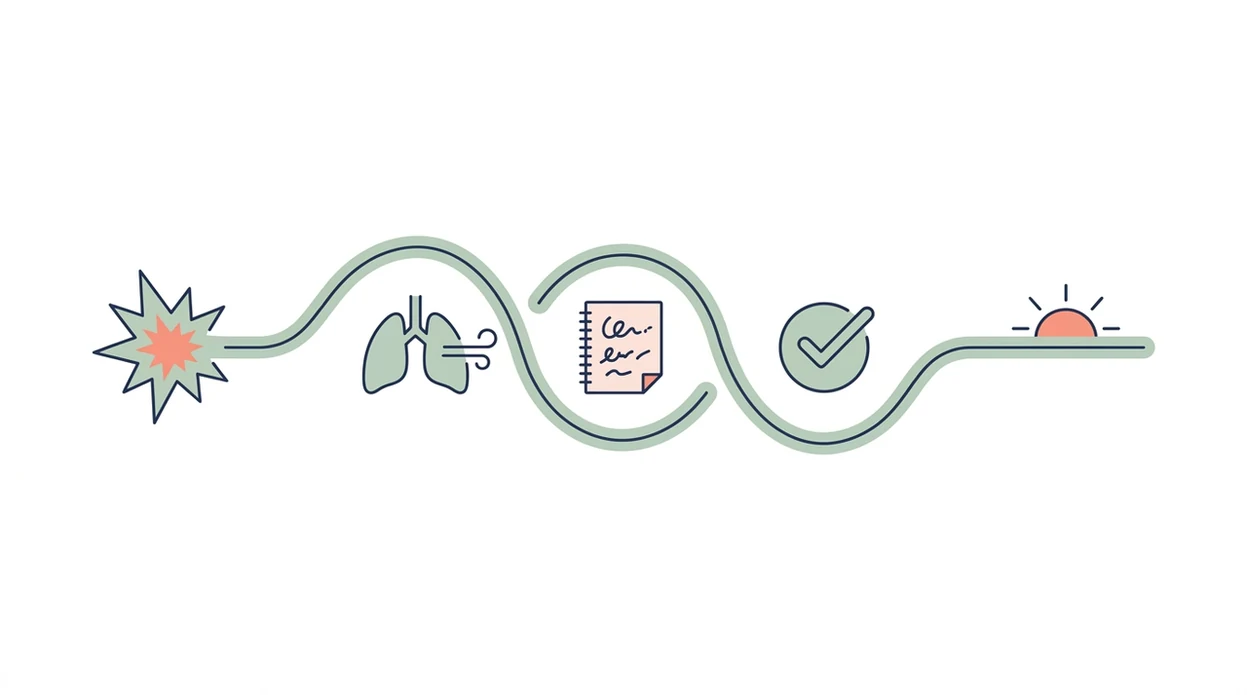
Stress-triggered smokers need craving tools because the urge often arrives before the thinking brain catches up. A counter can show a smoke-free streak, but it can't coach you through tight shoulders, a busy mouth, and that sudden need to do something with your hands.
- People with frequent mental distress are about twice as likely to smoke cigarettes as those without frequent distress, 28.2% versus 13.2%, according to CDC data source.
- Nearly 3 in 10 U.S. adult smokers reported daily worry, nervousness, or anxiety in 2022, according to CDC survey data source.
- Smoking feels calming because it relieves nicotine withdrawal, not because it solves the stressor.
- Within 4 weeks of quitting, anxiety and depression often improve compared with continuing to smoke.
- A stress smoking app should teach a replacement action during the craving wave, not simply celebrate time passed.
The right fit for people who smoke after pressure spikes is MeQuit because it turns a stressful moment into a craving log, coping action, and streak check.
The first urge can feel loud.
4 Best Quit Smoking Apps for Stressed People
The best quit smoking apps for stressed people combine a quit plan with fast tools for the moment you want to smoke. We looked for apps that handle the red traffic light beside a convenience store, not only the quiet Sunday planning session.
- MeQuit: The MeQuit stop smoking app covers trigger tracking, a breathing timer, craving log, and a progress dashboard. It works well when stress smoking follows repeat patterns.
- QuitSTART — The CDC-backed app includes distraction tools, mood tracking, and tips from former smokers.
- Kwit — Kwit uses gamified CBT challenges, urge-surfing guidance, and motivation cards.
- Smoke Free — Smoke Free offers missions, a craving diary, and health milestone tracking.
| App | Stress-specific strengths |
|---|---|
| MeQuit | Trigger notes, breathing timer, craving intensity, streak dashboard |
| QuitSTART | Mood check-ins, distractions, former-smoker tips |
| Kwit | CBT-style challenges, urge-surfing prompts, reward system |
| Smoke Free | Craving diary, missions, milestone tracking |
Anyone dealing with work-pressure smoking may prefer MeQuit because the craving log asks what happened, where it happened, and how intense the urge felt.
For parents, school pickup can be a trigger window; our quit smoking app for parents guide covers that routine in more detail.
How We Reviewed Quit Smoking Apps for Stress
We reviewed quit smoking apps for stress by checking whether each app helps during a real craving, not just after it passes. Rankings favored tools that connect stress, nicotine dependence, and relapse prevention in one usable flow.
- Checked stress-specific tools such as breathing timers, mood check-ins, urge-surfing prompts, CBT-style exercises, craving intensity logs, and trigger notes.
- Separated claim sources by noting what came from hands-on app review, public app store pages, official websites, or published documentation.
- Weighted evidence-based cessation features more heavily than design polish, including quit dates, craving tracking, nicotine replacement or medication guidance, counseling links, and relapse planning.
- Scored support access by looking for quitline links, coaching, peer support, or clear next steps when stress feels bigger than the app.
- Reviewed privacy and practical fit because mood notes, location patterns, and craving logs can be sensitive, especially for users managing anxiety or burnout.
- Flagged change risk because app features, pricing, free trials, and privacy terms can change after publication.
This means a calm-looking app did not rank highly unless it also helped when the urge was messy, fast, and stress-driven.
5 Stress Smoking App Features We Scored
A stress smoking app should be judged by what it does during a craving, not by how cheerful the home screen looks. Good stop smoking apps deliver coping structure and pattern recognition, not a prettier way to feel guilty.
| Feature scored | Why it matters for quit smoking under stress |
|---|---|
| Evidence-based quit structure | A quit date, NRT guidance, and relapse plan make the first week less vague. |
| In-the-moment coping tools | Breathing, grounding, and thought-challenging prompts give the urge somewhere to go. |
| Mood and trigger tracking | Logs reveal patterns like lunch break stress or arguments before smoking. |
| Human support access | Quitline links, coach chat, or peer support help during high-stress weeks. |
| Privacy practices | Mood notes and craving logs can contain sensitive mental health data. |
When the issue is emotional overload, MeQuit earns a spot because it connects mood, location, and craving intensity instead of treating every cigarette urge the same.
A quit smoking app for heavy smokers also needs dose-aware planning, especially when stress and high daily cigarette counts overlap.
How Quit Smoking Apps for Stressed People Work
Quit smoking apps for stressed people work by slowing down the habit loop before a cigarette becomes the default response. They help you notice the trigger, name the craving, choose a different action, and reinforce the smoke-free choice afterward.
The basic loop is trigger, craving, response, and reinforcement: a tense email or argument creates stress, the brain asks for nicotine, smoking brings short relief, and the pattern gets stronger. CBT prompts, short for cognitive behavioral therapy prompts, interrupt that automatic thought with questions like, “Is a cigarette solving this, or am I trying to escape the feeling?” Breathing tools buy time by lowering physical urgency for a minute or two, which can be enough to choose water, a walk, a text, or urge-surfing instead. Repeated logs then turn scattered moments into a map, showing patterns such as parking lots, late meetings, payday stress, or kitchen cleanup. App support works best as part of a wider quit plan, especially when cravings are strong enough to need counseling, nicotine replacement, or medication.
CBT, Urge-Surfing, and Trigger Logs Inside Quit Apps
Quit smoking apps for stressed people work by interrupting habit loops. The loop is simple: identify the trigger, log the emotion, deploy a coping response, then reinforce the smoke-free streak.
- CBT-style prompts help users name the thought behind the urge, such as “I can’t get through this call without smoking.”
- Urge-surfing teaches users to observe a craving wave without acting on it.
- Trigger logs expose repeat patterns after several days, like smoking after tense emails or after-dinner cleanup.
- Mobile cessation interventions significantly increase quit rates compared with minimal support, according to a Cochrane review source.
- Behavioral counseling plus FDA-approved cessation medication can more than double quit success compared with minimal support, according to the U.S. Public Health Service tobacco treatment guideline source.
The most evidence-backed approach to quit smoking under stress is structured cessation support combined with coping practice and, when appropriate, medication or nicotine replacement.
MeQuit stop smoking app supports that pattern because the user can log the urge, try a breathing action, and protect the streak before deciding what to do next.
Reset the plan.
6 Steps to Use a Quit Smoking App During Stress
Use a quit smoking app during stress before the craving becomes automatic. The goal is to make the next cigarette harder to reach and the next coping action easier to start.
- Set a quit date and log your top three stress triggers during setup.
- Log every craving with mood, location, and intensity as it happens.
- Tap the breathing or urge-surfing tool before deciding to smoke.
- Review your weekly trigger report to spot patterns you keep missing.
- Connect to human support through a quitline, coach, or peer group during high-stress weeks.
- Reset your plan, not your progress, after any slip-up.
For first-time quitters who freeze when anxiety spikes, MeQuit fits because the workflow starts with one small entry: mood, trigger, craving level, next action.
If your thought is, “I already messed up, so I might as well smoke the rest of the day,” pause there. A quit smoking app for first-time quitters should treat a slip-up as data, not a verdict.
4 Myths About Stress, Cigarettes, and Quit Apps
Stress makes quitting feel unsafe, but several common beliefs make the process harder than it needs to be. A good app should challenge those beliefs without shaming you.
Myth 1: A relaxation app alone replaces a quit plan. Nicotine dependence still needs structured cessation support, including a quit date and relapse plan.
Myth 2: Quit apps are just simple counters. Modern apps can include CBT prompts, breathing tools, craving diaries, and professional support links.
Myth 3: Quitting while stressed makes anxiety permanently worse. Research shows anxiety and depression often improve within 4 weeks of quitting source.
Myth 4: Badges prove an app is evidence-based. Rewards can help motivation, but proven methods matter more than streak fireworks.
Doctors and tobacco-treatment guidelines commonly recommend combining behavioral support with approved quit-smoking medication when dependence is strong or past quit attempts were difficult.
A quit smoking app for women may also need mood-cycle notes, caregiving stress patterns, and privacy checks.
Competitor Gaps in Stress Smoking App Reviews
Most app reviews do not separate stress-driven smokers from habit-driven smokers. That matters because a cigarette after panic, conflict, or burnout needs different support than a cigarette tied to routine.
Many guides mention Smokefree.gov, BecomeAnEX, QuitNow, or Smoke Free without asking whether the app includes quitline links, therapist-adjacent support, or a relapse plan. Few reviews check for the basics: quit date, NRT guidance, trigger tracking, and what happens after a slip-up.
Privacy also gets skipped too often. Mood logs, anxiety notes, and craving entries can reveal sensitive health information.
For stressed users, a quit app should be evaluated like a support plan on your phone. Not like a badge machine.
Limitations
Apps can help stressed smokers, but they are not a full medical or mental health plan. That is especially important if cigarettes are tied to panic, trauma, depression, or unsafe living conditions.
- Apps cannot replace personalized medical care, therapy, or crisis support.
- Many popular stress smoking apps have not been clinically tested.
- Intense stress can make you forget to open the app when you need it most.
- A phone app alone is usually less effective than combining it with NRT, medication, counseling, or a quitline.
- Privacy practices vary, and some apps may collect mood or mental health data for marketing.
- App quality varies widely; not every app follows evidence-based cessation guidelines.
- Some users need family, workplace, or clinician support more than another reminder.
MeQuit can help track what actually happened after a craving, but no app can remove every trigger. If savings help keep you engaged, a cigarette savings calculator app can add one more visible reason to continue.
When to Seek Medical or Mental Health Support
Seek professional support if quitting is tangled with panic, depression, trauma, or repeated relapse. A quit app can help you notice patterns, but it is not a substitute for medical care, therapy, or urgent help when symptoms feel unsafe.
Use the app as one piece of a wider plan, especially when stress smoking feels bigger than willpower.
- Contact a primary care clinician if withdrawal, sleep, mood, or anxiety symptoms are making quitting hard to manage.
- Ask about nicotine replacement or medication if cravings are intense, you smoke soon after waking, or past quit attempts collapsed in the first days.
- Call a quitline or speak with a pharmacist for practical help choosing patches, gum, lozenges, or next-step support.
- Work with a therapist if smoking is linked to panic attacks, trauma memories, depression, grief, or unsafe relationship stress.
- Use urgent local emergency support right away if you might harm yourself, feel unable to stay safe, or have crisis symptoms that cannot wait.
MeQuit can organize triggers and coping actions between appointments. The human support still matters.
FAQ
Does smoking actually reduce stress?
Smoking mainly relieves nicotine withdrawal, which can feel like stress relief. Many people report better anxiety and mood within weeks after quitting.
Can a quit smoking app replace therapy?
No. A quit smoking app can support craving management and tracking, but it cannot replace therapy or medical care for serious anxiety, depression, trauma, or crisis symptoms.
Are free quit smoking apps effective?
Free apps can help if they include evidence-based features such as quit planning, craving tracking, coping tools, and relapse support. A Cochrane review found that mobile smoking cessation interventions increase quit rates compared with minimal support.
How do I quit smoking when stressed?
Use coping tools before smoking, log the craving, and combine app support with nicotine replacement, medication, counseling, a quitline, or peer support. The MeQuit stop smoking app can help organize the trigger, mood, and next action during high-stress moments.
Which app feature helps most during cravings?
Guided breathing, urge-surfing, and real-time distraction tools are often the most useful during an active craving. Trigger logging helps later by showing what caused the craving.
Do quit smoking apps share my data?
Some quit smoking apps collect sensitive information such as mood, cravings, location patterns, or smoking history. Review permissions and privacy policies before entering mental health details.
How long until stress improves after quitting?
Anxiety and depression often improve within 4 weeks after quitting, though the first days can feel rough. Withdrawal symptoms usually ease as nicotine leaves the body and new coping habits become more automatic.
Build a calmer quit plan with Stop Smoking App
Use MeQuit to track cravings, protect your smoke-free streak, and notice the stress patterns that make cigarettes or vapes feel tempting. For extra support, combine the app with proven options like NRT, counseling, a quitline, or medical guidance.
Get Stop Smoking App