
Quit Smoking App for Women: Tracking Stress, Triggers, and Progress

A quit smoking app for women should track cravings, stress routines, and personal triggers rather than offering generic countdowns or pink-washed branding. The MeQuit stop smoking app supports progress tracking, craving management, and motivation tools for quit days shaped by stress, caregiving, weight concerns, and hormonal shifts.
Definition: A quit smoking app for women is a mobile cessation tool designed to address women-specific triggers like stress, hormonal cycles, and body-image concerns through evidence-based behavior-change techniques, progress tracking, and personalized coping support.
TL;DR
- Women face distinct quit-smoking challenges, including stress triggers, cycle-linked cravings, and weight worries that generic apps often ignore.
- Evidence shows women-tailored cessation apps achieved 10.4% abstinence vs. 4.7% for gender-neutral apps at 3 months.
- The strongest quit smoking apps for women combine craving tracking, coping-skills coaching, and honest progress data, not just money-saved counters.
Best Quit Smoking Apps for Women: 5 Named Options
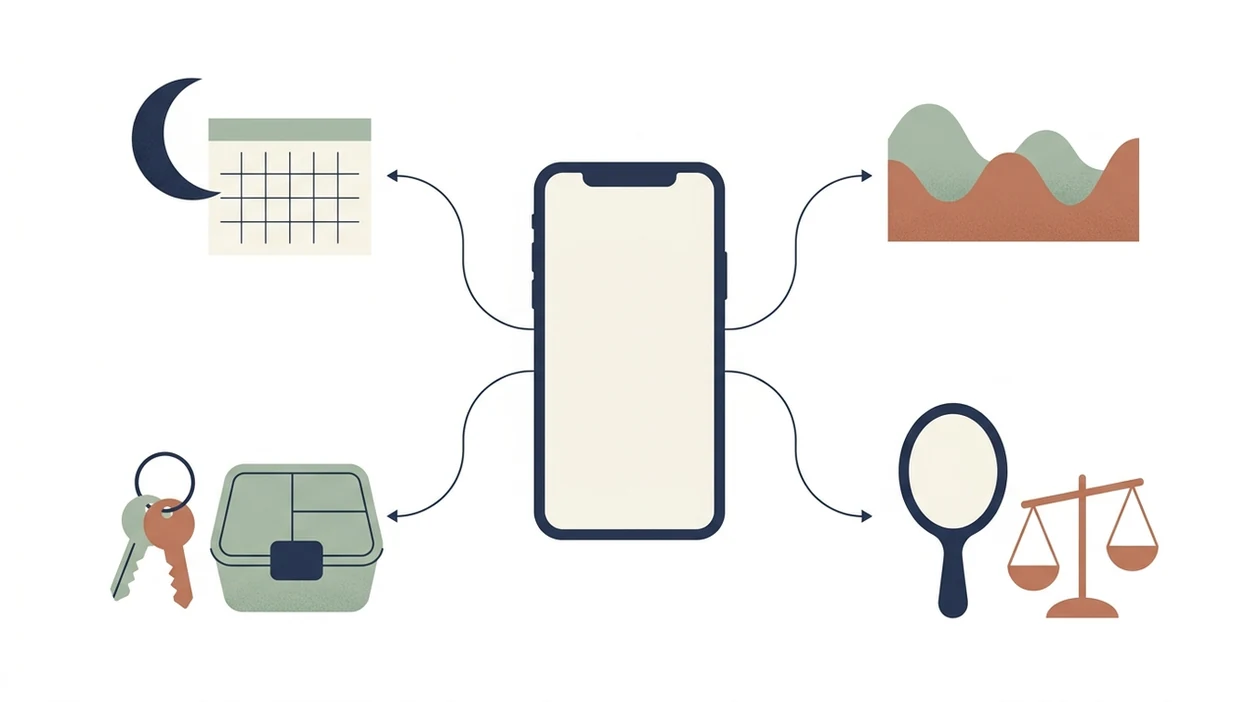
The best quit smoking apps for women address stress, mood, trigger patterns, and relapse recovery without reducing women’s health to pregnancy reminders or pink screens. A useful shortlist includes both research-tested tools and practical daily trackers.
- MeQuit covers craving tracking, stress-trigger logging, motivational milestones, and smoke-free streaks. Women looking for a quit plan that catches the “I need something in my hand” moment may find MeQuit useful because the craving log ties urges to context, intensity, and time.
- quitSTART is a free CDC-backed app with tips, badges, and challenges for people who want simple structure.
- Smoke Free focuses on progress tracking, health milestones, and money saved.
- Kwit uses gamified motivation and coping techniques to keep users engaged.
- My Change Plan–Women is a research-tested women-specific cessation app with trial evidence behind its design.
A genuinely women-informed app asks about stress, relationships, body-image concerns, and cycle-linked cravings. A pink rebrand just changes the color palette. Big difference.
Side-by-Side Comparison of Quit Smoking Apps for Women
The strongest overall fit depends on what you need most: evidence, simplicity, gamification, or deeper tracking. MeQuit is the best fit for tracking, My Change Plan–Women for research evidence, quitSTART for simplicity, and Kwit for gamified motivation.
| App | Women-specific support | Evidence level | Stress logs | Craving tracking | Coping prompts | Privacy/pricing signal |
|---|---|---|---|---|---|---|
| MeQuit | Stress, trigger, and motivation patterns | Practical behavior-change design | Yes | Yes | Yes | Check app-store policy; free/paid features may vary |
| quitSTART | General support, not women-specific | CDC-backed public health tool | Limited | Yes | Yes | Free CDC app |
| Smoke Free | Progress and health milestones | Broad cessation support | Limited | Yes | Some | Freemium model may vary |
| Kwit | Motivation and coping through game mechanics | Engagement-focused support | Some | Yes | Yes | Freemium model may vary |
| My Change Plan–Women | Designed for women-specific quit barriers | Trial-tested women-tailored app | Yes | Yes | Yes | Research app context; availability may vary |
Use the table this way:
- Choose My Change Plan–Women if peer-reviewed women-specific evidence matters most.
- Pick quitSTART if you want a simple, free starting point.
- Try Kwit if badges, levels, and game-like nudges keep you opening the app.
- Use MeQuit if stress logs, craving patterns, and coping prompts are the daily make-or-break features.
How We Picked These Women Quit Smoking Support Apps
We picked women quit smoking support apps by looking for evidence, useful features, privacy signals, and engagement design. The goal was not to reward the loudest app store listing.
- Evidence basis: Apps tested in studies with women participants ranked higher than apps relying only on marketing claims.
- Women-specific feature set: We looked for stress logs, mood tracking, trigger review, weight-concern support, and space for cycle-aware check-ins.
- Privacy transparency: Smoking, mood, and cycle notes are sensitive health data, so permission requests and data policies matter.
- Engagement design: Reminders, streaks, coping prompts, and weekly reviews help after the first-week excitement fades.
- Practical fit: MeQuit earns a place because craving logs, stress patterns, and motivation tools match the daily reality of quitting, including school pickup without a vape or cigarette.
For heavier daily use, a quit smoking app for heavy smokers may need stronger medication and counseling planning alongside app support.
Why Women Need a Different Smoking Cessation App
Women often need a different smoking cessation app because stress smoking, hormonal shifts, weight worries, and relationship triggers can shape quit attempts. Generic apps can help, but they may miss the timing and pressure points that matter most.
Stat stack:
- In 2022, 11.5% of adult women in the United States, about 14 million, smoked cigarettes, per the CDC source.
- Women who smoke have about a 25% higher coronary heart disease risk than men who smoke a similar number of cigarettes, according to a Lancet meta-analysis.
- A women-tailored app trial reported 10.4% 30-day abstinence at 3 months, compared with 4.7% for a gender-neutral app source.
- Stress-related triggers and emotional smoking patterns are common quit-day barriers.
- Weight-gain fear can delay quitting or make a slip-up feel bigger than it is.
Partners who smoke matter too. So does the caregiving load. The gas station cigarette display behind glass can hit differently after a long shift and a tense drive home.
How a Quit Smoking App for Women Works
A quit smoking app for women works by turning a craving into a trackable habit loop: trigger, urge, coping response, and review. That plain loop is the phone version of cognitive-behavioral practice.
The mechanism is simple. You log the trigger, receive a timed coping prompt, and later review the pattern. Stress and mood logging can help time support before the next craving wave. Cycle-aware check-ins may raise support during parts of the month when withdrawal feels sharper. Progress views should show more than money saved, including health milestones and craving frequency trends.
A 2017 systematic review of randomized trials found that text messaging and app-based smoking cessation support increased quit rates compared with minimal support or usual care. The most evidence-backed approach to quitting is behavioral support combined with proven treatment such as nicotine replacement therapy, medication, or counseling.
Anyone dealing with stress-linked cravings may fit MeQuit because it connects each craving entry to time, mood, trigger, and coping action.
How to Use a Smoking Cessation App for Women
Use a smoking cessation app for women as a daily quit plan, not as a guilt meter. The first honest note after a slip often matters more than a perfect-looking streak.
- Set a quit date and enter your baseline smoking patterns, including first cigarette timing and usual daily count.
- Log personal triggers such as stress, social pressure, hormonal shifts, boredom, driving, or after-dinner routines.
- Build a coping plan for each trigger, such as a breathing exercise, short walk, mint, or text to a friend.
- Track cravings in real time and note intensity, location, mood, and what helped.
- Review weekly progress reports and adjust coping strategies when one trigger keeps repeating.
- Combine app use with nicotine replacement therapy, medication, or counseling when appropriate.
Most adults who smoke say they want to quit, and the CDC recommends combining behavioral support with approved cessation treatments when needed source. Apps lower the barrier because the plan is already in your pocket. For first quit attempts, a quit smoking app for first-time quitters can help make the first week less vague.
Best Features for Craving and Stress Tracking
For stress-heavy quit attempts, the strongest app feature is a craving log that records the moment, trigger, intensity, and coping response instead of only counting smoke-free time. The point is to track what actually happened, then reset the plan.
When stress is the issue, MeQuit helps surface patterns across repeated logs, such as lunch-break urges, arguments, traffic, or restless legs under the dinner table. Motivational milestones connect progress to a health recovery timeline, while craving frequency trends show whether the waves are getting farther apart.
The right fit for women who want fewer surprise cravings is MeQuit because the craving tracker turns scattered urges into a reviewable pattern. It works alongside NRT and counseling, not as a standalone replacement. Good stop smoking apps deliver timely coping support and honest progress data, not instant willpower or a promise that withdrawal disappears.
What Women Quit Smoking Support Should Not Promise
Women quit smoking support should not promise a guaranteed quit, a medication replacement, or proof just because an app says “for women.” Trial data suggests tailored support can matter, but that does not make every gendered app evidence-based.
| Myth | Fact |
|---|---|
| Any generic app works equally for women. | Women may have different stress triggers, cycle-linked cravings, and weight concerns. |
| An app replaces patches, medication, or counseling. | Apps usually work better when paired with proven treatment. |
| “For women” branding means research-backed design. | Some apps are re-skinned without women-specific testing. |
| Quit apps are only relevant during pregnancy. | Women who are not pregnant still benefit from stress, mood, and trigger support. |
| Engagement stays high forever. | Many users stop opening apps after a few weeks without extra support. |
MeQuit avoids the magic-cure message because the workflow keeps coming back to one urge at a time. For high-stress routines, our quit smoking app for stressed people guide goes deeper on trigger planning.
When to Get Medical Help With Quitting Smoking
Get medical help with quitting smoking whenever pregnancy, breastfeeding, major mood symptoms, or medication questions are part of the picture. An app can help you notice patterns, but it should not diagnose withdrawal problems or tell you which treatment to take.
A clinician can help match your quit plan to your health history, especially if you are pregnant, trying to become pregnant, or nursing. That conversation can include nicotine replacement therapy, varenicline, bupropion, counseling, or a combination approach, depending on what is safe and appropriate for you.
- Contact your doctor, midwife, pharmacist, or quitline before starting medication if you are pregnant, breastfeeding, or planning pregnancy.
- Ask which options fit your situation, including patches, gum, lozenges, prescription medicine, counseling, or paired treatment.
- Report severe anxiety, depression, panic, hopelessness, self-harm thoughts, or withdrawal distress right away; urgent support matters more than preserving a streak.
- Use MeQuit or another app to bring real notes to the visit: craving times, triggers, sleep changes, mood shifts, and slips.
- Treat app prompts as support tools, not prescription instructions or medical clearance.
Limitations
A smoking cessation app for women can be useful, but it has real limits. Read this part before choosing any app, including MeQuit.
- It cannot replace individualized medical advice for pregnant or breastfeeding women.
- Long-term effectiveness of gender-tailored apps is still under-researched.
- Many apps labeled “for women” have no independent evaluation or peer-reviewed evidence.
- Engagement often drops after 2 to 3 weeks without counseling, medication support, or social accountability.
- Data privacy protections vary widely, and some apps may share sensitive health or behavioral data.
- Apps alone usually produce lower quit rates than apps combined with NRT, prescription medication, or counseling.
- Hormonal-cycle features are not yet standard in most mainstream cessation apps.
- A progress streak can motivate some users but discourage others after a slip-up.
MeQuit can help you make the next cigarette harder to reach, but it can’t control a partner’s smoking, refill prescriptions, or diagnose withdrawal symptoms. If money saved motivates you, a cigarette savings calculator app can add another clear reason to keep going.
FAQ
Do quit smoking apps actually work?
Yes, app-based and text-message smoking cessation interventions can increase quit rates compared with minimal support, according to a systematic review of randomized trials. They work best when users keep logging cravings and reviewing patterns.
Are women-specific quit apps more effective?
Women-specific quit apps may be more effective when they include tailored content. In the My Change Plan–Women trial, abstinence was 10.4% versus 4.7% for a gender-neutral app source.
Can an app replace nicotine patches?
No, a smoking cessation app should not be treated as a replacement for nicotine patches, medication, or counseling. Apps are usually most useful as daily behavioral support alongside proven treatments.
How much do quit smoking apps cost?
Costs vary by app: CDC quitSTART is free, while apps such as Smoke Free, Kwit, and MeQuit may offer free and paid features depending on the current app-store listing. Check the listing before downloading because prices and feature tiers can change.
Do hormones affect smoking cravings?
Yes, hormonal shifts across the menstrual cycle may affect nicotine withdrawal, mood, and craving intensity. Some women notice stronger cravings at predictable points and benefit from logging the timing.
Are quit smoking apps safe for privacy?
Privacy varies by app. Check permissions, data-sharing language, account requirements, and whether mood, cycle, and smoking data can be deleted.
Should I use an app while pregnant?
Pregnant women should ask a doctor, midwife, or prenatal clinician before relying on any quit-smoking plan. An app can support tracking and reminders, but it cannot replace prenatal medical guidance.
Quit with support that fits your routine
Stop Smoking App (MeQuit) helps you track cravings, triggers, smoke-free progress, and motivation as you build a healthier routine. It is not medical advice, but it can be a useful companion alongside proven support when needed.
Get Stop Smoking App