
Free Vs Paid Quit Smoking App: What Is Actually Worth Your Money?

A free vs paid quit smoking app comparison comes down to whether you will actually use premium features like coaching, personalized plans, and deeper analytics. Free apps cover the core tools most quitters need; paid plans are worth testing only when coaching, personalization, or deeper analytics solves a specific consistency problem.
> Definition: A quit smoking app is a mobile tool that helps users track smoke-free progress, manage cravings, and stay motivated through behavior-change techniques during a cessation attempt.
TL;DR
- Free quit smoking apps include core tracking, craving logs, and reminders, enough for many quitters to start.
- Paid smoking cessation app subscriptions add coaching, structured plans, and analytics that improve engagement, not guaranteed quit rates.
- Evidence shows active app users nearly doubled 6-month abstinence versus non-users, so the real question is whether a paid plan keeps you using the app.
How free vs paid quit smoking apps look
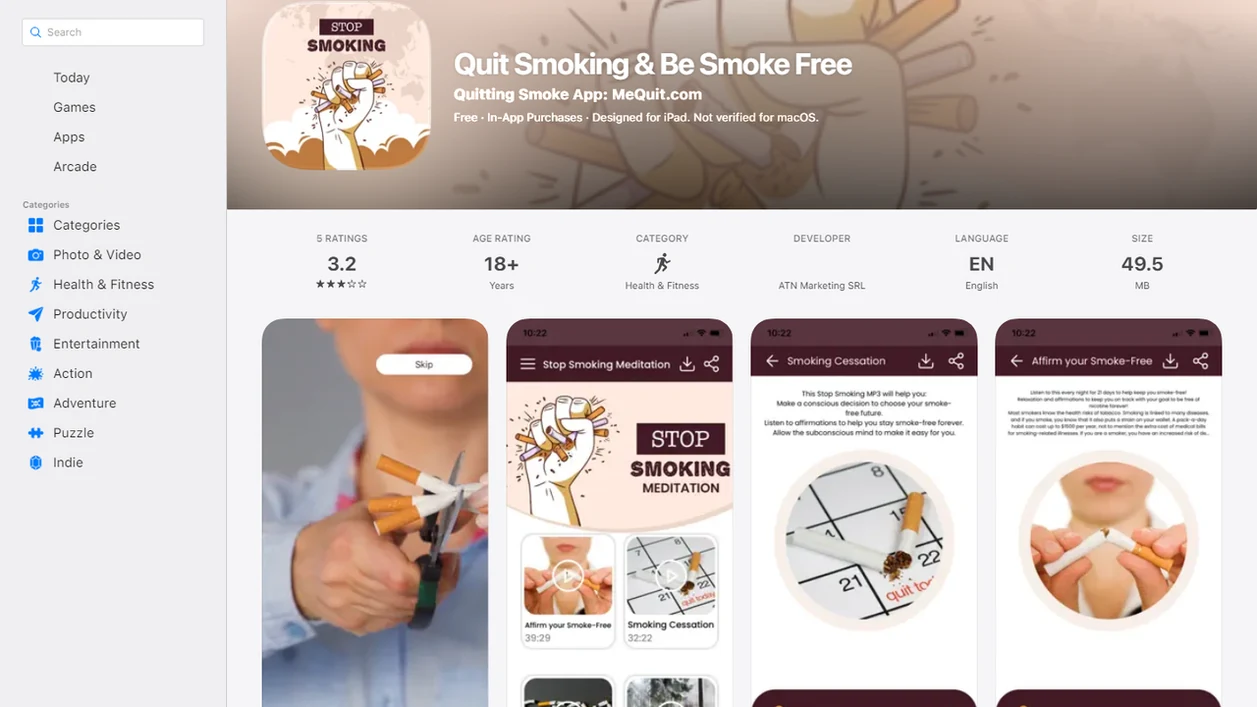
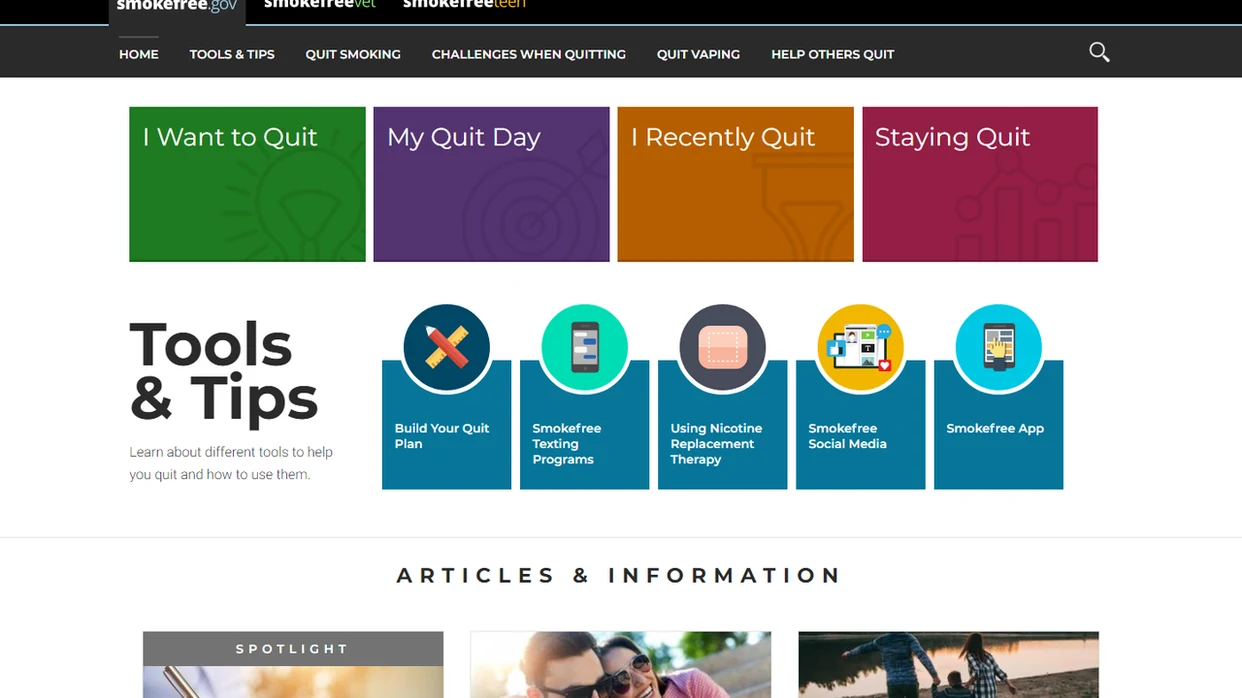
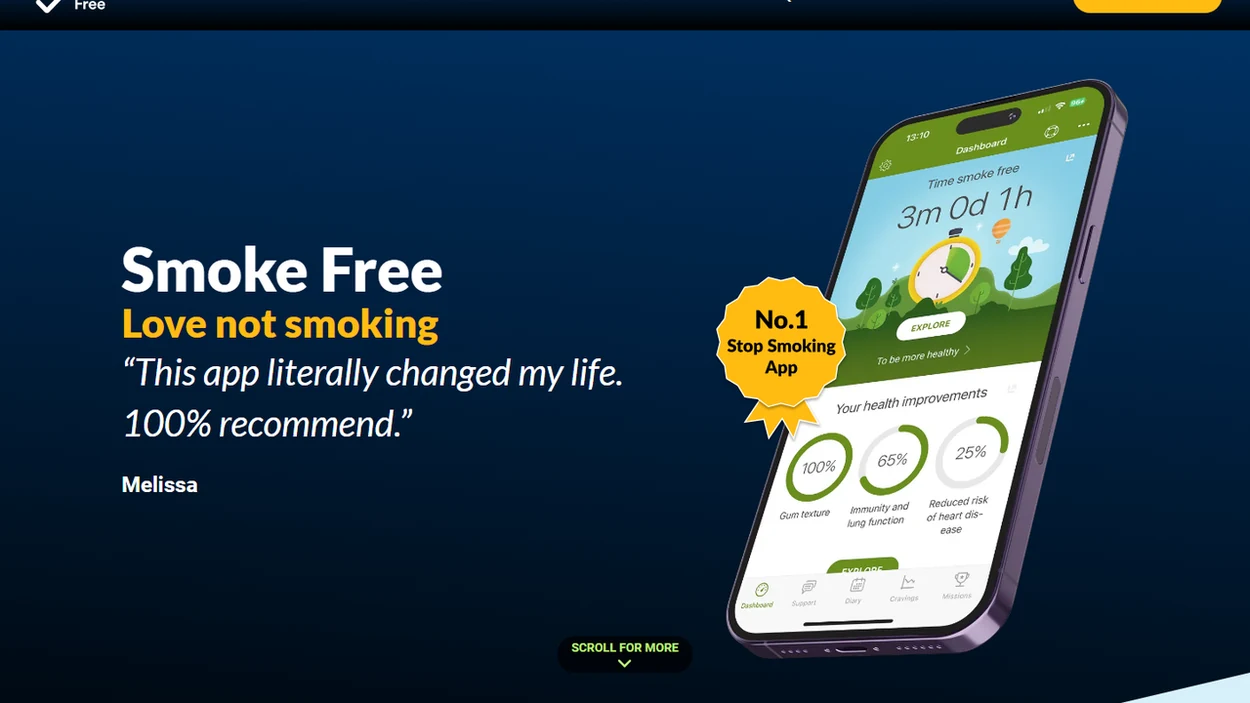
Side-by-side captures of the compared products. Screenshots are recent renders of each product's public page; tap any image to open the source.
At-a-Glance: Free Vs Paid Quit Smoking App Feature Comparison
Free and paid quit smoking apps usually differ most in support depth, ads, and personalization. Specific features vary by app, platform, and version, so check the current App Store or Google Play listing before paying.
| Feature | Free quit smoking app | Paid smoking cessation app |
|---|---|---|
| Quit-date tracking | Usually included | Included, often with more detail |
| Craving log | Basic notes or ratings | Patterns, tags, and reports |
| Reminders | Simple nudges | Custom timing and relapse prompts |
| Ads | Common | Usually removed |
| Coaching | Rare | Often included or unlocked |
| Personalized plans | Limited | More common |
| Analytics depth | Basic streaks | Deeper trends and trigger review |
| Community access | Sometimes limited | Often expanded |
| Privacy controls | Basic settings | May add export or enhanced controls |
MeQuit covers the core tools many people need first, with optional upgrades for users who want deeper tracking. Good stop smoking apps deliver repeatable quit-day support, not a magic button that removes withdrawal.
For context, compare any paid option against quitSTART, Smoke Free, Kwit, and NHS Quit Smoking so the choice is based on tools, evidence, privacy, and cost instead of app-store copy alone.
Where Free Quit Smoking Apps Win—and Where Paid Apps Win
Free quit smoking apps win when you need to start now, avoid commitment, and see basic progress without thinking about billing. Paid apps win when extra support improves follow-through, especially coaching, personalization, or analytics that make your next craving easier to handle.
A practical comparison looks like this:
- Choose free first if your main need is a quit date, smoke-free streak, craving log, and simple reminders.
- Upgrade only when you can name the gap, such as needing a coach to check in, a plan that adapts after slips, or reports that reveal your worst trigger windows.
- Ignore both tiers if you stop opening the app during cravings, because the best feature list cannot help from a forgotten home-screen folder.
- Prioritize outside support when nicotine dependence is high, withdrawal feels unmanageable, you have repeated relapses, or a clinician has recommended medication, nicotine replacement therapy, counseling, or a quitline.
- Use the app as the daily layer while quitlines or medication handle the heavier clinical support.
The real winner is the setup you will reach for when the cigarette is already in your hand.
Free Quit Smoking App Tools That Work Without a Subscription
Free quit smoking apps work best when they make the next cigarette harder to reach and the next urge easier to record. The strongest free tools are simple, boring, and used often.
- Quit-date tracking: A smoke-free streak turns “I’m trying” into a visible count.
- Craving logging: Recording time, trigger, and intensity helps you spot patterns.
- Milestone reminders: Small progress markers can help during the first week.
- Government-backed support: Smokefree.gov describes quitSTART as a free app with tailored tips, inspiration, and challenges source.
- Lower starting barrier: Free tools remove the “should I pay first?” delay.
If the priority is starting today without a subscription, MeQuit fits because the smoke-free streak and craving log let you test the habit before spending money. That matters when the urge hits in a restroom stall between classes.
Paid Smoking Cessation App Subscription Features That Add Value
Paid smoking cessation app features add value when they keep you engaged after the first motivation drop. Coaching, structured quit plans, personalized feedback, premium lessons, ad removal, and stronger privacy controls are useful only if you open them.
Stat callout: A 2024 randomized trial reported that the full app version increased 3-month abstinence versus a reduced version, with an odds ratio of 1.90. In the same paper, active app users had 12.7% six-month abstinence versus 7.0% in the comparison group source.
When the issue is losing focus after a slip-up, MeQuit handles the reset better than a notes app because you can log what happened and restart the plan. For many quitters, a paid upgrade is worth considering only after free tracking exposes the missing support.
Quit Smoking App Behavior-Change Tools and Craving Triggers
Quit smoking apps work by interrupting habit loops, which are cue, routine, and reward patterns. In plain English, the app helps you notice the moment before smoking stops feeling automatic.
Craving logs use CBT-based awareness to name the trigger before acting on it. Progress tracking leans on commitment bias and loss aversion, because losing a smoke-free streak can feel costly. Reminders and milestone rewards borrow from operant conditioning, where repeated feedback shapes behavior. Coaching and personalized plans add accountability loops.
The pocket check is real.
The 2024 Smoke Free trial also shows why active use matters. Offering an app alone did not show a detectable benefit in the full intention-to-treat analysis, with 6.8% versus 7.0% six-month abstinence. People who actually used the app did better. For trigger-heavy quits, our nicotine cravings tracker app guide goes deeper.
5-Step Choice Between a Free and Paid Quit Smoking App
Use a free app first, then pay only when you can name the exact gap. How to use a quit smoking app comparison:
- Set a quit date and download a free quit smoking app to test the basics.
- Log each craving and track smoke-free days for at least one week.
- Identify the gap: Are you missing coaching, deeper analytics, or a structured plan?
- Check the paid version against that gap, not against a long feature list.
- Combine support with 1-800-QUIT-NOW, counseling, or nicotine replacement therapy when needed.
MeQuit is a practical option for testing free features before upgrading because the first decision is behavior, not billing. Quitters who say, “I already messed up, so I might as well smoke the rest of the day,” often need a reset workflow more than another dashboard. Our best stop smoking app for relapse page covers that situation.
Quit Smoking App Subscription Pricing and Cancellation Policies
Quit smoking app subscription pricing usually falls into four buckets: monthly plans, annual plans, one-time purchases, and freemium upgrades. The cheapest-looking plan is not always cheaper if you forget to cancel.
Compare the subscription against your quit timeline. A three-month plan may make sense if it covers your highest-risk window. A rolling monthly plan can quietly add up if you stop using coaching after week two. Check refund rules, renewal dates, and cancellation steps before you subscribe.
Also compare the cost with continuing to smoke. A cigarette savings calculator can make the tradeoff less abstract, especially when the gas station cigarette display is sitting behind glass at eye level. Free government resources, including quitSTART and 1-800-QUIT-NOW, remain zero-cost alternatives. The CDC says 1-800-QUIT-NOW connects callers with quit coaches and other free support source.
4 Myths About Free and Paid Smoking Cessation Apps
Free does not mean weak, and paid does not mean guaranteed. The better question is whether the app changes what you do during a craving wave.
- Myth 1: Paid apps guarantee higher quit rates. Results depend on active use, not payment alone.
- Myth 2: Free apps are useless. Many include streaks, craving logs, reminders, and motivation tools.
- Myth 3: More features always mean better outcomes. Simpler tools can work if you actually use them.
- Myth 4: An app subscription replaces treatment. Apps support quitting; they do not replace counseling, quitlines, medication, or nicotine replacement therapy.
- Evidence check: The 2024 trial found offering the app alone did not show a detectable cessation benefit, with 6.8% versus 7.0% abstinence.
When a friend passes a vape at lunch, the useful feature is the one you can use in ten seconds. For vaping-specific support, compare options in our best app to stop vaping guide.
Evidence on Free vs Paid Quit Smoking Apps
The evidence does not prove that paid quit smoking apps beat free ones across the board. It shows that app engagement matters, and that subscriptions are useful only if their added features keep you using support at the hard moments.
The 2024 Smoke Free trial is the cleanest caution. In the download-offer, intention-to-treat view, six-month abstinence was essentially unchanged at 6.8% versus 7.0%. Among active users, though, abstinence was higher, including 12.7% versus 7.0% at six months, and the full version improved three-month results versus a reduced version source. That suggests the app helped people who engaged; it did not prove that simply installing or paying creates a quit.
Use the evidence in this order:
- Separate downloads from active use before trusting a quit-rate claim.
- Compare apps with proven supports such as quitlines, counseling, nicotine replacement, varenicline, or bupropion.
- Treat paid features as adherence tools, not as medical treatment.
- Recheck current versions because app designs, coaching access, prices, and subscription tiers change over time.
Free or Paid Quit Smoking App Decision Guide
Pick free if you are starting out, need basic tracking, prefer no financial commitment, or plan to combine app use with quitline support or nicotine replacement therapy. Pick paid if free tools have not kept you consistent, you want coaching accountability, you dislike ads, or structured plans help you follow through.
MeQuit is a sensible starting point because it covers core free tools and offers optional paid depth when you need more than streak counting. If your main question is whether you need a full app or a simple counter, the quit smoking app vs tracker debate is worth reading.
For most users, the app you open during the craving is more useful than the app with the longest feature list. The most evidence-backed approach to quitting usually combines behavior support with counseling, quitlines, or approved quit-smoking medicines when appropriate. The U.S. Preventive Services Task Force recommends behavioral interventions and FDA-approved pharmacotherapy for nonpregnant adults who smoke source.
Limitations
No quit smoking app, free or paid, can guarantee cessation. A phone can support the quit, but it cannot remove withdrawal, stress, social pressure, or nicotine dependence by itself.
- Evidence is mixed; the 2024 randomized trial found no detectable benefit from merely offering an app.
- Benefits appear stronger among people who actively engage, not everyone who downloads.
- Paid subscriptions can become expensive if coaching, analytics, or premium plans go unused.
- App store claims may not match independent evidence or the current app version.
- Apps are support tools, not substitutes for counseling, quitlines, or FDA-approved cessation medicines.
- Some users do better with human support from BecomeAnEX, Smokefree.gov, NHS quit resources, or local quit services.
- Privacy settings vary, especially for craving notes, health data, reminders, and account exports.
A tracker can show what actually happened, but a difficult first week may still need outside support. Dry mouth at the checkout line can feel bigger than a notification.
FAQ
Are free quit smoking apps effective?
Free quit smoking apps can be effective for many users because they include core tools like smoke-free tracking, craving logs, and reminders. They work best when used daily and combined with other quit support when needed.
Is a paid quit smoking app worth it?
A paid quit smoking app is worth it if premium features keep you engaged and address a specific gap, such as coaching or structured planning. Payment alone does not guarantee a higher quit rate.
What do paid smoking apps add?
Paid smoking apps commonly add coaching, deeper analytics, personalized quit plans, premium content, community features, ad removal, and stronger settings. The exact features vary by app and subscription tier.
Can an app replace nicotine patches?
No, an app should not be treated as a replacement for nicotine patches, medication, counseling, or other evidence-based cessation care. Apps are behavior-support tools.
Do quit smoking apps have clinical evidence?
Some quit smoking apps have clinical evidence, but results are mixed and version-dependent. The 2024 Smoke Free trial found stronger results among active users than among everyone merely offered the app.
How much do quit smoking subscriptions cost?
Quit smoking subscriptions may use monthly pricing, annual plans, one-time purchases, or freemium upgrades. Free alternatives include government-backed apps and quitline support.
Can I cancel a smoking app subscription?
Most smoking app subscriptions can be canceled through the App Store, Google Play, or the service account settings. Check cancellation and refund terms before subscribing.
Should I combine an app with a quitline?
Yes, combining an app with 1-800-QUIT-NOW, counseling, or medication support is often a stronger plan than using an app alone. The MeQuit stop smoking app can support daily tracking while human support handles coaching and accountability.
Choose a Quit Smoking App That Fits Your Real Life
Stop Smoking App (MeQuit) helps you track cravings, triggers, streaks, and savings while you build a quit plan you can return to after hard moments. It is not medical advice, but it can support your quit attempt alongside NRT, counseling, quitlines, or clinician guidance when needed.
Get Stop Smoking App